


Former DOJ Prosecutor Takes On Controversial Case Defending Don Lemon
A Surprising Career Move After Mass Resignation
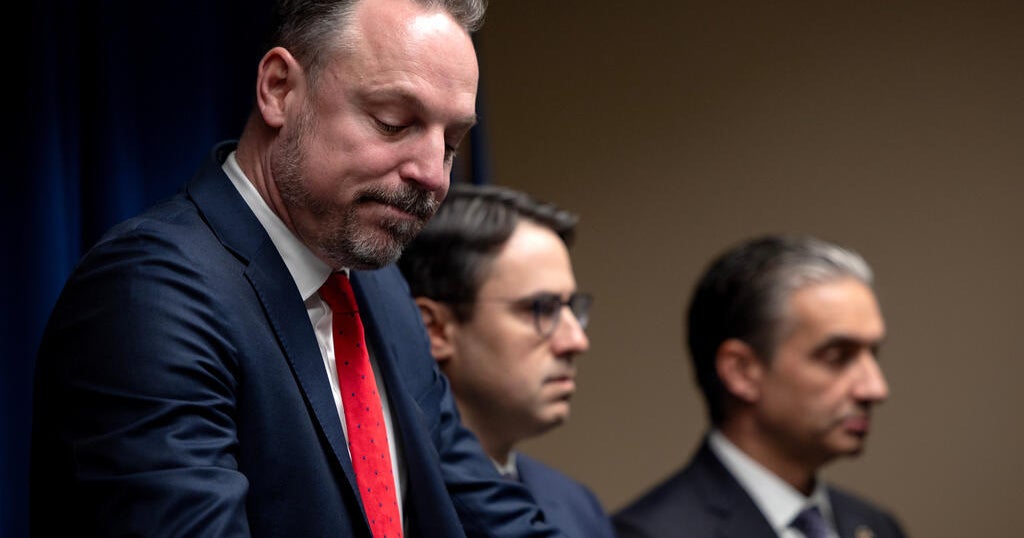
In an unexpected turn of events that has captured the attention of legal observers nationwide, Joe Thompson, a high-profile former federal prosecutor, has made headlines by taking on the defense of former CNN anchor Don Lemon. Thompson’s decision to represent Lemon comes just weeks after he was part of a dramatic wave of resignations from the U.S. Attorney’s office in Minneapolis, marking a significant career transition from prosecution to defense work. Thompson formally notified the court this week that he would be joining Lemon’s legal team, working alongside prominent Washington D.C.-based attorney Abbe Lowell, who is already well-known for representing high-profile clients in politically sensitive cases. This partnership brings together two experienced legal minds to tackle what has become a controversial prosecution that raises important questions about press freedom and First Amendment protections.
Thompson’s background as a federal prosecutor is both extensive and impressive. He dedicated more than a decade of his career to the Justice Department, rising through the ranks to eventually serve as acting U.S. Attorney in Minnesota at one point last year. During his tenure, he became particularly well-known for spearheading a massive series of fraud prosecutions that resulted in charges against more than 90 defendants accused of defrauding Minnesota’s public assistance programs. According to Thompson’s own estimates, these fraud schemes—which garnered significant attention from the Trump administration—cost the state an astounding $9 billion or more. His work on these cases established him as a tough, detail-oriented prosecutor willing to take on complex, large-scale investigations that required coordinating numerous defendants and untangling complicated financial schemes.
The Dramatic Exodus From the Justice Department
However, Thompson’s career at the Justice Department came to an abrupt end last month when he joined several other prosecutors in resigning from the U.S. Attorney’s office in Minneapolis. While the exact details surrounding the mass resignation remain somewhat murky, CBS News reported at the time that the departures were motivated, at least in part, by serious concerns among prosecutors about political pressure and questionable investigative priorities. Specifically, the resignations were reportedly connected to pressure from leadership to investigate the widow of Renee Nicole Good, a woman who was tragically killed by an Immigration and Customs Enforcement (ICE) agent. The fact that multiple prosecutors felt compelled to resign over this issue suggests deep concerns about the direction of the office and potentially inappropriate political interference in prosecutorial decisions. Thompson himself has not been available for comment about his resignation or his reasons for leaving the Justice Department after such a long and distinguished career. His silence on the matter has only added to speculation about what exactly prompted him and his colleagues to take such a dramatic step.
The Charges Against Don Lemon
The case that Thompson is now defending involves charges stemming from a protest that disrupted a church service in St. Paul, Minnesota. Last month, federal prosecutors indicted Lemon along with eight other individuals in connection with the demonstration. Lemon faces two federal charges: one count of conspiracy against religious freedom and one count of interfering with the exercise of religious freedom at a place of worship. These are serious federal charges that carry potential criminal penalties and have placed the former television personality in legal jeopardy. The protest in question erupted after demonstrators discovered that one of the pastors at the church was actually an ICE official, a revelation that sparked outrage among activists concerned about immigration enforcement policies. The demonstration that followed disrupted the church service, leading to the federal charges that now hang over Lemon and the other participants.
From the beginning, Lemon has maintained that he was present at the scene in his professional capacity as a journalist covering the protest, not as an active participant in the demonstration itself. The former CNN anchor, who has since transitioned to hosting a streaming show, has insisted that he had no affiliation with the protesters who were charged and that he was simply doing his job as a reporter documenting newsworthy events. This defense raises significant First Amendment questions about the boundaries between journalistic coverage and participation in protests, and where the line should be drawn when charging individuals present at demonstrations. After Lemon was arrested in Los Angeles late last month, his attorney Abbe Lowell issued a strong statement defending his client’s actions and framing the prosecution as an attack on press freedom. “Don has been a journalist for 30 years, and his constitutionally protected work in Minneapolis was no different than what he has always done,” Lowell declared, emphasizing the constitutional dimensions of the case. He continued: “The First Amendment exists to protect journalists whose role it is to shine light on the truth and hold those in power accountable.” This framing positions the case not just as a defense of one individual, but as a broader fight for journalistic freedom and the right of reporters to cover controversial events without fear of prosecution.
Early Legal Complications in the Case
Interestingly, the Justice Department’s prosecution of Lemon has already encountered some significant legal obstacles that suggest the case may not be as straightforward as prosecutors initially hoped. In an unusual development that embarrassed the government, a Minnesota magistrate judge initially refused to sign the criminal complaint charging Lemon in connection with the protest. This judicial pushback represented a rare rebuke to federal prosecutors and indicated that at least one judge had concerns about the sufficiency of the evidence or the appropriateness of the charges. However, prosecutors were undeterred by this setback and took the case to a federal grand jury the following week. The grand jury ultimately returned an indictment against Lemon and the other defendants, allowing the prosecution to move forward despite the magistrate judge’s initial reluctance. Following the indictment, federal law enforcement personnel arrested Lemon, though he was subsequently released on his own recognizance without having to post any bond, suggesting that the court did not view him as a flight risk or a danger to the community.
The Broader Implications and What Lies Ahead
The addition of Joe Thompson to Lemon’s defense team adds a fascinating dimension to this already high-profile case. Thompson brings insider knowledge of how federal prosecutors think and operate, having been on the other side of the courtroom for more than a decade. His recent experience with the Justice Department, combined with his apparent disillusionment that led to his resignation, may give him unique insights into the mindset and strategies of the prosecutors he now opposes. His willingness to take on this case so soon after leaving the Justice Department also sends a powerful message about his commitment to the defense and his belief in Lemon’s position. Together with Abbe Lowell’s experience handling politically sensitive cases for high-profile clients, Lemon has assembled a formidable legal team that will vigorously challenge the government’s case and raise important constitutional questions about press freedom.
As this case moves forward through the federal court system, it will be watched closely not just by those interested in Don Lemon’s fate, but by journalists, civil liberties advocates, and legal scholars concerned about the boundaries of First Amendment protections. The outcome could have significant implications for how journalists cover protests and demonstrations, and whether reporters risk criminal prosecution simply for being present at events where laws are allegedly broken. For Thompson, this case represents the beginning of a new chapter in his legal career, transitioning from prosecuting cases on behalf of the government to defending individuals against federal charges. The legal arguments, evidentiary battles, and constitutional questions that will unfold in the coming months promise to make this one of the most closely watched cases involving press freedom in recent years. Whether Thompson’s insider knowledge and Lowell’s high-profile defense experience will be enough to secure Lemon’s acquittal remains to be seen, but the case has already highlighted important tensions between law enforcement priorities and constitutional protections for the press.