



A Marriage Unraveling: The Hawaii Trail Incident That Shocked a Community
The Allegations and the Courtroom Drama
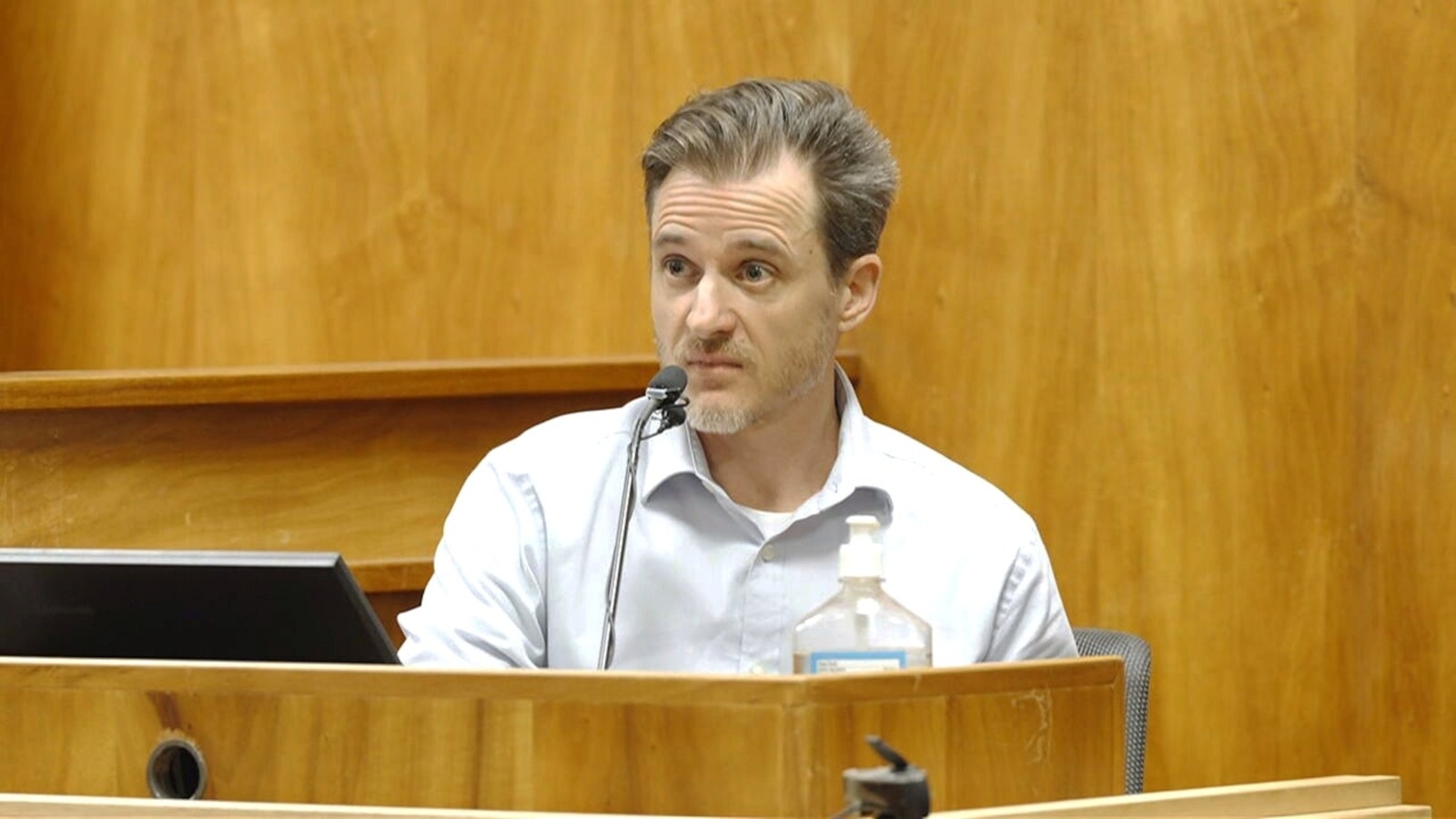
In a case that has captivated Hawaii and beyond, Dr. Gerhardt Konig, a 47-year-old anesthesiologist, finds himself at the center of a harrowing trial that reads like a tragic thriller. Accused of attempting to murder his wife on a scenic but treacherous hiking trail, the doctor has maintained his innocence while offering a starkly different version of events than the one his wife described. The incident occurred on March 24, 2025, on the Pali Puka Trail on Oahu, a location known for its breathtaking views and dangerous narrow passages. According to prosecutors, Dr. Konig allegedly attacked his wife, Arielle, with a rock in what they claim was a premeditated attempt to end her life. The anesthesiologist, however, has pleaded not guilty to second-degree attempted murder charges, and his testimony paints a picture of self-defense rather than cold-blooded violence. During his second day on the witness stand, the doctor faced intense questioning from prosecutor Joel Garner, who methodically worked to dismantle his version of events and establish a motive rooted in jealousy, financial concerns, and a crumbling marriage.
The Fractured Marriage and Emotional Affairs
The backdrop to this alleged violence is a marriage that had been struggling for months before the fateful hike. Arielle Konig testified that the couple, parents to two young sons, had traveled from their home in Maui to Oahu specifically to celebrate her birthday—a trip that was supposed to help mend their relationship. The trouble had begun in December 2024, when Dr. Konig discovered what his wife described as “flirty” WhatsApp messages between her and a male colleague. Arielle characterized this as an “emotional affair” rather than a physical one, but the discovery had shaken the foundation of their marriage. During cross-examination, prosecutors revealed that Dr. Konig hadn’t simply stumbled upon these messages; instead, he had gone into what he himself called “detective mode,” actively monitoring his wife’s WhatsApp account to uncover her communications. When confronted about his emotional state upon discovering the messages, Dr. Konig carefully distinguished between being “mad” and being “upset,” a semantic difference that prosecutors suggested revealed his attempt to downplay his anger. The aftermath of this discovery had created what seemed like an impossible set of demands: Dr. Konig testified that he wanted his wife to quit her job and surrender her privacy entirely, conditions that Arielle was unwilling to meet. This fundamental impasse about trust, control, and the future of their relationship would become central to understanding what happened on that mountain trail.
Financial Pressures and Divorce Research
Prosecutor Garner didn’t stop at exploring the emotional turmoil in the Konig marriage—he also delved into potential financial motivations that might have influenced the doctor’s alleged actions. Evidence presented in court showed that in the weeks and months leading up to the March hike, Dr. Konig had been accessing financial documents and information about divorce proceedings on his desktop computer. These weren’t casual searches; they appeared to be thorough investigations into what a divorce might cost him, particularly given that this would be his second marriage ending. Garner pressed the defendant directly: “You’re researching these financial documents and these divorce documents because you want to see how much damage you’re going to suffer in a divorce, isn’t that right?” Dr. Konig firmly denied this characterization, but the digital trail suggested a man preparing for the worst-case scenario. For a successful anesthesiologist with medical staff privileges at Maui Memorial Medical Center, a contentious divorce involving custody of two young children and division of assets could indeed represent significant “damage,” both financially and personally. The prosecution’s theory seemed clear: faced with a wife who wouldn’t meet his demands, an emotional betrayal that wounded his pride, and a potentially expensive divorce on the horizon, Dr. Konig allegedly saw murder as a solution—one that could be staged to look like a tragic hiking accident on a notoriously dangerous trail.
Two Versions of What Happened on the Trail
The most compelling—and disturbing—aspect of this trial has been the dramatically different accounts of what actually occurred on the Pali Puka Trail that day. According to Arielle Konig’s testimony from the previous week, her husband deliberately pushed her toward the edge of a cliff during the hike. She described a terrifying struggle in which her husband produced a syringe and vial before beating her with a rock as many as ten times, leaving her head and face covered in blood. In her account, she believed he was trying to knock her unconscious so he could drag her over the edge and make it appear as though she had fallen accidentally. She later received treatment for “severe complex scalp lacerations” and showed the court the scarring that remained on her scalp as evidence of the brutal attack. Dr. Konig’s version of events, presented during his testimony, told a completely different story. He claimed that after taking his wife on what the prosecution characterized as an unusually difficult hike for a birthday celebration, an argument about her affair erupted. According to the doctor, his wife shoved him first, nearly pushing him over the edge of the trail. He testified that they struggled on the ground and that she hit him with a rock before he managed to take the rock away from her and strike her with it—but only twice, he insisted, and in self-defense. He vehemently denied having any syringes with him, denied trying to pull his wife toward the cliff edge, and stated unequivocally that he never planned to hurt her that day.
The Aftermath and a Son’s Devastating Testimony
What happened immediately after the incident may prove as damaging to Dr. Konig’s defense as the conflicting accounts of the attack itself. After bystanders arrived and came to Arielle’s aid, Gerhardt left the scene, sparking an hourslong manhunt that ended with his arrest. Audio from a 911 call made by one of these bystanders was played in court, and the words were chilling: “Someone’s currently being attacked on the top of Pali Puka. There’s a man trying to kill her.” Perhaps most damaging was the testimony of Emile Konig, the doctor’s 20-year-old son from his previous marriage. Shortly after fleeing the scene, Dr. Konig made a FaceTime call to Emile—a call the doctor later characterized as a suicidal goodbye. When asked by prosecutors to recount what his father said during that call, Emile testified: “That he would not be making it back to Maui and to take good care of the younger kids, and that Ari, my stepmom, had been cheating on him, and that he tried to kill her.” The young man further testified that his father said his next plan was “to jump off the cliff” and that he was “at the end of his rope.” Dr. Konig has since pushed back against his son’s testimony, denying he made any such confession. According to the doctor, what he actually said during the call was “She said I tried to kill her”—a subtle but crucial difference that shifts from admission to accusation. In his testimony, Dr. Konig admitted to feeling suicidal in the aftermath, describing himself as “horrified” by what he had done and “hopeless” about both his actions and the future of his marriage.
The Road Ahead and Lives Forever Changed
As this trial continues in Honolulu, the stakes could hardly be higher for everyone involved. Dr. Konig has been held in jail since his arrest, and Maui Health immediately suspended his medical staff privileges at Maui Memorial Medical Center pending investigation, effectively ending his career as an anesthesiologist regardless of the trial’s outcome. For Arielle Konig, the physical scars have healed more quickly than the emotional trauma; she filed for divorce in May 2025, two months after the incident, seeking full custody of their two young sons. The children at the center of this tragedy—the two young boys who should have been celebrating their mother’s birthday that day—now face a future where one parent is accused of trying to kill the other, where family gatherings have been replaced by courtroom proceedings, and where the trust that should define childhood has been shattered. The case presents the jury with a difficult task: determining the truth when the only two people who know exactly what happened on that trail offer such contradictory accounts. They must weigh the physical evidence, the testimony of bystanders, the 911 calls, the digital trail of divorce research, and the competing narratives about who struck first and why. Whatever the verdict, this case serves as a sobering reminder of how quickly love can turn to something darker, how jealousy and betrayal can poison even the most seemingly stable relationships, and how a single day—a birthday celebration that should have been filled with joy—can change multiple lives forever.