


Nevada Court Halts Kalshi’s Prediction Market Operations: A Growing Legal Battle Over Regulatory Authority
Temporary Restraining Order Puts Kalshi on Pause in Nevada
The prediction market platform Kalshi has hit a significant legal roadblock in Nevada, where a state court has imposed a two-week restraining order effectively shutting down its operations within the state’s borders. The First Judicial District Court of Nevada issued this 14-day order on Friday, mandating that the platform immediately stop offering event contracts to Nevada residents. This legal action represents the latest development in an escalating conflict over who has the right to regulate these increasingly popular prediction markets – state gaming authorities or federal regulators. The order encompasses all of Kalshi’s offerings, including sports betting, entertainment wagering, and election prediction contracts, while the parties involved continue their legal arguments over jurisdictional authority.
The path to this restraining order began when the Nevada Gaming Control Board first demanded that Kalshi cease its sports contract operations in 2025. However, the situation became more complex when Kalshi attempted to move the case to federal court, arguing that state-level proceedings posed an “imminent harm” to their business operations. This strategic move was ultimately unsuccessful, as a federal appeals court ruled on Thursday that the case should remain in Nevada’s state court system. The very next day, the Nevada state court moved forward with the temporary restraining order, setting the stage for a more comprehensive hearing scheduled for April 3rd, where the fundamental questions about regulatory authority will be examined more thoroughly.
The Core Legal Question: State Versus Federal Jurisdiction
At the heart of this legal battle lies a fundamental question about American regulatory structure: who has the authority to oversee prediction markets? The Nevada judge’s reasoning for granting the restraining order centered on the practical difficulties the Gaming Control Board faces when dealing with unlicensed operators. According to the court’s determination, the gaming board cannot properly fulfill its statutory obligations and functions when “an unlicensed participant beyond the Board’s control, such as Kalshi, obstructs the Board’s ability to fulfill its statutory functions.” This perspective views prediction markets as falling squarely within the traditional domain of state gaming regulation, particularly given Nevada’s long history and expertise in regulating gambling activities.
From the state’s perspective, prediction markets that involve real money wagering on future events – whether sports outcomes, entertainment awards, or election results – are essentially a form of gambling that should fall under existing state gaming laws. Nevada, with its well-established regulatory framework for casinos, sports betting, and other gaming activities, believes it has both the legal authority and practical expertise to oversee these operations. The Gaming Control Board’s position is that allowing unlicensed operators like Kalshi to function outside their regulatory framework creates confusion, potential consumer protection issues, and undermines the state’s ability to maintain the integrity of gambling activities within its jurisdiction.
Federal Regulators Assert Their Authority
However, the situation is complicated by federal involvement, specifically from the U.S. Commodity Futures Trading Commission (CFTC), which has staked its own claim to regulatory authority over prediction markets. CFTC Chairman Mike Selig has become increasingly vocal about his agency’s position that federal regulation, not state oversight, is the appropriate framework for these platforms. He has filed court briefs articulating this argument and has made his position clear in numerous recent public appearances, where he has promised to vigorously contest state attempts to regulate prediction markets. Chairman Selig isn’t just making theoretical arguments – he’s actively working to establish CFTC policies specifically designed to govern prediction markets, demonstrating the agency’s commitment to asserting its jurisdiction.
The CFTC’s claim to authority rests on the argument that prediction markets function more like commodity futures contracts than traditional gambling. From this perspective, when users buy and sell contracts based on the likelihood of future events, they’re engaging in a form of derivatives trading that falls under the CFTC’s established mandate to regulate futures and options markets. This isn’t merely a turf war between regulators; it reflects genuinely different frameworks for understanding what prediction markets are and how they function. The CFTC’s position is supported by a general principle of American law that federal regulation typically supersedes state regulation when both claim jurisdiction over the same activity. However, as Chairman Selig himself has acknowledged, the courts may ultimately need to determine who is properly entitled to exercise jurisdiction in this case.
Kalshi Faces Multiple State-Level Challenges
Nevada isn’t the only state where Kalshi is facing legal difficulties. The company is currently being sued or prosecuted in several states on similar grounds, indicating that this is becoming a nationwide issue rather than an isolated dispute. Most notably, earlier this week, Arizona’s attorney general filed charges against Kalshi, accusing the platform of operating an unlicensed gambling business and offering illegal election wagering. This multi-state legal offensive suggests a coordinated concern among state attorneys general and gaming regulators that prediction market platforms are operating in a legal gray area, accepting wagers from their residents without proper state licensing or oversight.
The company has chosen to remain largely silent on these legal challenges. When asked about the Nevada development specifically, a spokesman for Kalshi declined to comment, a response that suggests the company is carefully managing its public statements while navigating this complex legal landscape. This cautious approach is understandable given that anything company representatives say could potentially be used in the various ongoing legal proceedings. However, the company’s earlier attempt to move the Nevada case to federal court reveals its strategy: Kalshi appears to believe that federal courts will be more sympathetic to the argument that the CFTC, rather than state gaming boards, should have regulatory authority over their operations.
Industry Players Take Sides in the Regulatory Debate
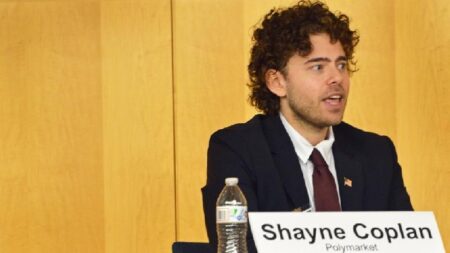
As this regulatory battle unfolds, various industry stakeholders are beginning to choose sides, and their decisions could significantly influence the outcome. In a notable development that strengthens the CFTC’s position, Major League Baseball has thrown its support behind federal regulation. This week, MLB signed a memorandum of understanding with the CFTC regarding the oversight of prediction markets. Even more significantly, the league also announced a partnership with Polymarket, another major prediction market platform, signaling that major sports organizations see federal oversight as the preferable regulatory framework. MLB’s involvement is particularly significant because sports leagues have traditionally been cautious about gambling-related issues and protective of their games’ integrity.
The fact that a major professional sports league has formally aligned itself with the CFTC rather than state gaming regulators could influence how courts view the jurisdictional question. MLB presumably conducted extensive legal analysis before entering into these agreements, and their decision to work with federal rather than state regulators suggests their legal team believes the CFTC’s authority is on solid ground. Additionally, MLB’s willingness to partner directly with a prediction market platform indicates growing mainstream acceptance of these services, which could make it more difficult for state regulators to characterize them simply as unlicensed gambling operations that should be shut down.
The coming weeks and months will be crucial in determining the future of prediction markets in the United States. The April 3rd hearing in Nevada will provide more clarity on how at least one state court views the jurisdictional question, while similar proceedings in Arizona and other states will contribute to a developing body of legal precedent. Meanwhile, the CFTC continues to build its case for federal authority, both in court filings and through the development of actual regulatory policies for prediction markets. Ultimately, this dispute may require resolution by federal appellate courts or even the Supreme Court to definitively answer whether these platforms should be regulated as gambling operations under state law or as derivatives markets under federal commodities law. For now, prediction market companies like Kalshi find themselves caught in the middle, forced to navigate conflicting regulatory claims while facing the very real possibility of being shut down in multiple states.