
The Hidden Cost of Regime Change: Why Crypto Markets Are Struggling After Gary Gensler’s Exit
When Celebration Turns Into Market Uncertainty
The cryptocurrency market has been on a turbulent journey since the beginning of 2025, and according to prominent crypto analyst Benjamin Cowen, the reasons behind this decline go far deeper than typical market cycles or technical indicators. In a thought-provoking analysis shared on X (formerly Twitter) this Thursday, Cowen drew a direct line between the crypto market’s struggles and a fundamental breakdown in institutional credibility that began when Gary Gensler departed from his position as SEC Chairman. The numbers tell a stark story: Bitcoin, which had climbed to an impressive $109,000, has since tumbled to approximately $75,000—a significant correction that has left many investors questioning what went wrong. But Cowen’s warning extends beyond the cryptocurrency space. He’s raising alarm bells about a similar pattern that could be emerging in traditional financial markets as the crypto community and broader investment world celebrate the anticipated departure of Federal Reserve Chairman Jerome Powell. The analyst’s core argument is unsettling yet compelling: the very celebrations that accompanied Gensler’s exit may have inadvertently triggered the market weakness that followed, and the financial world might be about to repeat this mistake on an even larger scale with Powell’s transition.
The Gensler Effect: How Removing the Sheriff Changed the Town
Cowen’s analysis of what happened after Gensler left the SEC is remarkably straightforward and damning. The crypto community had long viewed Gensler as an antagonist—a regulatory force that stood in the way of innovation and market freedom. His departure was met with widespread cheering across crypto social media, forums, and industry conferences. However, according to Cowen, what the market actually lost was something it didn’t realize it needed: accountability. Without the implicit threat of regulatory consequences, the crypto space descended into what Cowen characterizes as a free-for-all where bad actors operated with impunity. The months following Gensler’s departure saw a disturbing trend where influencers with massive followings and even politicians launched meme coins—cryptocurrencies with little to no underlying utility or technological innovation. Many of these projects followed a predictable and destructive pattern: they would generate enormous hype, attract capital from retail investors hoping to get in early, and then the creators would execute what’s known in crypto parlance as a “rug pull”—suddenly withdrawing their support and cashing out, leaving ordinary investors holding worthless tokens.
What made this situation particularly troubling was the complete absence of consequences for these actions. In Cowen’s assessment, capital that should have been flowing into legitimate blockchain projects with real-world applications and technological merit was instead being diverted into what he bluntly described as “useless assets.” This misallocation of capital had ripple effects throughout the entire crypto ecosystem, thinning out liquidity across different markets and projects. The irony wasn’t lost on market observers: Bitcoin did experience a modest uptick immediately after Gensler’s departure, briefly validating the optimistic predictions of those who had celebrated his exit. However, this rally quickly lost momentum and reversed course. The sustained bull run that many had confidently predicted never materialized in any meaningful way, and the market instead entered a grinding decline that has brought Bitcoin down roughly 30% from its peak.
Powell’s Pending Exit: History Preparing to Repeat Itself
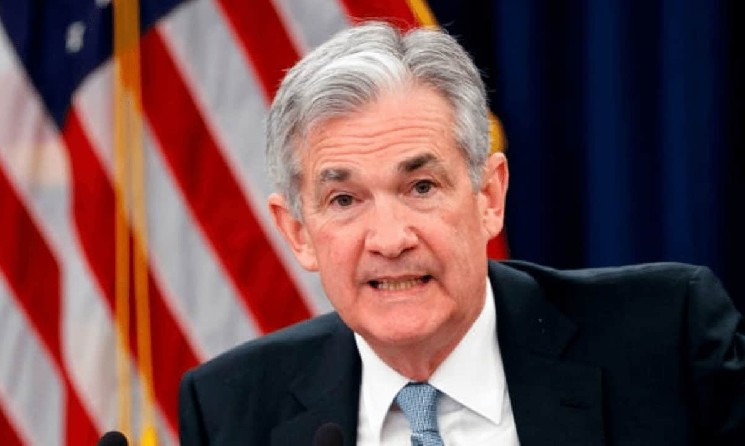
Now Cowen sees an eerily similar pattern developing around Federal Reserve Chairman Jerome Powell, particularly following what is expected to be his final policy meeting as chair, which took place on Wednesday. At this meeting, the Federal Reserve held its benchmark interest rate unchanged for the third consecutive time, maintaining rates in the 3.50%-3.75% range—a decision that saw an unusual four officials dissenting, highlighting significant disagreement within the Fed’s leadership about the appropriate policy direction. The stage is set for a transition, with Trump appointee Kevin Warsh already cleared by the Senate Banking Committee and positioned to succeed Powell. Just as with Gensler’s departure from the SEC, substantial portions of the financial market are treating Powell’s exit as an inherently bullish development for asset prices. The prevailing sentiment among many traders and investors is that Warsh, being a Trump appointee, will be more amenable to aggressive rate cuts—a policy stance that typically supports higher valuations for stocks, cryptocurrencies, and other risk assets.
However, Cowen is sounding a cautionary note that cuts against this optimistic consensus. His concern isn’t primarily about the specific policies that Warsh might implement, but rather about the institutional credibility of the Federal Reserve itself. In Cowen’s own words: “If the Fed just becomes another cabinet of the executive branch, it may lead to a lack of trust in the institution itself.” This statement gets to the heart of a crucial but often overlooked aspect of how modern financial markets function. The Federal Reserve’s power and effectiveness don’t rest solely on its ability to adjust interest rates or implement quantitative easing—they rest fundamentally on the market’s belief that the Fed is making decisions based on economic data and long-term financial stability rather than short-term political considerations. Cowen’s analysis suggests that markets actually function better with a Federal Reserve that maintains its independence, even if that independence sometimes means disappointing traders who want more accommodative monetary policy. The alternative—a Fed that is perceived as compliant with executive branch priorities—might deliver the rate cuts that traders desire in the immediate term, but could ultimately undermine the very institutional credibility that makes those policy tools effective.
The Reality Check: When Rate Cut Dreams Meet Inflationary Headwinds
Turkish crypto commentator Cihan0x.ETH has extended Cowen’s analytical framework even further, pointing out a reality that many market participants seem to be overlooking in their celebration of Powell’s pending departure: rate cuts are no longer expected in the near-term horizon that many had hoped for. The timeline for anticipated rate reductions has shifted dramatically, moving from expectations of cuts beginning in 2026 to a more distant 2027 timeframe. This delay isn’t driven by Federal Reserve stubbornness or political considerations—it’s driven by fundamental economic forces, particularly inflation on the energy side of the economy. The ongoing conflict involving Iran has kept global energy prices elevated well above levels that would allow the Fed comfortable room to cut rates without risking a resurgence of broader inflation. These elevated energy costs are flowing through to US inflation data, creating exactly the kind of economic environment that ties the Fed’s hands regardless of who occupies the chairman’s seat.
The Federal Reserve’s own policy statement from Wednesday’s meeting explicitly acknowledged this constraint, citing “the recent increase in global energy prices” as a contributing factor to their cautious stance on monetary policy. This represents a type of inflation that the Federal Reserve has limited ability to combat through conventional monetary policy—it’s not demand-driven inflation that can be cooled by raising interest rates, but rather supply-side inflation driven by geopolitical disruptions to energy markets. In this environment, the identity of the Fed chair matters far less than many market participants seem to believe. Kevin Warsh might personally favor more aggressive rate cuts than Powell, but if energy-driven inflation continues to run above the Fed’s 2% target, the practical room for rate reductions simply doesn’t exist without risking the Fed’s credibility on its inflation-fighting mandate.
The Structural Complications: A Two-Pope Problem at the Federal Reserve
Beyond the policy questions, Wednesday’s meeting also revealed a structural complication that could create unusual dynamics at the Federal Reserve in the coming months and years. Jerome Powell announced that while he plans to step down from the chairmanship when his term expires next month, he intends to remain on the Federal Reserve’s Board of Governors rather than leaving the institution entirely. This decision is significant for several reasons. First, it denies the Trump administration an opportunity to fill an additional board seat with an appointee who might be more aligned with the administration’s policy preferences. The Federal Reserve Board consists of seven members, and while the president nominates both the chair and the board members (all subject to Senate confirmation), sitting board members serve 14-year terms specifically designed to insulate them from short-term political pressures.
Powell cited what he described as “unprecedented” legal pressure from the Trump administration as a factor in his decision to remain on the board rather than departing completely. This characterization itself is remarkable, as it represents an unusually direct acknowledgment of tensions between the Federal Reserve and the executive branch—tensions that historically have been handled with more diplomatic language. The practical result of Powell’s decision is what some market analysts are calling a “two Popes” dynamic, borrowing terminology from the rare historical instances when the Catholic Church has had both a reigning pope and a living former pope. In the Federal Reserve context, this means that the same seven-member board that will be voting on monetary policy decisions will include both Kevin Warsh as the sitting chair and Jerome Powell as a regular board member—a former chair who stepped down not because his board term expired, but due to the end of his chairmanship term.
The Broader Lesson: Why Institutional Credibility Matters More Than Personnel Changes
The overarching theme connecting Cowen’s analysis of both the Gensler departure and the Powell transition is a lesson about institutional credibility that extends far beyond any individual officeholder or specific policy decision. Financial markets—whether in cryptocurrency or traditional assets—don’t operate in a vacuum of pure supply and demand. They function within frameworks of rules, expectations, and most importantly, trust. When Gary Gensler led the SEC, his regulatory approach was often criticized as heavy-handed, hostile to innovation, and excessively focused on enforcement actions. Yet that very enforcement-oriented approach, which many in the crypto industry found frustrating, served an important function: it created consequences for fraudulent behavior and helped maintain a baseline level of market integrity. When that enforcement presence diminished, the result wasn’t the flourishing of legitimate innovation that many had hoped for, but rather an explosion of low-quality projects, scams, and rug pulls that ultimately damaged the entire ecosystem’s credibility and diverted capital away from projects with genuine potential.
The parallel situation with the Federal Reserve carries even higher stakes because of the institution’s central role in the global financial system. The Fed’s power to influence economic outcomes doesn’t flow primarily from its technical tools—interest rate adjustments, asset purchases, reserve requirements—but from the market’s belief that the Fed is committed to long-term economic stability and will make decisions based on economic data rather than political expediency. If market participants begin to perceive the Federal Reserve as simply another executive branch department implementing the president’s preferred policies, the institution’s effectiveness becomes fundamentally compromised. In this light, Cowen’s warning about celebrating Powell’s departure carries particular weight. The short-term satisfaction of seeing a Fed chair replaced by someone perceived as more dovish on interest rates could create long-term damage to the Fed’s institutional credibility—damage that would ultimately make it harder for the Fed to effectively manage economic crises or maintain price stability regardless of what policy positions it takes. As crypto markets continue to struggle with the aftermath of regulatory absence and traditional markets navigate the transition in Fed leadership, the lesson seems clear: sometimes the institutions and officeholders we love to criticize are performing more valuable functions than we realize until they’re gone.