
Federal Funding Cut for Fentanyl Test Strips Threatens Overdose Prevention Efforts
A Sudden Policy Reversal with Life-or-Death Consequences
In a dramatic shift that has left public health advocates reeling, the federal government has announced it will no longer allow its funding to be used for purchasing drug testing strips that detect deadly contaminants like fentanyl. The Substance Abuse and Mental Health Services Administration (SAMHSA) delivered this news in a letter that has sent shockwaves through communities working on the front lines of America’s overdose crisis. What makes this reversal particularly jarring is that just months earlier, in July, the Trump administration had explicitly supported the use of these same test strips as valuable tools in preventing deaths. The about-face has created confusion and panic among harm reduction organizations that have come to depend on federal support to provide these inexpensive but potentially lifesaving resources to people who use drugs.
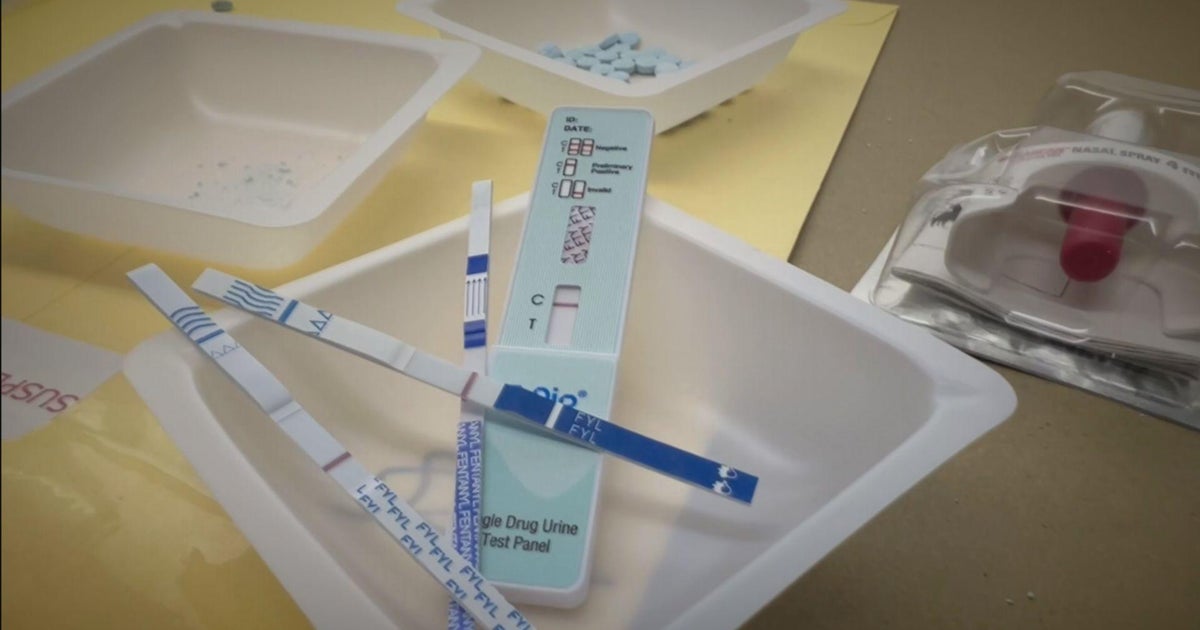
These test strips, which cost approximately one dollar each, work as simple detection tools that can identify the presence of dangerous adulterants in various substances—whether powders, pills, or party drugs. Maritza Perez Medina, who serves as director of federal policy at the Drug Policy Alliance, describes them as a “critical, life-saving tool” that empowers people with information about what they’re actually consuming. The knowledge provided by these strips allows individuals to make informed decisions that could mean the difference between life and death. The sudden policy change has left advocates like Medina scrambling to understand the reasoning and find alternative solutions. “People are just astonished,” she explained, capturing the sentiment of a community blindsided by the announcement. “There has been a lot of confusion about where this came from.” The timing is particularly concerning given that the United States had been making significant progress in reducing overdose deaths, progress that many attribute directly to the kinds of harm reduction tools now being defunded.
The Legal and Political Context Behind the Decision
The controversial letter from SAMHSA references an executive order signed by President Trump in July 2025, which declares that agency funding cannot support programs that “only facilitate illegal drug use.” A spokesperson from Health and Human Services defended the decision, stating that the letter clarifies guidance for SAMHSA grantees and represents the agency’s deliberate shift away from harm reduction toward approaches deemed more compatible with federal law. However, this justification has struck many as contradictory, particularly given that fentanyl test strips are not classified as drug paraphernalia in 45 states plus Washington, D.C. In fact, some states have gone so far as to actively promote their use—Nevada and California, for instance, provide online information about where residents can obtain these testing strips.
The policy reversal also appears to contradict previous congressional action and the administration’s own recent position. SAMHSA began supporting harm reduction efforts, including test strip distribution, back in 2021. As recently as July 2025, the agency issued a letter explicitly listing test strips as tools that could be purchased with SAMHSA funding. Furthermore, the SUPPORT Act, originally passed by Congress in 2018 with bipartisan support and reauthorized in 2025, protected the use of such testing materials. This legislative backing made the sudden policy change all the more unexpected. Medina emphasized that knowing what substances actually contain allows people to make informed choices and potentially avoid fatal overdoses—a principle that seems at odds with labeling such information-gathering as “facilitating” drug use. “It’s really a low barrier way to ensure that people know what they’re putting in their bodies,” she explained, noting that the overdose death decline from pandemic-era peaks resulted from intentional government investment in giving communities the tools they needed.
Real-World Impact on Organizations and Communities
The practical consequences of this funding cut are already becoming painfully clear for organizations across the country. Shreeta Waldon, executive director of the Kentucky Harm Reduction Coalition, received notice on Friday that her organization would be losing a $400,000 grant. The scale of their work illustrates just how many people will be affected—in just the first quarter of fiscal year 2026, the organization distributed 48,465 fentanyl test strips. With that funding suddenly eliminated, Waldon estimates they have approximately one month’s worth of test strips remaining before facing what she describes as a “full-blown crisis.” Her frustration with the political nature of the decision is evident: “It doesn’t make sense that one day something is an evidence-based protocol, and you decide, because of political climate, it is no longer evidence-based. If they follow the science and the data, we would never move in this direction.”
Smaller organizations are feeling the pinch as well, though the dollar amounts may seem less dramatic. A’zhane Powell, founder and CEO of Fyrebird Recovery in South Carolina, has lost a $4,000 grant. While that might sound modest compared to larger cuts, Powell explains that her organization already operates on razor-thin margins, and the loss of even this amount creates significant strain when trying to purchase bulk supplies of test strips. These organizations now find themselves in an impossible position—demand for their services hasn’t decreased, but their resources to meet that demand have suddenly evaporated. The timing couldn’t be worse, as communities nationwide continue grappling with contaminated drug supplies that can turn fatal in an instant. For people who use drugs, these test strips represent a crucial safety measure, a way to reduce risk in situations where risk is inherently present. Without access to them, users are left literally in the dark about what they’re consuming.
The Scramble for Alternative Funding Sources
With federal support pulled, organizations are desperately searching for ways to continue their work. Fyrebird Recovery has turned to asking for donations, but this approach offers no guarantee of sustainable funding. Waldon expressed hope that states might use money they received from opioid crisis settlements to support harm reduction organizations—a potential lifeline that could help fill the gap left by withdrawn federal funds. However, Christine Minhee, who operates a database tracking these settlement funds, cautions that such efforts face significant complications. State policies vary widely on how settlement money can be used, and there’s ongoing debate about whether these funds should be directed toward filling budget gaps or reserved for new initiatives.
Lauren Kestner, a division director at the Center for Prevention Services in North Carolina, worries that the policy changes will limit her organization’s access to pass-through block grant funding. This funding mechanism channels federal money through state governments to nonprofits, local agencies, and other subrecipients that provide everything from medication for opioid use disorder to HIV treatment. If federal funds become restricted from supporting comprehensive harm reduction approaches, entire networks of care could be compromised. The HHS spokesperson attempted to reassure advocates by stating that SAMHSA still prioritizes lifesaving interventions, including naloxone, the overdose-reversing medication. But Powell expressed skepticism about trusting those priorities after experiencing such a sudden reversal on test strips: “How far will it go until we’re back to square one again?” Her question captures a broader anxiety within the harm reduction community—if evidence-based tools can be arbitrarily defunded based on shifting political winds, what other supports might disappear next?
Understanding America’s Progress Against Overdose Deaths
To fully grasp what’s at stake with this policy change, it’s essential to understand the remarkable progress the United States has made in recent years in reducing overdose deaths. The numbers tell a dramatic story: there were 111,000 overdose deaths in 2023 according to Centers for Disease Control and Prevention data. For the 12-month period ending in November 2025, however, the reported number of drug overdose deaths had plummeted to approximately 68,000—a decline of roughly 40 percent. This represents thousands of lives saved, thousands of families spared the devastating loss of a loved one, thousands of communities with members still contributing and thriving rather than grieving.
This decline didn’t happen by accident or luck. Public health experts attribute the reduction to several interconnected factors working together: the increased availability and public awareness of naloxone, which can reverse opioid overdoses if administered quickly; changes in the drug supply that have made it somewhat less uniformly potent than during peak crisis years; and harm reduction efforts that include the very test strips now being defunded. Each of these elements plays a role in a comprehensive approach to saving lives. Medina warned that funding cuts could roll back this hard-won progress, potentially returning communities to the crisis conditions of just a few years ago. “Our fear is that if we are gutting all the things that work, that when people seek help, they won’t find any doors open,” she explained. The concern isn’t merely theoretical—when people lose access to tools that help them use substances more safely, the predictable result is more deaths, more emergency room visits, more strain on healthcare systems, and more grief-stricken families.
The Path Forward in Ongoing Crisis Conditions
Despite the encouraging decline in overdose deaths, Medina emphasizes a crucial point that sometimes gets lost in discussions about progress: “We’re still in the midst of the overdose crisis.” While 68,000 annual deaths represents a significant improvement from 111,000, it still means that roughly 186 people are dying from drug overdoses every single day in America. That’s the equivalent of a commercial airliner crashing daily with no survivors—a scale of loss that would dominate headlines if it occurred in any other context. The crisis hasn’t ended; it has merely become somewhat less catastrophic than its worst peak. This ongoing emergency makes the timing of the funding cuts particularly troubling to advocates who see them as abandoning effective strategies before the job is finished.
The combination of federal funding cuts and the removal of practical harm reduction tools creates what Medina describes as a perfect storm “that could very well lead to more drug use harms, including overdose.” The concern is that people who use drugs will continue to do so—prohibition has never successfully eliminated drug use—but they’ll do so with less information about what they’re consuming and fewer resources available when things go wrong. For communities already stretched thin trying to address substance use issues, mental health needs, and related public health challenges, this represents a significant setback. The test strips were never a complete solution to the overdose crisis, but they were an accessible, affordable, evidence-based tool that demonstrably saved lives. Their defunding sends a message that seems to prioritize ideology over outcomes, politics over people, and symbolic gestures over the practical work of keeping human beings alive. As organizations scramble to find alternative funding and communities brace for potential increases in overdose deaths, the question remains whether policymakers will reconsider this decision before its full consequences become tragically clear in the mortality statistics of months and years to come.