
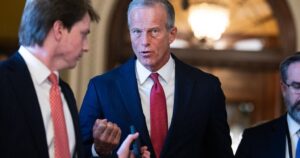



When Politicians Bet on Themselves: The Kalshi Prediction Market Scandal
A Wake-Up Call for Political Ethics and Market Integrity
In what can only be described as a watershed moment for both political ethics and the rapidly evolving world of financial technology, the prediction market platform Kalshi has taken the extraordinary step of suspending and fining a sitting United States congressman and two congressional candidates. Their offense? Placing bets on their own election outcomes. This bombshell revelation, which first came to light through reporting by Cointelegraph, has sent shockwaves through both Washington’s political corridors and the emerging prediction market industry. The enforcement action represents far more than just a platform policing its users—it’s a pivotal test case that could define how these new financial instruments are regulated and how politicians interact with them in the future.
At its core, the issue exposes a troubling intersection between political power and financial opportunity. When Bobby DeNult, Kalshi’s Head of Enforcement, announced the suspensions, he made clear that the company maintains a zero-tolerance policy toward anyone who can directly influence the outcomes they’re wagering on. This isn’t about the amount of money involved; it’s about the fundamental principle of market integrity. Think about it from a common-sense perspective: these candidates weren’t just predicting election outcomes like ordinary citizens—they were the very people making critical decisions about campaign strategy, fundraising, advertising spending, and even whether to stay in the race at all. Every choice they made could shift the odds in their favor or against themselves, creating a situation that’s fundamentally incompatible with fair market operation.
This situation raises uncomfortable questions that extend beyond just this one incident. How many other politicians might be engaging in similar behavior on other platforms? What does it say about a lawmaker’s judgment when they’re willing to gamble on their own political future? And perhaps most importantly, what safeguards need to be in place to prevent this type of conflict of interest from becoming normalized? The answers to these questions will likely shape not just Kalshi’s future operations, but the entire landscape of political prediction markets as they continue to grow in popularity and influence.
Understanding Prediction Markets and Their Growing Influence
For those unfamiliar with prediction markets, these platforms operate on a fascinating principle that harnesses the collective wisdom of crowds. Essentially, they function as financial marketplaces where people can buy and sell contracts based on whether specific future events will occur. If you believe a particular candidate will win an election, you might buy “Yes” shares in that outcome. If the candidate wins, your shares pay out; if they lose, you lose your investment. The market price of these shares naturally adjusts based on supply and demand, creating a real-time probability estimate that often proves remarkably accurate—sometimes even more reliable than traditional polling methods.
Kalshi isn’t some shadowy offshore gambling site operating in legal gray areas. This is a legitimate, regulated platform that received a designated contract market license from the Commodity Futures Trading Commission (CFTC), making it legal for U.S. residents to participate. This regulatory approval was groundbreaking when it was granted, as it represented official government recognition of prediction markets as legitimate financial instruments rather than mere gambling operations. The platform allows trading on everything from whether the Federal Reserve will raise interest rates to whether it will snow in major cities on Christmas Day, and increasingly, on political outcomes like congressional and presidential elections.
What makes prediction markets valuable is their ability to aggregate dispersed information. Thousands of participants, each bringing their own knowledge, insights, and research, collectively price contracts in ways that synthesize all that information into a single probability. When an oil industry expert trades on energy policy outcomes, a political consultant bets on election results, and an economist weighs in on Federal Reserve decisions, the market theoretically captures expertise from diverse sources. But this entire system depends on one crucial assumption: that no single participant has the power to unilaterally determine the outcome or possesses secret information that gives them an unfair advantage. When a candidate bets on their own race, that fundamental assumption collapses entirely. They’re not contributing dispersed public knowledge—they’re exploiting their unique position of control.
The growing influence of these markets extends beyond just traders making or losing money. Media outlets increasingly reference prediction market odds when covering elections and policy debates. Businesses use them for strategic planning. Researchers study them to understand public sentiment. This means that when markets get distorted by insider participation, the consequences ripple outward, potentially misleading everyone who relies on these probability estimates for decision-making. That’s why platforms like Kalshi must maintain strict integrity standards—their usefulness to society depends entirely on their accuracy and fairness.
The Enforcement Action and What It Reveals
When Kalshi’s enforcement team discovered that these political figures had been betting on their own races, they faced a moment of truth. Would they quietly handle it behind closed doors, or would they make a public example that demonstrated their commitment to market integrity? They chose the latter, and that choice speaks volumes about both the platform’s values and the precarious position prediction markets occupy in the current regulatory environment. By publicly announcing the suspensions and fines, Kalshi sent an unmistakable message: market manipulation will not be tolerated, regardless of who the violator is or how much political influence they wield.
Bobby DeNult’s explanation of the enforcement rationale was remarkably clear and uncompromising. He emphasized that candidates possess numerous ways to influence election outcomes that ordinary market participants simply don’t have. A candidate can choose to drop out of a race, fundamentally changing the competitive landscape. They can make strategic decisions about how aggressively to campaign in the final weeks. They can time major announcements or endorsements for maximum impact. They can even engage in self-sabotage if they had perversely bet against themselves. Each of these actions represents information asymmetry and potential manipulation that corrupts the market’s integrity.
What’s particularly noteworthy is that Kalshi didn’t wait for government regulators to force their hand. This was proactive self-regulation, the kind that industry advocates often point to when arguing against heavy-handed government oversight. The prediction market industry stands at a crossroads, with some regulators expressing deep skepticism about whether these platforms can responsibly handle politically sensitive contracts. By demonstrating robust internal enforcement, Kalshi is essentially making the case that industry self-regulation can work—that platforms can be trusted to police themselves effectively without requiring burdensome new laws and regulations.
However, this incident also reveals the enormous challenges these platforms face. Unlike traditional stock markets, which have had decades to develop sophisticated surveillance systems and clear legal frameworks around insider trading, prediction markets are still in their infancy. They’re navigating ethical and legal territory that hasn’t been fully mapped. When Kalshi wrote rules prohibiting participants from betting on outcomes they could influence, they were essentially creating from scratch the kind of integrity framework that took traditional financial markets generations to develop. The fact that violations occurred despite these rules highlights that enforcement is an ongoing challenge, not a one-time achievement.
Political and Legal Ramifications for Those Involved
For the sitting congressman caught in this scandal, the consequences extend far beyond losing access to one prediction market platform. The political fallout could be substantial and long-lasting. In an era where voters are increasingly cynical about politicians’ motivations and ethical standards, being caught betting on your own election looks terrible. It reinforces the stereotype of politicians as self-serving individuals more interested in personal profit than public service. Opponents in future primary or general elections will undoubtedly use this incident in attack advertisements, questioning the congressman’s judgment, integrity, and fitness for office.
Beyond the immediate political damage, there’s also the possibility of formal ethics investigations. The House of Representatives maintains an Ethics Committee specifically tasked with reviewing alleged misconduct by members. While it’s unclear whether betting on one’s own election violates specific House rules—this situation is so novel that explicit prohibitions may not exist—the Committee could certainly investigate whether the behavior constitutes conduct unbecoming of a member of Congress or violates broader ethical principles. Even if no formal sanctions result, the investigation process itself would be embarrassing and distracting, potentially hampering the congressman’s effectiveness and fundraising abilities.
The legal implications are murkier but potentially serious. While there’s no specific federal statute called “political insider trading,” several broader laws could potentially apply. The CFTC, which regulates prediction markets like Kalshi, prohibits manipulation and fraud in commodity markets. If prosecutors could demonstrate that the congressman’s trading was part of a deliberate scheme to profit from non-public information or manipulate market prices, criminal charges could theoretically be filed. Additionally, federal wire fraud statutes have been broadly interpreted in the past and might apply if electronic communications were used in furtherance of a fraudulent scheme. However, legal experts note that actually bringing charges would face significant hurdles, including proving criminal intent and navigating the unclear regulatory status of political event contracts.
For the two congressional candidates who were also suspended, the ramifications might be different in degree but similar in kind. Campaign opponents will certainly use this information to paint them as ethically compromised. Local media will likely cover the story extensively, potentially dominating news cycles during crucial periods of their campaigns. If these candidates were already facing uphill battles, this scandal could prove fatal to their electoral chances. Even if they ultimately win their races, they’ll enter office under a cloud of controversy that could limit their effectiveness and influence.
Broader Implications for Democracy and Markets
This scandal arrives at a moment when trust in both political institutions and financial markets remains fragile. The 2008 financial crisis shattered many Americans’ confidence in Wall Street’s integrity. Meanwhile, political polarization and high-profile corruption cases have eroded faith in elected officials. The revelation that politicians were betting on their own elections—treating democracy itself as just another financial opportunity—risks compounding both forms of cynicism simultaneously. It’s the kind of story that confirms people’s worst suspicions about how power and money intersect in modern America.
Yet there’s also a more optimistic way to interpret these events. The fact that Kalshi discovered this behavior, publicly disclosed it, and imposed meaningful penalties demonstrates that accountability mechanisms can function effectively. Unlike political scandals that only come to light through whistleblowers or investigative journalism years after the fact, this was caught relatively quickly by the platform’s own monitoring systems. In that sense, it’s evidence that the prediction market industry is taking compliance seriously and has the technical capability to detect rule violations. If the industry can maintain this vigilance as it scales up, it might actually prove more transparent and accountable than many other sectors of the financial industry.
The incident also highlights important questions about how prediction markets should be regulated going forward. Currently, these platforms operate under a patchwork of rules that leaves significant ambiguities. Should politicians be categorically banned from trading on any political markets, or only on races and issues they’re directly involved with? Should there be disclosure requirements, similar to how members of Congress must report stock trades? Should prediction market contracts be considered fundamentally different from other financial instruments, requiring specialized regulation? These aren’t easy questions, but this scandal makes clear that they need answers.
From a democratic theory perspective, there’s something deeply troubling about elected officials treating their own elections as profit opportunities. Democratic elections are supposed to be exercises in collective self-governance, where citizens choose representatives to serve the public interest. When politicians approach their campaigns as personal financial instruments to be traded for profit, it fundamentally misunderstands—or deliberately ignores—the civic purpose of elections. This isn’t just a technical violation of platform rules; it’s a category error that confuses private enrichment with public service. The fact that this confusion can now be operationalized through prediction markets represents a genuinely new ethical challenge that democratic societies will need to grapple with.
Looking Forward: Lessons and Lasting Changes
The Kalshi prediction market scandal will likely be studied for years as a case study in both financial regulation and political ethics. Several important lessons emerge from this incident. First, as financial innovation continues at a rapid pace, creating new types of markets and trading instruments, the potential for novel forms of misconduct increases proportionally. Regulatory frameworks and ethical guidelines inevitably lag behind technological capabilities, creating windows of opportunity for those willing to exploit ambiguities. Second, industry self-regulation can be effective but requires genuine commitment and robust enforcement mechanisms—not just policies that exist on paper but aren’t actually enforced. Third, the intersection of politics and finance requires especially careful oversight because violations undermine both market integrity and democratic legitimacy simultaneously.
For prediction market platforms, this incident should serve as a wake-up call about the importance of “know your customer” protocols and ongoing transaction monitoring. Kalshi presumably has systems in place to verify user identities and watch for suspicious trading patterns, but this case suggests those systems may need enhancement. Should platforms require users to disclose if they’re political candidates or officeholders? Should certain individuals be automatically prohibited from trading on specific contracts? Should there be additional verification steps for high-stakes political markets? These operational questions will likely drive industry discussions in the coming months.
For politicians, the message should be equally clear: the rules that govern financial markets apply to you too, and the public expects even higher ethical standards from elected officials. The increasing digitization of financial markets means that activities once difficult to track are now highly visible and easily auditable. Past assumptions about what behavior could be hidden or dismissed as minor indiscretions no longer hold in an era of comprehensive data logging and public transparency. Additionally, as prediction markets grow in popularity and cultural prominence, more voters will be familiar with how they work and why candidate participation represents a conflict of interest.
Moving forward, we’re likely to see several developments in response to this scandal. Regulatory agencies, particularly the CFTC, will probably issue clearer guidance about permissible and prohibited behavior on prediction market platforms. Congress might hold hearings examining whether new legislation is needed to specifically address political insider trading in these novel markets. Other prediction market platforms will almost certainly review and likely strengthen their own policies regarding candidate participation. Ethics offices in Congress and state legislatures may issue advisory opinions clarifying that betting on one’s own election is inappropriate. And legal scholars will debate whether existing laws adequately address this conduct or whether new statutes are needed.
Ultimately, this scandal illuminates fundamental tensions in modern American society: between innovation and regulation, between financial opportunity and ethical restraint, between viewing politics as civic duty versus treating it as another market to be exploited for personal gain. The resolution of these tensions will shape not just the future of prediction markets, but broader questions about how we want democracy and capitalism to intersect in the 21st century. As these platforms continue growing in influence and sophistication, maintaining integrity will require constant vigilance from operators, regulators, and the voting public alike. The Kalshi enforcement action represents an important affirmation that such integrity is possible—but also a reminder of how easily it can be compromised when personal financial interest collides with public responsibility.