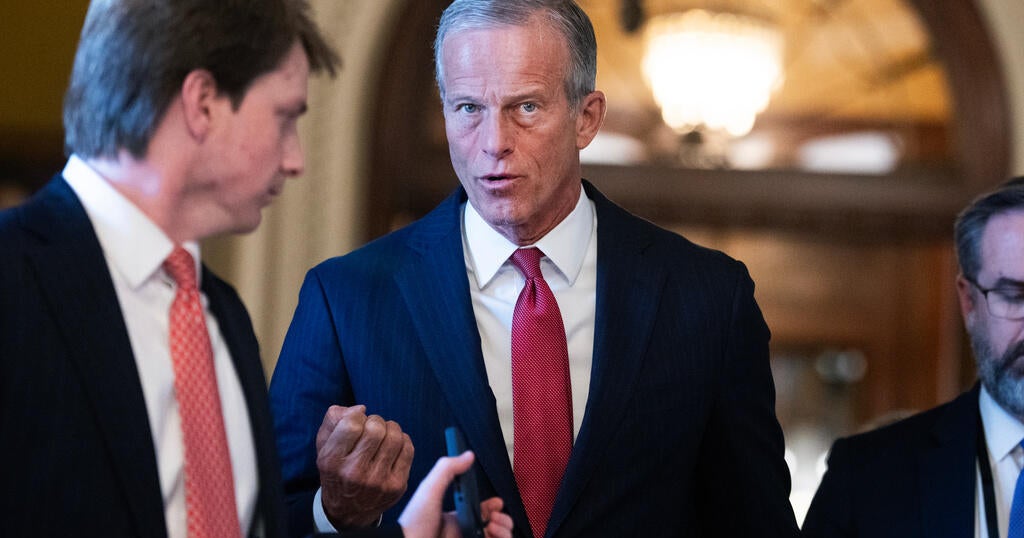

Senate Republicans Push Forward with Border Agency Funding Plan Through Marathon Voting Session
A Late-Night Legislative Battle Begins
The U.S. Senate plunged into what everyone expected would be an exhausting, all-night voting marathon on Wednesday evening, as Republican lawmakers moved forward with their controversial plan to secure funding for key immigration enforcement agencies. As the clock ticked past midnight into Thursday morning, senators continued casting votes in what’s known as a “vote-a-rama” – a grueling legislative procedure that allows unlimited amendments and forces lawmakers to vote repeatedly on measure after measure. This dramatic scene unfolded as Republicans utilized a special budgetary process to bypass Democratic opposition and fund Immigration and Customs Enforcement (ICE) and portions of Customs and Border Protection (CBP) for more than three years, effectively ensuring these agencies remain operational throughout the remainder of President Trump’s administration.
The Republican strategy centers on a budget resolution that would authorize two key committees – the Senate Judiciary and Homeland Security committees – to draft legislation increasing spending by up to $70 billion each. While the final price tag is expected to land around $70 billion total rather than the combined $140 billion maximum, Republican leaders say they’re setting these higher figures to give the committees flexibility as they work out the details. This approach uses what’s called budget reconciliation, a special legislative process that allows the Senate to pass bills with direct budgetary consequences using only a simple majority vote rather than the usual 60-vote threshold needed for most legislation. With Republicans holding a 53-seat majority in the Senate, this procedural maneuver effectively sidelines Democratic opposition and ensures the funding plan will move forward despite fierce pushback from across the aisle.
Democrats Promise to Make Republicans Answer for Their Priorities
Senate Minority Leader Chuck Schumer, speaking at a Wednesday news conference, made it clear that while Democrats can’t block the Republican funding plan outright, they plan to make the process as politically painful as possible for the GOP majority. “This will be a reconciliation of contrasts, and we are relishing that fight,” Schumer declared, promising that Democrats would introduce “lots of amendments” designed specifically to force Republican senators to cast votes that could be used against them in future campaigns. The New York Democrat framed the debate as a fundamental clash of priorities, contrasting what he characterized as Republican eagerness to “shell out billions of dollars to Donald Trump’s private army without any common-sense restraints or reforms” with Democratic efforts to “put money in people’s pockets by lowering their costs.”
Schumer’s strategy revolves around offering amendments focused on affordability issues and other kitchen-table concerns that resonate with everyday Americans. By forcing votes on these popular measures, Democrats hope to create a political record showing that Republicans prioritized funding for immigration enforcement over helping families struggling with high costs for groceries, housing, healthcare, and other necessities. “Republicans are about to learn the hard way that when they refuse to reduce costs, they lose,” Schumer warned, adding that “this will be a reconciliation of reckoning for Senate Republicans.” While these Democratic amendments are unlikely to pass given Republican control of the chamber, each vote creates a public record that can be highlighted in campaign ads and used to shape the narrative about which party is fighting for working families versus which party is focused on other priorities.
The Backstory: How a Department Shutdown Led to This Moment
The current standoff over Department of Homeland Security funding didn’t emerge from nowhere – it has roots in a tragic series of events that unfolded in Minneapolis earlier this year. In January, two deadly shootings involving federal agents shocked the nation and sparked intense scrutiny of DHS immigration enforcement practices. In response to public outcry and concerns about accountability, Democrats drew a line in the sand, pledging to block any funding for the department unless it included meaningful reforms to how ICE and CBP conduct their operations. This principled stand led to a political stalemate that resulted in the entire Department of Homeland Security shutting down on February 14.
For weeks, lawmakers from both parties engaged in tense negotiations, trying to find common ground that would address Democratic demands for reform while satisfying Republican insistence on maintaining robust immigration enforcement capabilities. Despite extensive back-and-forth discussions, the two sides ultimately couldn’t bridge their differences on what reforms should look like. Rather than continue the impasse indefinitely, they reached a partial compromise last month: they agreed to fund the bulk of DHS operations through the traditional appropriations process, but deliberately left out funding for ICE and parts of CBP – the very agencies at the center of the reform debate. This split-the-baby approach satisfied neither side completely but allowed most of the department to potentially reopen while the fight over immigration enforcement agencies continued.
The House Waits and the Department Remains in Limbo
The situation has now reached a peculiar bureaucratic standoff that leaves the Department of Homeland Security in an uncertain state. The Senate passed funding for most of DHS operations (everything except ICE and the disputed CBP portions) through the regular appropriations process, but the House of Representatives has yet to take up that bill and vote on it. House Republicans have made their position clear: they won’t move forward with funding the rest of DHS until they have assurances that ICE and CBP will also receive the money they need to operate. Essentially, they’re waiting for the Senate to complete this budget reconciliation process before they’ll act on anything. This leaves the entire department technically shut down, even though President Trump has taken the unusual step of directing that DHS employees continue to be paid on a temporary basis despite the lack of formal appropriations.
Senate Majority Leader John Thune expressed optimism on Wednesday that once the Senate completes its work on the immigration enforcement funding, the House will finally move forward with the broader DHS appropriations bill. He noted that agency officials have been sounding alarms that without formal funding authorization, they’ll run out of money to operate next month. “I think that message is being delivered and hopefully will be received, and we can get moving forward with making sure those agencies are funded,” Thune told reporters. The pressure is mounting as the clock ticks down, with career officials worried about the practical implications of prolonged funding uncertainty for national security operations, border security, cybersecurity efforts, disaster response capabilities, and the many other critical functions that fall under the DHS umbrella.
Last-Minute Drama and Warnings About the Future
Just as the vote-a-rama was set to begin Wednesday night, the process hit an unexpected snag when Senator John Kennedy of Louisiana exercised his prerogative as an individual senator to place a hold on the proceedings. Kennedy wanted to push for several changes to the bill, using his leverage to argue that Republicans were missing an opportunity to accomplish more with this legislation. He warned his colleagues that this would likely be the last chance for a reconciliation bill – Republicans are limited in how many times they can use this special budget process, and they’re already planning to use at least one more reconciliation bill for a major tax and spending package later this year. Kennedy stressed that the GOP should use this vehicle to include the SAVE Act, an election-related bill that Republicans have been pushing, along with several provisions aimed at helping Americans deal with rising costs of living.
“This is the last train leaving the station,” Kennedy declared dramatically on the Senate floor, “and I’d like to see us come up with one or two issues that will help the American people with the cost of living and other things that I know Republicans can agree to.” His concerns reflected a broader tension within the Republican caucus about whether they’re using their Senate majority effectively and whether they’re focusing too narrowly on immigration enforcement at the expense of other priorities that matter to voters. After making his point and presumably receiving some assurances or deciding he’d extracted maximum attention for his concerns, Kennedy ultimately released his hold and allowed the voting marathon to proceed. As senators settled in for what would be hours of back-to-back votes stretching through the night, the fundamental questions remained: How much should immigration enforcement cost? What reforms, if any, should accompany that funding? And which party will pay the political price for how they answer those questions when voters head to the polls in the next election?