
Catholic Voters in Bucks County Navigate Faith, Politics, and War in a Pivotal Midterm Year
A Catholic Stronghold at a Political Crossroads
In the rolling hills and bustling townships of Bucks County, Pennsylvania, Catholic churches dot the landscape like familiar landmarks—33 parishes serving a community where more than one-third of residents identify as Catholic. This isn’t just a statistical footnote; it’s a defining characteristic of a region that has become one of America’s most watched political battlegrounds. In 2024, these Catholic voters helped deliver a stunning victory for President Trump, marking the first time in over three decades that a Republican presidential candidate carried the county. Their support proved crucial in swinging the entire state red. But now, as the nation finds itself embroiled in a controversial war with Iran, these same voters are wrestling with a profound conflict between their political loyalties and their spiritual leadership. Pope Leo XIV’s sharp criticisms of the war, coupled with President Trump’s unprecedented attacks on the pontiff, have created a fault line that’s forcing Catholics in Bucks County to reconsider their political allegiances in ways that could reshape the upcoming midterm elections.
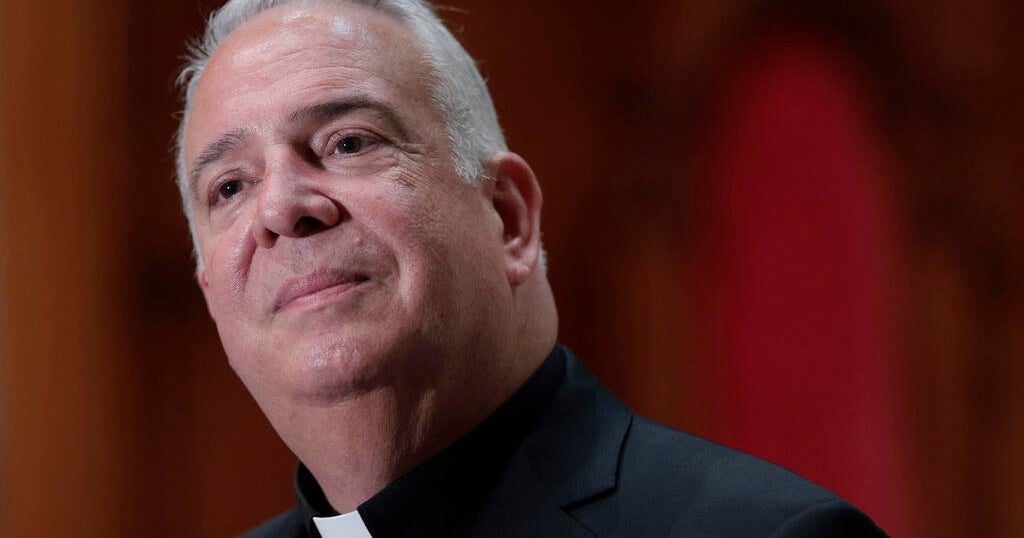
Even Philadelphia Archbishop Nelson Perez, who oversees the Catholic community in Bucks County, felt compelled to enter the fray. In a carefully worded but unmistakable statement, he defended the pope against the president’s attacks, declaring that the pontiff’s call for peace “powerfully reflects the truth of the gospel.” These aren’t just words echoing in administrative offices—they’re being heard from the grand Cathedral of St. Matthew the Apostle in Philadelphia all the way to the modest pews of St. Mark’s parish in Bristol borough. For voters who have long balanced their faith with their political convictions, this moment represents something different, something more personal. When the leader of your church speaks out on matters of war and peace, and the political leader you supported attacks him in response, the tension isn’t abstract—it’s felt in every Sunday service, every prayer, and ultimately, in every vote cast.
The Human Cost of Political Division
William Watkins embodies the inner conflict many Bucks County Catholics are experiencing. A Democrat from Bristol who has previously crossed party lines to vote for GOP Representative Brian Fitzpatrick, Watkins spoke candidly after attending Friday morning Mass about his evolving perspective. His words carry the weight of someone genuinely torn between practical politics and moral conviction: “I would do it as a protest,” he explained about his consideration to vote against Fitzpatrick in the fall if the war continues. “Not that I think he’s not a good candidate. I just think that the policy of the Republican Party right now is too one-sided.” This isn’t the voice of a partisan warrior or an ideological purist—it’s the voice of an everyday American trying to reconcile competing values. Watkins represents countless voters who don’t fit neatly into our polarized political categories, people who evaluate candidates on their merits rather than their party labels, but who also can’t ignore when fundamental moral questions arise.
The political landscape of Bucks County itself tells a fascinating and somewhat contradictory story. Since 2019, the county has comprised the majority of Pennsylvania’s First Congressional District, an area that perfectly encapsulates America’s political complexity. The southern part of the county skews more working-class, while the northern areas are more affluent, but what unites them is a fierce independence that defies easy categorization. Representative Fitzpatrick has built an enviable position here, winning reelection in 2024 by nearly 13 percentage points—a significant improvement from his narrower victory in 2016. He’s accomplished this through what many describe as a meticulously moderate voting history, carefully positioning himself as someone willing to break with party orthodoxy when conscience demands it. Yet beneath this surface stability, seismic shifts are occurring. When Fitzpatrick first won his seat, Republicans dominated local government, controlling all but one of the county’s 12 elected positions. Today, that dynamic has completely reversed, with Democrats now holding 11 of those 12 seats. Bob Harvie, vice chair of the Bucks County Board of Commissioners and the Democratic frontrunner for Fitzpatrick’s House seat, offered a blunt assessment: “People will come out and vote if Trump is on the ballot. But they won’t come out and vote if he’s not.”
When Faith Leaders Challenge Political Leaders
The confrontation between Pope Leo XIV and President Trump has escalated from diplomatic disagreement to personal attacks, creating unprecedented tension for American Catholics who support the president. The pope didn’t mince words about the U.S. war with Iran, calling Trump’s threats to destroy Iranian civilization “unacceptable.” For a religious leader who typically chooses diplomatic language carefully, these were fighting words. President Trump responded with characteristic combativeness, dismissing America’s first native-born pope as “weak on crime” and “very liberal,” adding that the pontiff isn’t “doing a very good job.” For many Catholics, hearing their spiritual leader attacked by their political leader has been jarring, forcing a reckoning that goes beyond typical policy disagreements.
Representative Fitzpatrick found himself walking a tightrope, needing to address his constituents’ concerns while maintaining his own integrity. His response was swift and unambiguous. He called the president’s words “disgraceful” and “plainly sacrilegious”—language that carries real political risk in a district Trump carried. In an interview, Fitzpatrick expanded on his thinking: “I am not a fan of any divisive rhetoric ever, particularly when it’s targeted at any religious leader. The pope is one of many religious leaders who’s trying to bring world peace and solve world hunger and see the humanity and dignity of every human being. That’s somebody we should hold in high esteem.” These words resonated with voters like Pat Balcer, a Catholic Republican from Bristol Township who has never supported Trump despite his party affiliation. After Mass, Balcer explained his continued support for Fitzpatrick: “Let the pope have his say. The pope is for world peace, and that’s what he was proclaiming. I like that [Fitzpatrick] crosses the line every once in a while and doesn’t stay with the rest of the lemmings.”
The War Question and Political Accountability
But for many voters, Fitzpatrick’s words defending the pope aren’t enough—they want to see action on the war itself. Polling consistently shows that most Americans oppose the Iran war, including a majority of Catholics, and that opposition is creating political vulnerabilities even for previously secure incumbents. Bob Harvie, Fitzpatrick’s likely Democratic challenger, has been hammering this point: “Brian Fitzpatrick can talk all he wants about how upset he is with Donald Trump, but I haven’t yet seen him cast a vote that matters when it comes to stopping Trump’s agenda.” This criticism highlights the gap between rhetoric and action that often defines political accountability debates.
The voting record tells a nuanced story. In March, Fitzpatrick voted against a resolution that would have forced the U.S. military to cease hostilities with Iran without congressional approval. He called the measure “recklessly over-broad,” aligning himself with most Republicans—only two GOP members voted for it. However, Fitzpatrick did introduce his own resolution in April designed to force compliance with the War Powers Act of 1973, though it hasn’t reached the floor for a vote. He’s also demonstrated independence on other significant issues, including voting against Trump’s One Big Beautiful Bill Act. When confronted with Harvie’s criticism, Fitzpatrick responded with evident frustration: “You condemn the statement, which I did. And you introduce a War Powers Resolution, which I did. So what in the world is [Harvie] talking about?”
The history of Middle Eastern wars looms large over Bucks County politics. Before Trump’s 2024 victory, the last Republican to carry the county was President George H.W. Bush in 1988, following his successful prosecution of Operation Desert Storm. Yet just four years later, after the shine wore off that military success, Democrat Bill Clinton won Pennsylvania. The pattern has repeated in congressional races too. Bucks County elected a Democrat to the U.S. House in 2006, unseating Mike Fitzpatrick—Brian’s late brother—largely because of his vote to fund military operations in Iraq and Afghanistan. Mike reclaimed the seat in 2010, but the message was clear: voters here have long memories about military adventures. William Watkins summed up the prevailing skepticism: “I don’t like [the GOP’s] policies connected to the war. I don’t think they should have gone in the way they did, and I don’t think they’re going to be able to finish it the way they think they will. It’s a lose-lose situation.”
Reconciling Faith with Political Loyalty
Not all Catholic Trump supporters are experiencing crisis over the pope’s statements, however. Some have found theological and practical ways to maintain both their faith and their political allegiances. Dennis McGee Jr., a market researcher and podcaster from Bristol Township, represents this perspective. He describes himself as a lifelong independent who joined the Republican Party specifically because of Trump in 2016, motivated by the former president’s positions on various issues. Now a local GOP committee member, McGee attends Mass seven days a week, yet he’s found a way to dismiss the pope’s criticism of the war without feeling he’s compromising his Catholic identity.
His reasoning relies on a doctrinal distinction that most Catholics rarely need to consider: “Popes have an infallible ability, meaning they speak, and we as Catholics have to be obedient to what they say. This is not an infallible statement that Pope Leo made. It was a general statement.” He’s technically correct—papal infallibility applies only to specific, formal pronouncements on matters of faith and doctrine, and even then only under carefully defined circumstances. The pope’s criticism of the Iran war, while morally forceful, doesn’t meet the technical requirements for infallibility. For McGee and others who think like him, this theological nuance provides permission to respectfully disagree with the pope on political matters while maintaining their identity as faithful Catholics. It’s a sophisticated argument that reveals how deeply some Trump supporters have thought about reconciling what might appear to outsiders as contradictory positions.
The Broader Implications for Pennsylvania and Beyond
Bucks County isn’t just interesting in isolation—it’s a microcosm of larger trends that could determine control of Congress and future presidential elections. The county has earned its reputation as a bellwether, and both major candidates for its House seat, Fitzpatrick and Harvie, grew up in its southern section, where economic diversity creates volatile political conditions. Their childhood parishes are only six miles apart, a proximity that symbolizes how closely divided and competitive this region has become.
The stakes extend far beyond one congressional district. Pennsylvania itself has become indispensable in presidential politics, and Catholic voters have historically determined the state’s direction. Nearly two decades ago, prominent Pennsylvania pollster G. Terry Madonna told The New York Times something that remains true today: “Whoever wins the Catholic vote will generally win our state and, most of the time, the nation.” Recent data supports the continued relevance of this observation. According to Pew Research Center’s 2023-24 Religious Landscape Study, nearly a quarter of Pennsylvania’s population still identifies as Catholic, with more than 60 percent identifying as Christian overall. The state’s political leadership reflects this religious composition—the last two Republican governors were Catholic, as are 10 of the state’s current 17 House members and four of the last seven U.S. senators.
Charlie Gerow, a Republican strategist based in Harrisburg, emphasized the crucial nature of this voting bloc: “For Republicans, the Catholic vote is pivotal. A lot of Catholic voters are still old-line Democrats, who will vote Republican, particularly in statewide and national elections. So capturing the Catholic vote is very, very important.” These Catholic Democrats who sometimes vote Republican represent the ultimate swing voters—rooted in communities and traditions, often economically moderate, socially conservative on some issues but concerned about social justice on others. They’re exactly the voters who might be moved by a conflict between their spiritual leader and their political preferences. As the midterm elections approach, with the Iran war continuing and the pope’s criticism unabated, the question isn’t whether Bucks County Catholics will matter—it’s which way they’ll ultimately lean when forced to choose between competing loyalties. Their decision could ripple across Pennsylvania and the nation, potentially reshaping the political landscape in ways that echo for years to come.