


Disney’s New Era: Josh D’Amaro and Bob Iger Chart the Company’s Future
A Historic Leadership Transition at the House of Mouse
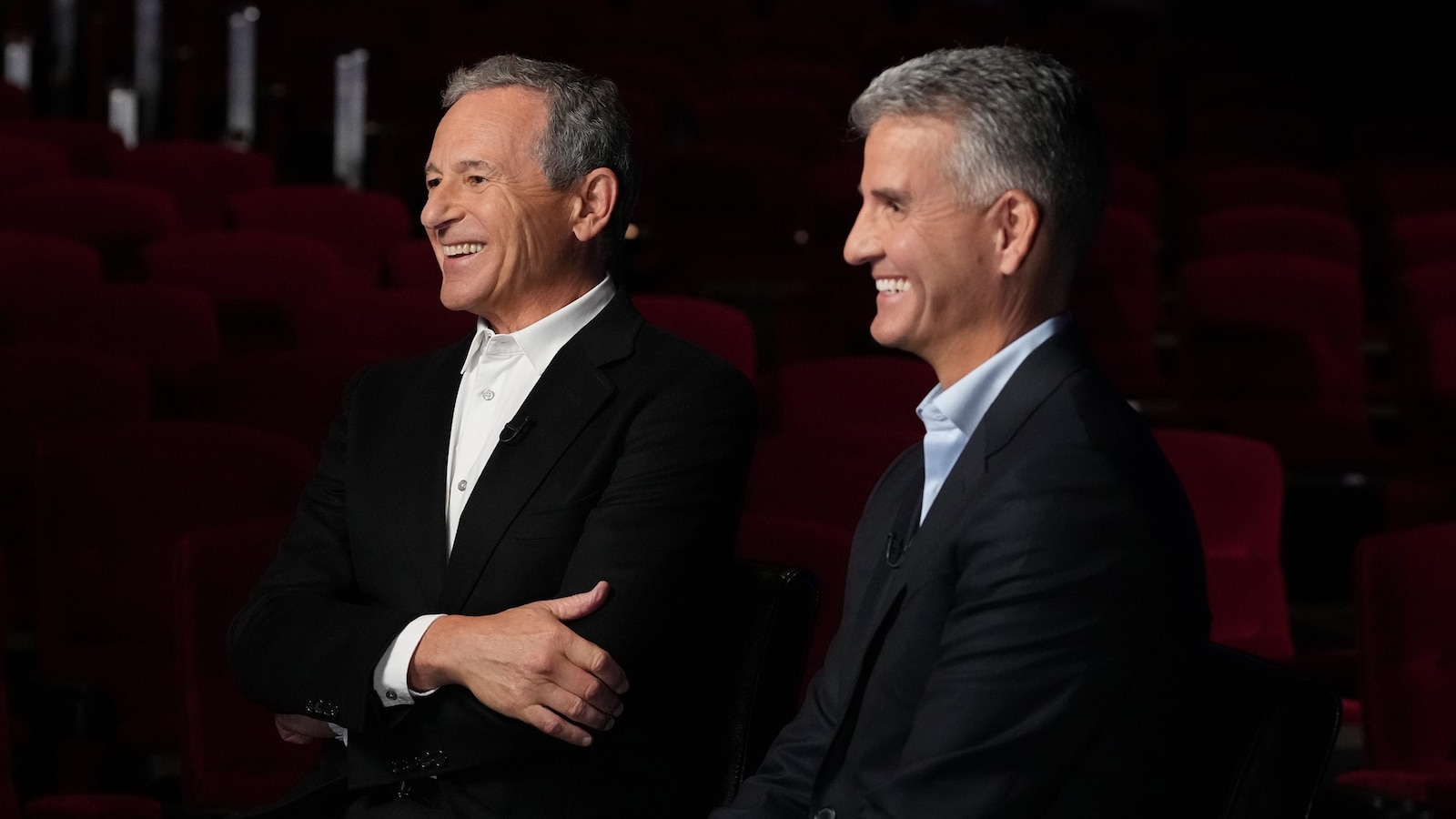
The Walt Disney Company is on the cusp of a momentous change as Josh D’Amaro prepares to step into the role of CEO next month, taking the reins from the legendary Bob Iger. In an exclusive conversation with “World News Tonight” anchor David Muir, both leaders opened up about what this transition means—not just for them personally, but for one of the world’s most beloved entertainment companies. The interview, which took place just hours after D’Amaro’s appointment was officially announced, offered a rare glimpse into the thinking of two executives tasked with steering a cultural icon into its next century of existence.
D’Amaro, who currently chairs Disney’s experiences unit—overseeing the company’s global network of theme parks, resorts, cruise ships, and consumer products—spoke candidly about the responsibility he’s about to shoulder. “Of course, I feel the weight on my shoulders. I think I should feel it,” he acknowledged. Yet despite the pressure, there was an unmistakable sense of gratitude in his words: “I just feel so fortunate to be in a position to be able to be that next steward for the brand into the next 100 years.” It’s a statement that captures both the magnitude of the role and the reverence D’Amaro has for the company he’s served since 1998. This isn’t just about running a business; it’s about preserving and evolving something that has touched the lives of hundreds of millions of people across generations.
Understanding Disney’s Unique Place in Global Culture
Bob Iger has spent decades at the helm of Disney, first as CEO from 2005 to 2020, then returning in 2022 after a brief retirement to help stabilize the company during turbulent times. Throughout his tenure, Iger has demonstrated a deep understanding of what makes Disney different from any other corporation. As he explained to Muir, “Disney really is a cultural institution that has touched hundreds of millions of people for now over 100 years. And having that appreciation, knowing the place Disney occupies in people’s lives, I think is essential to anyone occupying this position, in terms of their ability to move the company forward.”
This perspective reveals why selecting the right CEO for Disney is about more than finding someone with strong business acumen or creative vision. It requires someone who fundamentally understands the emotional connection millions of families have with Disney—from the first time a child meets Mickey Mouse to the traditions passed down through generations of visiting the theme parks, watching the animated classics, or sharing the latest Marvel adventure. Iger emphasized the delicate “careful balance between legacy and innovation” that any Disney leader must maintain. Push too hard toward innovation, and you risk alienating the core audience that cherishes Disney’s timeless values. Lean too heavily on legacy, and the company becomes a museum rather than a living, evolving entertainment powerhouse.
D’Amaro appears to understand this balance intimately, having had the unique advantage of working closely with Iger over the years. “I’ve had the great benefit and the great honor of working with Bob for all of those years, first from a distance and now much more up close and personal,” D’Amaro said. “And I’ve watched probably the best of the best balance those two things.” This apprenticeship of sorts has given D’Amaro a front-row seat to observe how Iger navigates the competing demands of honoring Walt Disney’s original vision while simultaneously pushing the company into new territories—from the acquisitions of Pixar, Marvel, Lucasfilm, and 21st Century Fox to the launch of Disney+ and the expansion into streaming entertainment.
D’Amaro’s Journey and Vision for Risk-Taking
At 54, Josh D’Amaro brings both youthful energy and deep institutional knowledge to the CEO position. His journey with Disney began in 1998, and his path through the company has been marked by hands-on experience with the aspects of Disney that most directly touch consumers’ lives. With a business administration degree from Georgetown University, D’Amaro started his Disney career at Disneyland Resort, eventually rising to become its president before taking on the same role at Walt Disney World Resort. This progression through Disney’s most iconic properties gave him an understanding of what makes the Disney experience magical for millions of visitors each year.
One of the qualities both Iger and D’Amaro highlighted as essential for Disney’s future is a willingness to take calculated risks. “Bob’s a big risk-taker. I’m a big risk-taker, and that’s been true my whole life,” D’Amaro said, pointing to Disney’s recently announced expansion into Abu Dhabi as an example of the bold moves the company continues to make. This willingness to venture into new markets and try unconventional approaches has been a hallmark of Iger’s leadership—his acquisitions were initially questioned by some but have proven transformative for the company. D’Amaro’s embrace of this philosophy suggests he won’t be a caretaker CEO content to simply maintain what exists but rather someone who will actively seek new opportunities to grow the Disney brand in meaningful ways.
Embracing the AI Revolution While Preserving Human Creativity
Perhaps no issue better illustrates the balance between innovation and legacy than Disney’s planned $1 billion investment in OpenAI and its broader embrace of artificial intelligence. For a company built on human creativity—from the hand-drawn animations of Walt Disney’s era to the imaginative storytelling of today’s Pixar films—AI could be seen as either a threat or an opportunity. According to Iger, D’Amaro firmly falls in the latter camp: “One of the reasons Josh was chosen for this position is, I’ve observed him over the years that we’ve worked together as someone that views technology as an opportunity and not a threat.”
D’Amaro’s own comments on AI reveal a nuanced understanding of how technology can enhance rather than replace human creativity. “The reason this company is so special is because of how creative we are and the human beings that are generating that creativity,” he emphasized. “This is real. AI, to Bob’s point, is here and it’s something that we’re embracing. And you’re seeing it supercharged these creatives in amazing ways.” This perspective suggests that under D’Amaro’s leadership, Disney will explore how AI can make animators more efficient, help writers develop more complex narratives, or create more immersive theme park experiences—all while keeping human creativity at the center of everything the company does. It’s a philosophy that honors Disney’s legacy as a creative powerhouse while acknowledging that the tools of creativity continue to evolve.
The AI investment also signals Disney’s recognition that the entertainment landscape is changing rapidly. Audiences increasingly expect personalized experiences, interactive content, and seamless integration across platforms. AI offers the potential to deliver on these expectations in ways that would have been impossible just a few years ago. D’Amaro’s willingness to embrace these technologies while maintaining Disney’s commitment to storytelling and human connection could prove to be one of his defining characteristics as CEO.
Building a Strong Leadership Team
Leadership transitions are never just about one person, and Disney’s announcement included another significant appointment: Dana Walden, currently head of Disney’s entertainment business, will become The Walt Disney Company’s president and chief creative officer. D’Amaro spoke warmly of Walden, describing her as “an incredibly powerful executive” with “years and years of experience in this space.” He added, “She’s exceptionally creative and she’s a great human being.” This appointment signals D’Amaro’s recognition that he’ll need a strong team around him to successfully guide Disney through the challenges and opportunities ahead.
Walden’s elevation to president and chief creative officer is particularly significant given the central role content creation plays in Disney’s overall strategy. With Disney+, Hulu, and ESPN+ now core to the company’s business model alongside traditional film and television, having strong creative leadership is more important than ever. Walden’s track record in developing hit shows and managing complex creative operations makes her well-suited to this expanded role. Together, D’Amaro and Walden represent a new generation of Disney leadership—one that respects the company’s history while being unafraid to chart new courses.
Iger’s Graceful Exit and Lasting Legacy
For Bob Iger, this transition represents the end of an era that has defined much of his adult life. After serving as CEO from 2005 to 2020, then as executive chairman until 2021, and returning as CEO in 2022, Iger has been the face of Disney for nearly two decades. His accomplishments are staggering: the successful acquisitions of Pixar, Marvel, Lucasfilm, and 21st Century Fox; the launch of Disney+; the expansion of Disney parks globally; and the navigation of numerous challenges from technological disruption to a global pandemic.
Speaking about stepping away from the role, Iger was philosophical and honest. “You can’t just turn the switch off one day on something that you’ve been so involved with,” he acknowledged, recognizing that Disney holds “such an important” place in his life. Yet there was also a sense of peace in his words: “But, I’m just looking forward to quieter moments and quieter days and a little bit more, I don’t know, room in my life.” After decades of operating at the highest levels of corporate leadership, dealing with constant decisions, public scrutiny, and the relentless pace of a global entertainment company, Iger seems ready for a different chapter—one with more time for reflection and personal pursuits.
Iger’s legacy will undoubtedly be his ability to grow Disney while maintaining its essential character. He understood that Disney is more than a company—it’s a repository of childhood memories, family traditions, and cultural touchstones. His leadership preserved these intangibles even as he dramatically expanded Disney’s reach and capabilities. As D’Amaro takes the reins, he inherits not just a company but this legacy of balancing growth with preservation, innovation with tradition, and business success with cultural responsibility. If the interview with Muir is any indication, D’Amaro is ready for the challenge, approaching it with a mixture of humility, confidence, and deep respect for what Disney means to millions around the world. The next chapter in Disney’s story is about to begin, and under D’Amaro’s leadership, it promises to honor the past while boldly embracing the future.