


Luigi Mangione Federal Trial Delayed: Understanding the Complex Legal Battle Ahead
Trial Date Pushed Back to Allow Fair Proceedings
In a significant development in one of the most high-profile criminal cases in recent memory, a federal judge in New York has decided to push back Luigi Mangione’s federal trial by approximately one month. U.S. District Judge Margaret Garnett announced on Wednesday that jury selection for the federal case will now begin on October 5, with the actual presentation of evidence starting on October 26. This decision comes as the legal system grapples with the unusual challenge of coordinating two separate prosecutions—one at the state level and one at the federal level—against the same defendant for the same alleged crime. The 27-year-old Mangione stands accused of fatally shooting UnitedHealthcare CEO Brian Thompson on a Manhattan street in December 2024, a shocking act that sent ripples through the business community and captured national attention. The adjustment in scheduling reflects the court’s concern about ensuring Mangione receives a fair trial despite the intense public interest and media coverage surrounding both prosecutions.
Balancing Two Prosecutions and the Challenge of Impartiality
Judge Garnett’s decision highlights the delicate balancing act the federal court must perform while Mangione simultaneously faces charges in New York state court. During the hearing, the judge acknowledged the reality that federal prosecutors and the court are, to some extent, “at the mercy of events in the state case,” which is scheduled to begin with jury selection on June 8. The judge expressed concern about the practicality of having potential federal jurors complete questionnaires while the state trial is ongoing and likely dominating news coverage. “There’s really no way around taking into account the events in the state case involving the same defendant,” Garnett explained, recognizing that proceedings at 100 Centre Street—the location of the state courthouse—would inevitably impact how the federal trial must be structured. While the judge stated she did not want to be “held hostage” by the state prosecution, she demonstrated a pragmatic understanding that the two cases cannot be completely separated in the public consciousness, and that the timing of one would significantly affect the ability to seat an impartial jury for the other.
The Defendant’s Demeanor and Defense Strategy
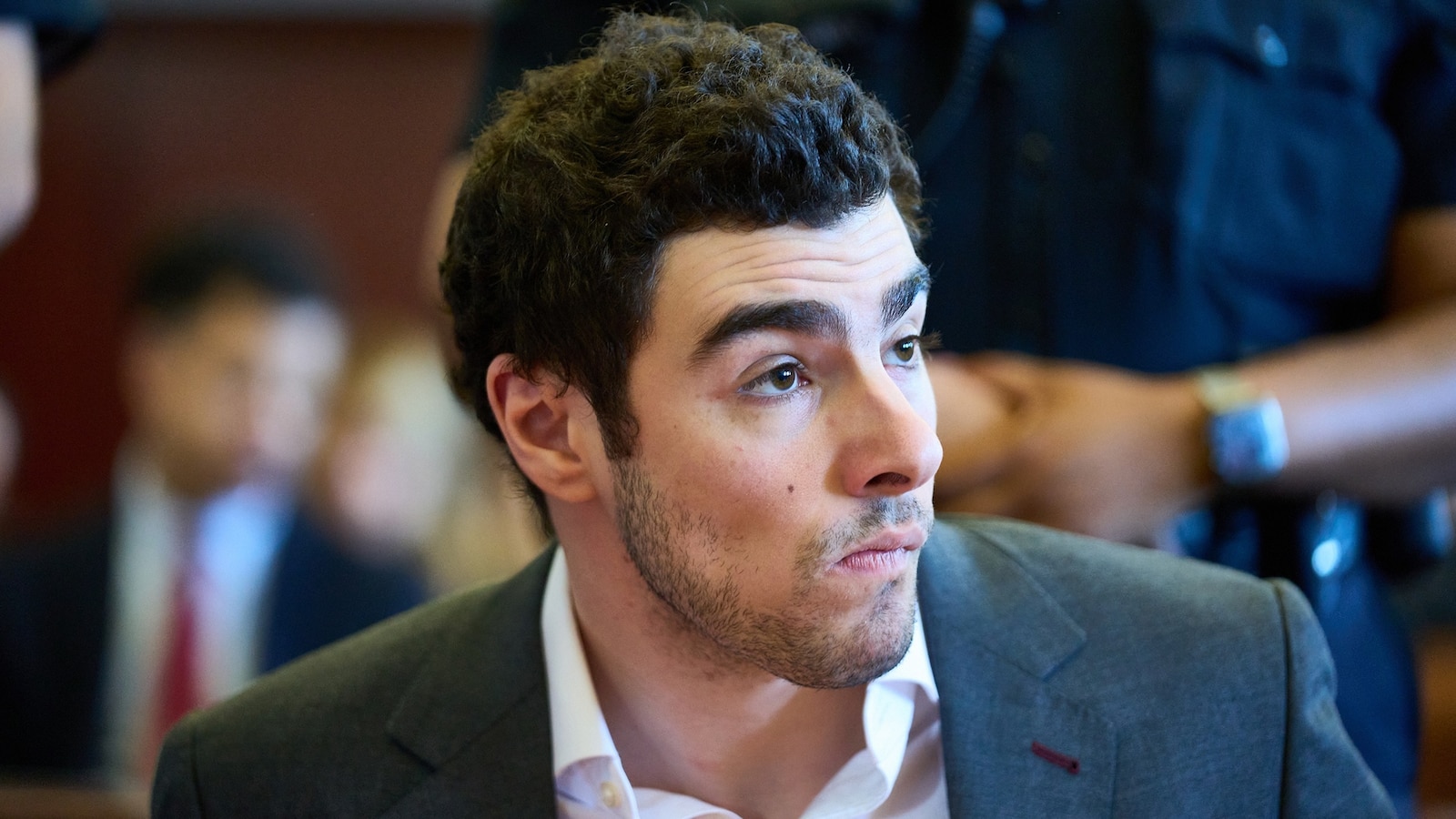
At Wednesday’s brief hearing, Mangione appeared in court wearing a beige smock over a white shirt with rolled-up sleeves, shackled at the ankles—a standard security measure for defendants facing serious charges. Observers noted his surprisingly casual demeanor, with one arm propped on the back of his seat throughout the proceedings, projecting an image that seemed almost relaxed given the gravity of the charges he faces. His defense team had actually requested an even longer delay, asking that the federal trial be postponed until January 2027, more than a year and a half beyond the newly scheduled date. This request suggests a defense strategy that may be banking on the passage of time to reduce public attention and potentially make it easier to find impartial jurors. However, federal prosecutors strongly objected to any significant rescheduling, arguing that such delays would prejudice the government’s case and its ability to present evidence and witnesses effectively. The court’s compromise—a one-month delay rather than the defense’s requested year-plus postponement—reflects an attempt to balance the defendant’s right to a fair trial with the public’s interest in timely justice.
The Serious Charges and Potential Consequences
Luigi Mangione has pleaded not guilty to both state and federal charges stemming from the alleged shooting death of Brian Thompson, the CEO of UnitedHealthcare, one of the nation’s largest health insurance companies. The incident allegedly occurred in Midtown Manhattan in December 2024, in what prosecutors describe as a targeted killing. Mangione faces the possibility of life in prison if convicted in either the state or federal case, making the stakes extraordinarily high. Interestingly, the legal landscape of this case has already shifted significantly since charges were first filed. Judge Garnett previously dismissed the federal charges that carried the possibility of the death penalty, removing what would have been the most severe potential punishment from consideration. Additionally, Judge Gregory Carro, who is overseeing the state prosecution, threw out an enhancement to the state murder charges that characterized Mangione’s alleged actions as terrorism. These rulings have narrowed the scope of what prosecutors can argue, though Mangione still faces extremely serious charges that could result in him spending the rest of his life behind bars.
The Road Ahead: Key Dates and Pending Decisions
As this complex dual prosecution moves forward, several important dates and decisions loom on the horizon. Mangione is scheduled to return to federal court on June 5, just days before his state trial is set to begin on June 8. In the state case, Judge Carro has indicated he will rule on various defense motions to exclude certain evidence by May 18, decisions that could significantly impact the strength of the prosecution’s case and potentially influence the federal proceedings as well. The coordination—or lack thereof—between these two timelines creates a challenging situation for all parties involved. The defense must prepare simultaneously for two major trials with different prosecutors, different judges, and potentially different strategies. Meanwhile, the prosecution teams at both levels must be mindful of how their cases might affect each other, particularly regarding evidence presentation and witness testimony. The media and public will likely maintain intense focus throughout both proceedings, making the challenge of finding impartial jurors even more difficult and underscoring why Judge Garnett felt the need to create more temporal distance between the two trials.
The Broader Implications and Questions of Justice
This case raises fascinating questions about the American justice system and how it handles situations where both state and federal authorities have jurisdiction over the same alleged crime. While dual sovereignty—the principle that allows both state and federal governments to prosecute the same conduct—is well-established in American law, it’s relatively rare for both prosecutions to move forward simultaneously against the same defendant. Critics sometimes argue this amounts to double jeopardy, though courts have consistently held that separate sovereigns may each bring charges. The Mangione case also highlights the challenges of conducting high-profile trials in the age of social media and 24-hour news coverage, where potential jurors are constantly exposed to information and opinions about defendants before ever setting foot in a courtroom. Judge Garnett’s concerns about questionnaires being filled out during the state trial reflect a very real worry: how do you find twelve people who can fairly and impartially judge the evidence when the defendant and the alleged crime have been discussed endlessly across every media platform? As this case proceeds through both the state and federal systems, it will test the courts’ ability to balance the public’s right to know with the defendant’s right to a fair trial, while also managing the practical complexities of coordinating two separate prosecutions for what is alleged to be a single act of violence that shocked the nation.