

Global Markets React to Trump-Iran Tensions: A Deep Dive into the Geopolitical Storm
The Spark That Ignited Market Chaos
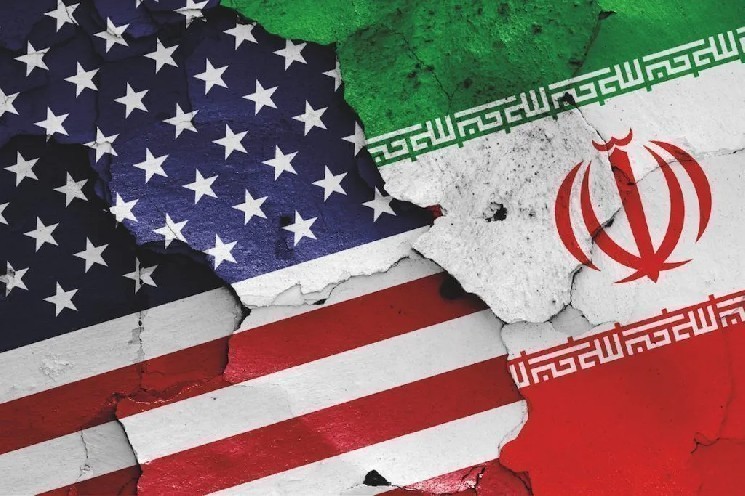
In what can only be described as a whirlwind few days for global financial markets, recent statements from US President Donald Trump regarding potential diplomatic developments with Iran have sent shockwaves through commodity and cryptocurrency markets alike. The situation has created a perfect storm of uncertainty, with traders and investors scrambling to make sense of conflicting narratives coming from Washington and Tehran. What started as seemingly positive news about potential de-escalation quickly morphed into a he-said-she-said diplomatic drama that has left market participants on edge and portfolios swinging wildly in both directions.
The immediate impact on global markets was nothing short of dramatic. Oil prices, which had been trading at elevated levels due to heightened tensions in the strategically vital Strait of Hormuz, experienced violent swings as traders digested the news. Meanwhile, Bitcoin and other cryptocurrencies saw significant volatility, with Bitcoin initially surging on what appeared to be positive developments before giving back gains as Iran firmly denied any contact with the United States. This kind of geopolitical uncertainty is exactly the type of scenario that exposes just how interconnected our global financial system has become, where a statement from a world leader can instantly move billions of dollars across multiple asset classes within minutes.
Iran’s Firm Denial and Counter-Narrative
The Iranian response to Trump’s statements was swift, categorical, and left no room for misinterpretation. Through multiple official channels, including the state-run Fars news agency and Tasnim, Iranian officials pushed back hard against any suggestion that diplomatic channels had been opened between the two long-time adversaries. A senior Iranian security official, speaking to Fars, didn’t mince words when characterizing Trump’s statements as nothing more than “psychological warfare” designed to manipulate both domestic and international audiences. This official went further, suggesting that Trump had fundamentally changed his position and was now engaged in tactical maneuvering rather than genuine diplomacy.
The Iranian Foreign Ministry, through its own statements carried by Tasnim, offered an even more cynical interpretation of the American president’s remarks. According to their analysis, Trump’s real objective wasn’t peace or de-escalation at all—instead, they argued he was simply trying to buy time to bring down energy prices, which had been surging amid fears of supply disruptions from the Middle East. The Iranians even claimed that Trump had backed down from a more aggressive posture only after Tehran threatened to strike all energy facilities throughout the Middle East region, a threat that would have catastrophic implications for global oil supplies. The Iranian official emphasized that “the situation in the Strait of Hormuz cannot be restored to its pre-war state through psychological warfare,” suggesting that real action, not just words, would be necessary to resolve the standoff. This tough stance indicates that despite whatever Trump may have said, the Iranian government sees no genuine path forward in the current diplomatic environment.
Bitcoin’s Rollercoaster Ride Through Geopolitical Uncertainty
For cryptocurrency enthusiasts and investors, the past few days have served as yet another reminder of how Bitcoin increasingly functions as a barometer for global geopolitical tensions. When Trump’s initial statements hit the wires, Bitcoin experienced a notable surge, with traders apparently interpreting the news as a positive development that would reduce conflict risk in the Middle East. This reaction reflects the complex relationship Bitcoin has with traditional safe-haven assets—sometimes it behaves like digital gold, rising when uncertainty increases, while at other times it responds positively to risk-on sentiment when tensions appear to ease.
However, the celebration in crypto markets proved short-lived. Once Iranian officials categorically denied Trump’s claims and pushed back with their own interpretation of events, Bitcoin’s rally lost steam quickly. The world’s largest cryptocurrency by market capitalization retreated from its intraday highs and settled back around the $70,000 level, still managing to hold onto gains of approximately 2.5% over a 24-hour period. This volatility perfectly illustrates one of the ongoing challenges facing Bitcoin as it matures into a more mainstream asset: its price remains highly susceptible to geopolitical news and macroeconomic developments, making it both exciting and nerve-wracking for investors. The rapid give-back of gains also demonstrates that cryptocurrency markets remain somewhat thin and prone to sharp reversals when the narrative changes, with algorithmic trading and leverage likely amplifying the moves in both directions.
Oil Markets Navigate Treacherous Waters
If Bitcoin’s reaction was notable, the movement in oil markets was absolutely stunning in its volatility and significance for the broader global economy. International crude oil benchmarks experienced the kind of intraday swings that oil traders typically only see during major geopolitical crises or supply disruptions. Brent crude, the international benchmark, plummeted to $97 per barrel following Trump’s initial comments, which suggested reduced conflict risk, before recovering and climbing back to around $100 per barrel as Iran’s denial cast doubt on the entire narrative. This represents a multi-dollar swing in a matter of hours—the kind of movement that can make or break trading positions and has real implications for everything from gasoline prices at the pump to inflation expectations.
West Texas Intermediate (WTI) crude, the US benchmark, experienced similarly dramatic volatility. After Trump’s statements sent prices sharply lower to $87 per barrel, the subsequent Iranian pushback helped lift prices back to approximately $92 per barrel. These kinds of swings aren’t just abstract numbers on a trading screen—they represent real uncertainty about global oil supplies and the potential for conflict to disrupt the flow of crude from one of the world’s most important energy-producing regions. The Strait of Hormuz, which Iran has implicitly and explicitly threatened in the past, is one of the world’s most critical energy chokepoints, with roughly a fifth of global oil consumption passing through this narrow waterway. Any sustained conflict or closure of the strait would send oil prices skyrocketing and potentially plunge the global economy into recession, which is why traders are watching every development so closely.
The Psychological Warfare Dimension
Perhaps the most intriguing aspect of this entire episode is the explicit Iranian framing of Trump’s statements as “psychological warfare”—a term that deserves unpacking. In modern geopolitics, information and narrative control have become weapons just as important as missiles and military hardware. Both sides in any conflict increasingly recognize that managing market expectations, public opinion, and diplomatic perceptions can be just as valuable as traditional shows of force. From the Iranian perspective, accusing Trump of psychological warfare serves multiple purposes: it dismisses his statements as lacking substance, it positions Iran as the clear-eyed realist seeing through American manipulation, and it signals to domestic audiences that the government isn’t being swayed by American pressure.
This framing also raises fascinating questions about Trump’s actual strategy, assuming there is one beyond his characteristic off-the-cuff communication style. If the Iranians are correct that Trump is trying to bring down energy prices through verbal intervention, it would represent a remarkably cynical but potentially effective short-term tactic. High gasoline prices are politically toxic for any American president, and if Trump could talk oil prices lower without actually having to negotiate a complex deal with Iran, that would be a win from his perspective. On the other hand, if Trump genuinely believed some form of backchannel communication had occurred or was attempting to create space for de-escalation, the Iranian denial makes him look either misinformed or dishonest, neither of which is a good look on the international stage. The truth, as is often the case in geopolitics, probably lies somewhere in a murky middle ground that neither side will ever fully acknowledge.
What This Means for Markets and Investors Going Forward
For investors, traders, and anyone with exposure to global markets, this episode offers several important lessons and considerations. First and foremost, it’s a stark reminder that geopolitical risk remains alive and well, capable of moving markets violently and unpredictably. The fantasy that we live in a purely rational, information-efficient market where prices reflect fundamental value has been thoroughly debunked—markets are driven by narratives, perceptions, and the very human emotions of fear and greed, all of which can shift dramatically based on statements from political leaders that may or may not reflect reality.
Second, the divergent reactions in oil and Bitcoin markets illustrate how different asset classes process the same information through very different lenses. Oil responded primarily to supply risk calculations, with prices falling on reduced conflict probability and rising when that probability increased again. Bitcoin’s reaction was more complex, reflecting its ambiguous status as sometimes a risk asset, sometimes a safe haven, and always a speculative vehicle prone to momentum-driven moves. Going forward, investors should expect continued volatility around Middle East developments, particularly anything involving Iran, the Strait of Hormuz, or regional oil infrastructure. The situation remains fundamentally unresolved, with both sides maintaining their positions and no clear path to de-escalation visible. Until there’s genuine diplomatic progress—the kind backed by actions rather than just statements—markets will likely remain on edge, ready to swing violently on each new headline. Perhaps most importantly, this episode reminds us that in today’s interconnected global economy, developments halfway around the world can impact your portfolio before you’ve even finished your morning coffee, making diversification and risk management more important than ever.