



Federal Judges Challenge Trump’s Use of Historic Wartime Law to Deport Migrants
Courts Draw Line on Mass Deportations Without Due Process
In a striking rebuke of the Trump administration’s immigration enforcement tactics, federal judges in New York and Colorado have raised serious constitutional concerns about the government’s use of an obscure 18th-century law to rapidly deport alleged gang members to El Salvador. The legal confrontations center on the administration’s invocation of the Alien Enemies Act—a wartime authority that allows for the removal of noncitizens with minimal legal protections—and have sparked a broader debate about the fundamental rights guaranteed to all people on American soil, regardless of their immigration status.
U.S. District Judge Alvin Hellerstein didn’t mince words during a hearing in New York on Tuesday, drawing a comparison between the administration’s approach and the medieval inquisitions of centuries past. His sharp criticism came as he extended a temporary order preventing the deportation of detained migrants in New York’s Southern District without proper legal proceedings. The judge’s concerns reflect a growing unease in the legal community about how the government is using a law originally designed for wartime enemies to address modern immigration challenges. “This is the United States of America,” Judge Hellerstein stated emphatically from the bench. “People are being thrown out of the country because of their tattoos.” His words captured the essence of what many legal experts and civil rights advocates see as a dangerous erosion of constitutional protections in the name of immigration enforcement.
The Controversial Return of an Old Law
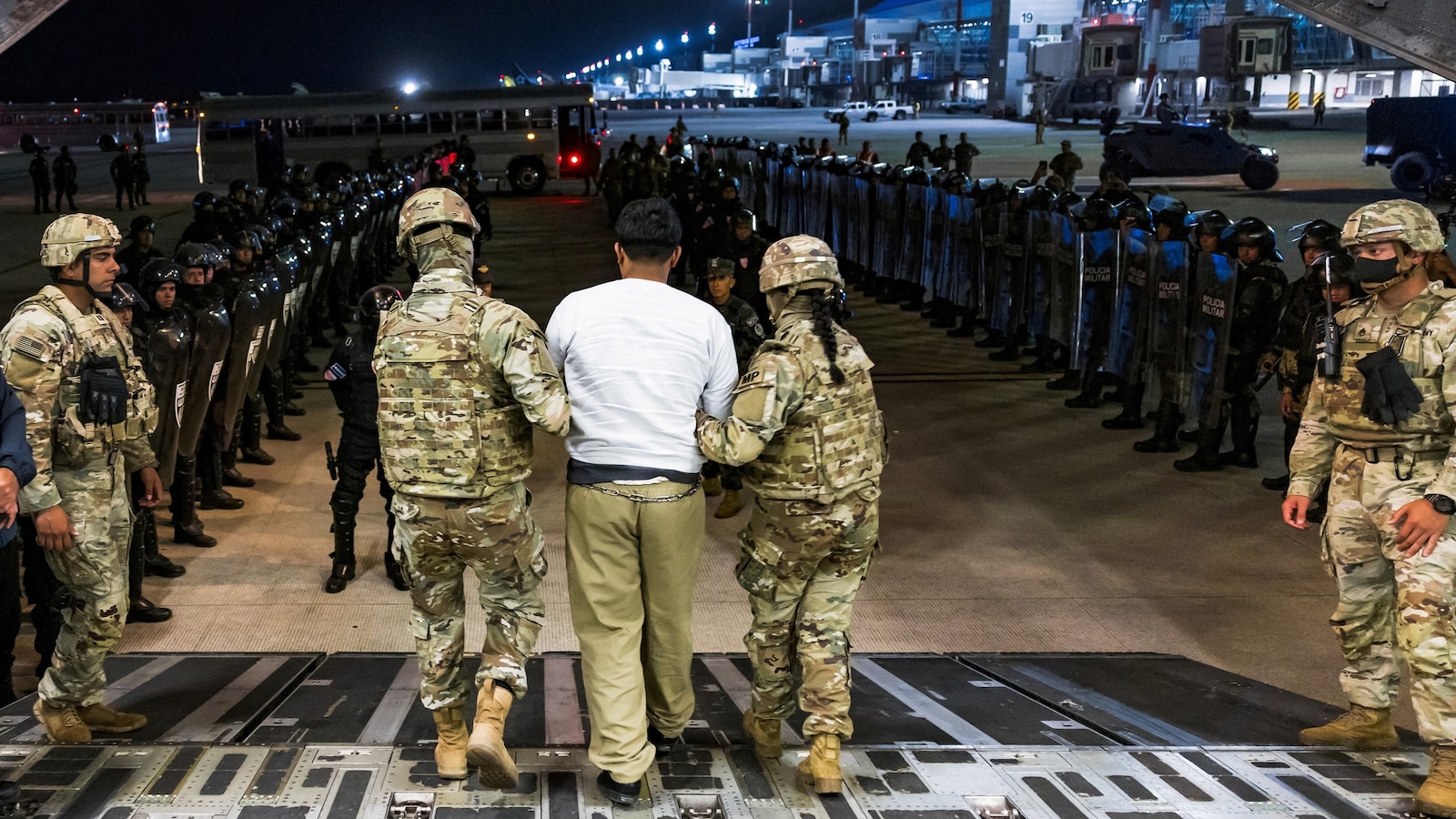
The legal battle began last month when the Trump administration dusted off the Alien Enemies Act, a law dating back to 1798 that was created during a very different era in American history. The administration used this authority to deport two planeloads of alleged gang members to CECOT, a controversial mega-prison in El Salvador known for its harsh conditions. The government’s justification for invoking this rarely-used wartime law hinged on a novel legal argument: that the Venezuelan gang Tren de Aragua constitutes a “hybrid criminal state” that is effectively invading the United States. This creative interpretation of what constitutes an enemy force represents a significant expansion of how the law has traditionally been understood and applied.
What’s particularly concerning to legal observers is what happened to the men who were deported on March 15. According to an official from U.S. Immigration and Customs Enforcement, “many” of those removed from the country actually had no criminal records in the United States whatsoever. Rather than seeing this as a reason for caution, the ICE official argued that “the lack of specific information about each individual actually highlights the risk they pose”—a circular logic that essentially treats the absence of evidence as evidence itself. Authorities have acknowledged using tattoo markings as one of the primary factors in identifying individuals as gang members, a practice that raises serious questions about accuracy, profiling, and the potential for mistaken identity. Judge Hellerstein found this approach particularly troubling, challenging a Department of Justice lawyer who suggested that due process should be considered a “flexible standard” rather than a firm constitutional requirement.
Judges Assert Constitutional Protections Apply to All
The fundamental principle at stake in these cases is one of the bedrock guarantees of American justice: the right to due process before the government takes action against you. Judge Hellerstein was clear and unequivocal in his position on this matter: “The law is clear: If you are kicking out a person, you give them an opportunity to defend themselves. You can’t kick someone out by guilt by association.” This statement goes to the heart of what distinguishes the American legal system from authoritarian approaches to justice. The concept that people deserve a chance to face their accusers, to know the evidence against them, and to present their own defense isn’t just a procedural nicety—it’s a constitutional requirement that has been recognized by courts for centuries.
While Judge Hellerstein reserved his final decision about issuing a broader preliminary injunction, he made it clear that he sees “serious problems” with how the Trump administration has been using the Alien Enemies Act. Beyond the due process concerns, the judge also noted the troubling question of where these migrants are being sent. The conditions at El Salvador’s CECOT mega-prison have been the subject of international human rights concerns, with reports of overcrowding, violence, and inhumane treatment. The prospect of American authorities sending people—especially those who may not actually have gang affiliations—to such facilities raises additional legal and moral questions. “This proclamation is contrary to the law,” Judge Hellerstein declared, signaling his skepticism about the legal foundation of the entire operation.
Colorado Court Raises Additional Red Flags
The concerns aren’t limited to New York. In Colorado, U.S. District Judge Charlotte Sweeney issued her own temporary order on Tuesday that takes an even more protective stance. Her ruling prohibits the administration from using the Alien Enemies Act to deport anyone currently in Colorado and goes further by requiring that any noncitizens subject to removal under this law must receive at least three weeks’ notice before deportation. This cooling-off period is designed to give people a meaningful opportunity to secure legal representation, gather evidence, and mount a proper defense—all things that are practically impossible when deportation happens with little warning.
Judge Sweeney’s written order contained particularly pointed criticism of how the Trump administration has been handling these cases. She examined the cases of two men the government attempted to remove and found the process “deficient and fails to comport with due process.” Her concerns were specific and damning: the notices provided to these men didn’t give them a reasonable amount of time to respond to the charges against them, and the documents were only provided in English, despite the fact that the men may not be fluent in the language. This seemingly small detail actually speaks to a larger problem—how can someone defend themselves if they can’t even understand the accusations being made against them? Judge Sweeney wrote that she has “grave concerns that Petitioners would be afforded notice that comports with due process to challenge the determination.” Beyond the procedural deficiencies, she also questioned the very legitimacy of Trump’s proclamation invoking the Alien Enemies Act, writing that the plaintiffs were likely to prove that it violates both the Immigration and Nationality Act and existing humanitarian protections.
Limited Relief and Broader Implications
It’s important to note that the relief granted by these judges, while symbolically significant, is currently limited in scope. Judge Hellerstein’s order applies to only approximately a dozen migrants currently detained in a few New York counties, and Judge Sweeney’s ruling covers only those within Colorado. These aren’t nationwide injunctions, which means the administration’s deportation activities can continue in other parts of the country. However, these rulings may signal the beginning of a broader legal resistance to the administration’s approach, as other judges around the country consider similar cases and potentially follow the reasoning laid out in these decisions.
The larger questions raised by these cases extend far beyond the immediate fate of the individuals involved. They touch on fundamental issues about what it means to be a nation of laws, about how far executive power can stretch in the name of national security, and about whether the protections enshrined in the Constitution apply equally to everyone within American borders or only to citizens. The judges’ references to medieval inquisitions and their insistence on proper notice, meaningful time to respond, and genuine opportunities for defense aren’t just legal technicalities—they represent the difference between a system based on the rule of law and one based on the arbitrary exercise of power. As these cases move forward, they will test whether the ancient principle that even the king must bow to the law still holds true in modern America, or whether fears about immigration and gang violence will be allowed to override the constitutional protections that have defined American justice for more than two centuries. The outcomes will likely shape immigration enforcement policy and constitutional law for years to come.