
Major Terrorism Convictions in Prairieland ICE Detention Center Attack
Eight Found Guilty in Landmark Antifa-Related Terrorism Case
In a significant legal development that has sparked intense debate about domestic terrorism prosecutions, eight individuals were convicted on Friday for their involvement in what prosecutors described as a coordinated attack on an immigration detention facility in Alvarado, Texas. The incident, which occurred on July 4, 2025, resulted in charges against nine defendants and has become one of the most comprehensive terrorism-related prosecutions in recent memory. The convictions centered on charges of providing material support to terrorists, among other serious offenses stemming from the night’s events at the Prairieland ICE detention center.
Attorney General Pam Bondi issued a strong statement following the verdicts, characterizing antifa as “a domestic terrorist organization that has been allowed to flourish in Democrat-led cities – not under President Trump.” She emphasized that these convictions represent just the beginning of what the Trump administration promises will be a systematic effort to dismantle what they consider antifa’s violent activities across American streets. The case has drawn national attention not only for its legal implications but also for the broader political and social questions it raises about protest, violence, and how the government defines and prosecutes domestic terrorism in an increasingly polarized America.
The Events of July 4, 2025, and Their Aftermath
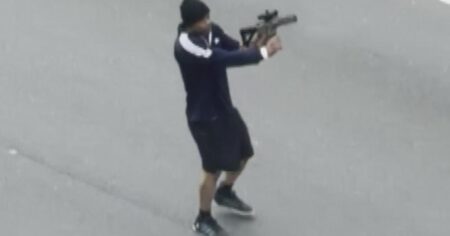
According to prosecutors, the defendants engaged in what they characterized as a premeditated terrorist attack inspired by antifa ideology. The evening’s events included setting off fireworks near the detention facility, vandalizing property on the premises, and most seriously, shooting at police officers who responded to the disturbance. One officer, Lieutenant Gross, was struck in the neck by a bullet during the incident, though he fortunately survived his injuries and has since made a full recovery. The prosecution presented their case as clear evidence of an organized attack rather than a spontaneous protest that escalated, pointing to planning, coordination, and the presence of weapons and tactical gear.
The charges came in the wake of the Trump administration’s September 2024 designation of antifa as a domestic terrorist organization, a move that generated considerable controversy at the time. Critics of the designation argued that antifa is fundamentally an ideology rather than an organized group with formal leadership structures or membership rolls. They contended that labeling adherents to a particular political viewpoint as terrorists sets a dangerous precedent, as subscribing to an ideology, no matter how controversial, should not in itself constitute a crime in a free society. Supporters of the defendants maintained that those present that night were engaged in protest against Immigration and Customs Enforcement policies and that the government was overreaching in its prosecutorial approach to send a chilling message to political activists.
The Verdicts and What They Mean for the Defendants
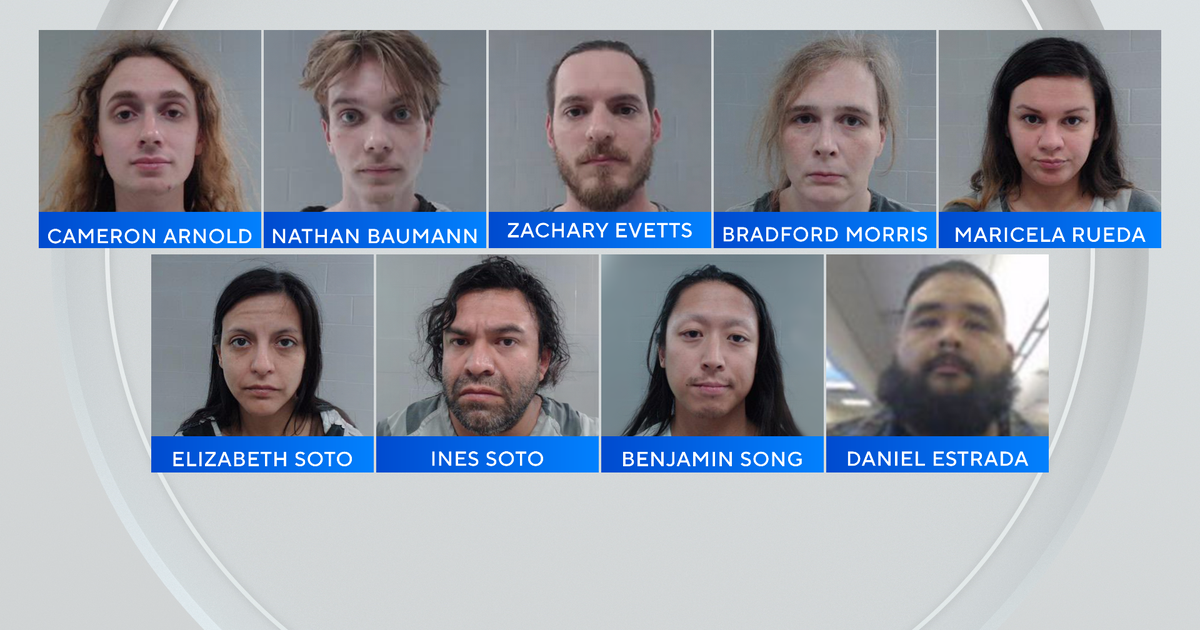
The nine defendants—Autumn Hill (formerly known as Cameron Arnold), Zachary Evetts, Benjamin Song, Savanna Batten, Meagan Morris (formerly known as Bradford Morris), Maricela Rueda, Elizabeth Soto, Ines Soto, and Daniel Rolando Sanchez-Estrada—faced a combined total of 65 charges including attempted murder, aiding terrorists, weapons offenses, and document concealment. The jury’s verdicts revealed a complex picture of culpability. All eight defendants who went to trial were found guilty of riot charges and providing material support to terrorists, as well as charges related to carrying and using explosives during the riot. However, the jury made significant distinctions when it came to the most serious charges.
Benjamin Song faced the harshest verdict, being found guilty of one count of attempted murder of an officer and three counts of discharging a firearm during a violent crime. The jury apparently concluded that Song was the individual who fired the shots that night, including the bullet that struck Lieutenant Gross in the neck. His conviction on these charges carries severe consequences—he now faces a minimum of 20 years and potentially life in federal prison. The other defendants were acquitted of attempted murder charges, though they still face substantial prison time for their other convictions. Autumn Hill, Zachary Evetts, Meagan Morris, Maricela Rueda, Savanna Batten, Elizabeth Soto, and Ines Soto each face between 10 and 60 years in prison for their convictions on the remaining charges.
Daniel Rolando Sanchez-Estrada was found guilty on different charges—corruptly concealing a document and conspiracy to conceal documents—and faces up to 40 years in federal prison. Additionally, seven other defendants who were not part of this trial had previously pleaded guilty to single counts of providing material support to terrorists, with each facing up to 15 years behind bars. U.S. District Judge Mark Pittman, who presided over the trial, will ultimately determine the sentences for all 16 defendants involved in the case. The wide range of potential sentences reflects both the severity with which the law treats terrorism-related offenses and the discretion judges maintain in considering individual circumstances during sentencing.
The Evidence Presented at Trial
Throughout the weeks-long trial, prosecutors built their case through testimony from investigators, law enforcement officers, and cooperating witnesses who had agreed to testify against their former associates. The government presented surveillance footage showing fireworks being set off along the tree line of the detention facility, creating what prosecutors argued was cover for more violent actions. Investigators displayed an array of physical evidence seized after police arrived on the scene and during subsequent searches of the defendants’ homes, including various weapons, tactical gear, and vandalized vehicles that had been damaged during the incident.
Witness testimony painted a picture of the night’s events, describing how protesters set off fireworks, spray-painted vehicles, and scattered when law enforcement officers responded to the scene. One particularly damning piece of evidence came from a cooperating witness who testified that Benjamin Song had later admitted to shooting an officer during the confrontation. Prosecutors also presented digital evidence, including phone location data that placed the defendants at the scene, as well as records of group chats and meetings that the government argued demonstrated premeditation and coordination. Additional testimony detailed efforts by some defendants to help Song evade capture following the shooting, which formed the basis for the obstruction charges.
The Defense’s Position and Legal Strategy
Defense attorneys mounted a vigorous challenge to the government’s narrative, questioning the credibility of cooperating witnesses who had incentives to provide testimony favorable to prosecutors in exchange for more lenient treatment. They took issue with the government’s use of certain terminology, particularly the word “tactical” to describe gear that defense lawyers suggested was no different from what ordinary people might possess. Most fundamentally, the defense argued that their clients had gathered to engage in constitutionally protected protest activity against ICE detention policies rather than to carry out a coordinated terrorist attack as prosecutors claimed.
In a notable strategic decision, none of the defense attorneys chose to present their own cases after the government rested, instead arguing that prosecutors had failed to meet their burden of proving guilt beyond a reasonable doubt. This approach reflected the defense team’s confidence that the government’s evidence was insufficient to support convictions on the most serious charges, a calculation that proved partially correct given the acquittals on most of the attempted murder charges. However, the strategy ultimately failed to persuade the jury on the core terrorism-related charges, suggesting that jurors found the government’s evidence of coordination, preparation, and violent intent sufficiently compelling.
Law Enforcement Response and Broader Implications
Alvarado Police Chief Teddy May expressed satisfaction with the verdicts, noting that Lieutenant Gross has fully recovered from his injuries. Chief May characterized the outcome as reflecting “the consequences of the choices made that night,” while expressing some regret that the defendants, particularly Benjamin Song, had made decisions that would now result in them paying a heavy debt to society. He rejected the defense’s contention that the defendants could have reasonably believed they were attending a peaceful protest, stating, “I don’t believe any reasonable person could believe the suspects didn’t know what they were doing.”
For the injured officer, his family, and the department as a whole, Chief May said the convictions bring a sense of closure to a traumatic incident. He emphasized that his officers were simply doing their jobs when they came under fire that night and expressed gratitude to the investigators and prosecutors whose work led to the convictions. The chief said the verdicts reinforced the department’s faith in the justice system and that the force remains focused on supporting its officers and continuing to serve the Alvarado community.
This case represents a significant test of how terrorism laws will be applied to domestic political violence in the coming years. The successful prosecution on material support for terrorism charges—traditionally used in international terrorism cases—signals a new era in how the government may approach politically motivated violence at home. Whether this approach will withstand appellate scrutiny and whether it will serve as a deterrent or instead inflame tensions remains to be seen. What is clear is that the Prairieland case has established a precedent that will influence domestic terrorism prosecutions for years to come, raising fundamental questions about the boundaries between protest and terrorism, and about how society should respond to political violence regardless of its ideological motivation.