


Federal Prosecutors Drop Charges Against Flag-Burning Protester Outside White House
A Test of Free Speech Rights
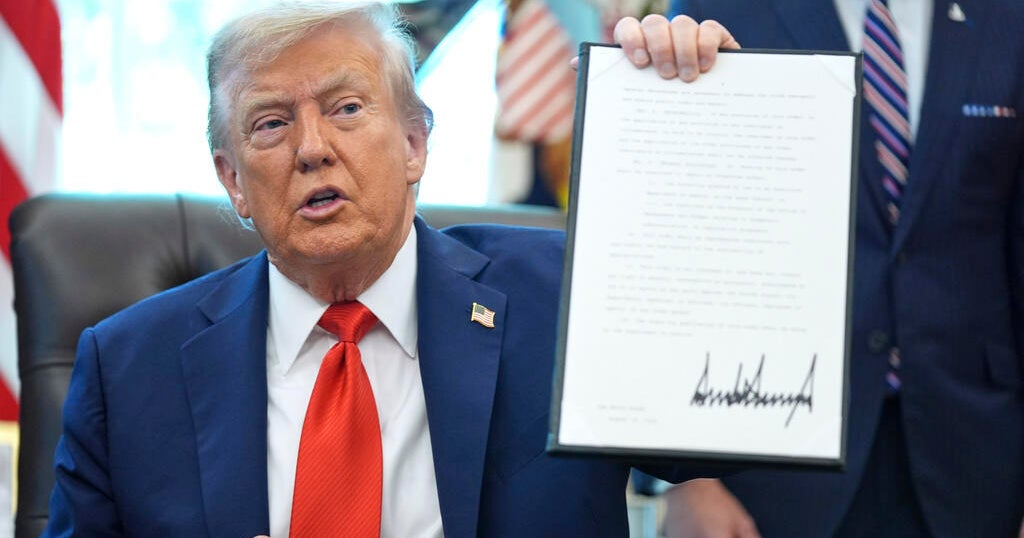
In a significant development that highlights the ongoing tension between presidential directives and constitutional protections, federal prosecutors in Washington, D.C. have moved to dismiss charges against Jan Carey, a man who deliberately burned an American flag outside the White House last year. This act of protest came in direct response to President Trump’s executive order that called for the Department of Justice to investigate and prosecute individuals who burn the American flag. Carey, who identified himself as a military veteran, wasn’t simply making a political statement—he was intentionally testing the boundaries of the executive order against long-established Supreme Court precedent protecting symbolic speech under the First Amendment. The case has drawn attention from civil liberties advocates and legal scholars alike, as it represents a direct confrontation between executive power and constitutionally protected forms of political expression.
The Charges and Legal Strategy
The prosecution’s approach to charging Carey revealed an interesting legal strategy that attempted to sidestep the constitutional protections for flag burning. Rather than directly charging him with the act of burning the American flag itself—which would have been clearly unconstitutional based on Supreme Court precedent—prosecutors instead brought two misdemeanor counts that focused on the manner and location of the fire. The first count accused Carey of lighting a fire “not in a designated area and receptacle,” while the second alleged he started a fire “in a manner that threatened, caused damage to, and resulted in the burning of property, real property, and park resources.” Each charge carried a potential penalty of a fine or up to six months in custody. This prosecutorial approach appeared designed to comply with President Trump’s executive order, which specifically instructed federal prosecutors to focus on “content-neutral laws” that could be applied to flag-burning incidents without directly criminalizing the symbolic act itself. Carey had entered a not guilty plea and was actively challenging his indictment when prosecutors decided to drop the case.
The Executive Order and Constitutional Conflict
President Trump’s executive order directing the Justice Department to investigate flag burning represents a long-standing personal position on this controversial issue. The president has been vocal about his belief that burning the American flag should be a criminal offense, famously suggesting back in 2016 that such acts should be punished by “loss of citizenship or year in jail.” However, this position directly conflicts with the Supreme Court’s landmark 1989 decision in Texas v. Johnson, which ruled that flag burning constitutes symbolic speech protected by the First Amendment. The executive order attempted to navigate around this constitutional obstacle by instructing prosecutors to focus on instances where flag burning might violate other laws that don’t specifically target the act of flag desecration itself. The order suggested that prosecutors should look for cases where burning a flag “is likely to incite imminent lawless action” or amounts to “fighting words”—both recognized exceptions to First Amendment protection. Despite these legal gymnastics, the order fundamentally sought to criminalize an activity that the nation’s highest court has explicitly protected as a form of political expression.
A Veteran’s Protest
The circumstances surrounding Jan Carey’s flag burning make this case particularly compelling and symbolically powerful. In video footage captured by local news station WUSA9, Carey clearly identified himself as a military veteran—someone who had served the very country whose flag he was burning. This detail adds layers of complexity to the narrative, as veterans are often viewed as the ultimate patriots, individuals who have literally put their lives on the line to defend American values and freedoms. Yet here was a veteran exercising what he believed to be his constitutional right to protest government action through symbolic speech. Carey was explicit about his motivations, telling reporters at the time that when he heard about the president’s executive order, he “immediately thought I need to go burn a flag in front of the White House and let’s put this to the test.” His actions represented a deliberate act of civil disobedience and constitutional challenge, consciously designed to force a confrontation between the executive order and established Supreme Court precedent. For Carey, this wasn’t simply a protest against the president’s policies—it was a defense of the very freedoms he had served to protect during his military service.
The Broader Implications
The decision by federal prosecutors to drop the charges against Carey raises important questions about the relationship between executive orders, prosecutorial discretion, and constitutional rights. While neither the U.S. Attorney’s office in D.C. nor Carey’s legal representative immediately provided comments on the dismissal, the timing and circumstances suggest that prosecutors may have concluded that the case was unlikely to succeed or that pursuing it would set problematic legal precedents. The Supreme Court’s 1989 ruling in Texas v. Johnson remains binding law, and any attempt to criminalize flag burning—even indirectly through charges related to fire safety or property damage—would likely face serious constitutional challenges. The case also highlights the limitations of executive power in our system of government. While presidents can issue executive orders directing how federal agencies should prioritize their work, these orders cannot overturn Supreme Court decisions or supersede constitutional protections. The dismissal of charges against Carey effectively demonstrates this principle in action, showing that constitutional rights can withstand attempts to circumvent them through creative legal theories or prosecutorial strategies.
Protecting Unpopular Speech
This case ultimately serves as a reminder of one of the most fundamental and sometimes uncomfortable principles of American democracy: the First Amendment protects speech and symbolic expression even when—perhaps especially when—that expression is offensive, unpopular, or deeply disturbing to many Americans. The flag holds profound meaning for millions of people, representing sacrifice, national unity, and the ideals upon which the country was founded. For many, especially veterans and military families, seeing the flag burned is deeply painful and feels like a personal affront. Yet the Supreme Court has recognized that the strength of American democracy lies precisely in its protection of dissenting voices and controversial forms of expression. As Justice William Brennan wrote in the majority opinion in Texas v. Johnson, “If there is a bedrock principle underlying the First Amendment, it is that the government may not prohibit the expression of an idea simply because society finds the idea itself offensive or disagreeable.” The decision to drop charges against Jan Carey upholds this principle, reaffirming that Americans have the right to protest government actions through symbolic speech, even when that speech takes the form of burning the very symbol of the nation itself. While this protection may be difficult for many to accept, it represents a core value that distinguishes free societies from authoritarian ones—the recognition that true patriotism sometimes means defending the rights of those with whom we most strongly disagree.