
Dr. Oz Takes Aim at Hospice Fraud: A Battle to Protect America’s Most Vulnerable
A Bold Promise to Root Out Healthcare Thieves
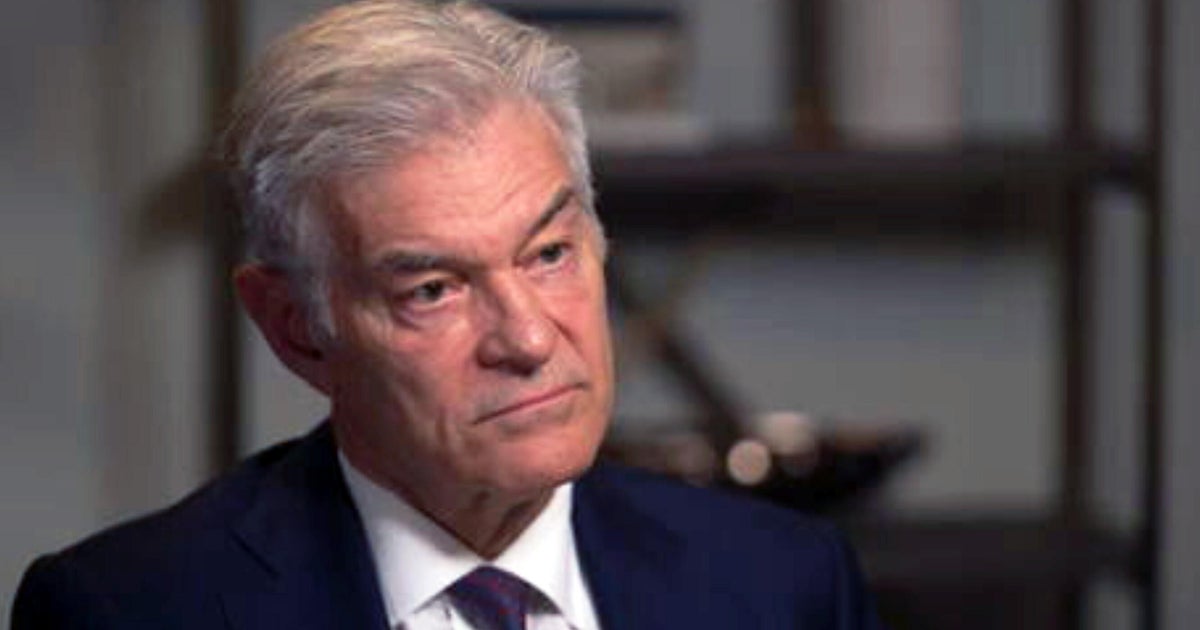
Dr. Mehmet Oz, now serving as administrator for the Centers for Medicare and Medicaid Services under the Trump administration, has drawn a line in the sand when it comes to hospice fraud. This week, he made a powerful pledge to decertify any hospice providers caught stealing taxpayer money through identity theft or overbilling schemes targeting dying patients. In his own words during an exclusive interview with CBS News, Dr. Oz didn’t mince words about the severity of the problem: “If they steal the money, they’ll steal your health, they’ll steal your life, and we’re seeing that over and over again.” His message to fraudsters was equally blunt – find another illegitimate business to exploit, because stealing from the American people will no longer be tolerated. This announcement comes at a critical time when hospice care, meant to provide comfort and dignity to terminally ill patients in their final days, has become a profitable hunting ground for criminals who see vulnerable Americans and their Medicare benefits as easy targets for exploitation.
The Shocking Reality Behind Hospice Fraud
Hospice care represents one of healthcare’s most compassionate services, offering terminally ill patients pain management and the opportunity to die with dignity surrounded by loved ones. However, this noble industry has been increasingly infiltrated by bad actors who have turned it into a lucrative fraud operation. These criminals have been billing the federal government for services they never actually provided or, even worse, for people who aren’t sick at all. A comprehensive CBS News investigation examined state and federal data and uncovered deeply troubling patterns, particularly in California, where the problem appears to have reached crisis proportions. In Los Angeles County alone, which has roughly 1,800 hospice providers, over 700 of these companies trigger multiple red flags for fraud based on state-defined criteria. To put the national scope of this problem in perspective, the U.S. Department of Health and Human Services Office of the Inspector General reported in 2023 that suspected hospice fraud totaled an estimated $198.1 million. That’s nearly $200 million in taxpayer money that was supposed to help dying Americans instead lining the pockets of criminals who prey on the healthcare system’s trust and vulnerabilities.
Dr. Oz’s Plan: Swift Action and Zero Tolerance
The Centers for Medicare and Medicaid Services, now under Dr. Oz’s leadership, holds tremendous power in addressing this crisis because Medicare is federally administered and hospices must be certified to receive reimbursements funded by taxpayer dollars. Dr. Oz has outlined an aggressive strategy to tackle the problem head-on, starting with California’s worst offenders. “My plan is to do just that, to take half the hospices in California, the ones that are illegitimate based on the criteria we’ve been discussing today, and take away their ability to bill us,” he stated emphatically. This isn’t a gradual approach or a warning shot – it’s a declaration that fraudulent operators will lose their ability to do business with Medicare. Dr. Oz emphasized that Los Angeles County’s problems are unique in their scale, noting that “forty-nine states do not have the kinds of problems that Los Angeles County has.” He called for unity across political lines to address this issue, saying that tough decisions need to be made by “Democrats and Republicans, red and blue, doesn’t matter.” To implement this crackdown, CMS has developed a checklist of tactics commonly used in fraud schemes, and when these red flags are triggered, the agency will conduct on-site visits to determine which operations are legitimate and which are not.
The Political Battleground: California’s Response
The hospice fraud crisis has become more than just a healthcare issue – it’s evolved into a significant political flashpoint, particularly as California Governor Gavin Newsom potentially eyes a presidential run. Republicans and social media influencers have seized upon fraud in public services as a powerful campaign issue, pointing fingers at Democratic state leaders and accusing them of failing to prevent costly schemes that waste taxpayer money. When asked about California’s willingness to cooperate and share information to solve the problem together, Dr. Oz expressed uncertainty. However, Governor Newsom’s office pushed back strongly against any suggestion that California hasn’t been taking the issue seriously. A spokesperson told CBS News that “California has always been ready and willing to engage constructively with the federal government over anti-fraud efforts. The state cracked down on hospice fraud years ago.” The statement highlighted California’s establishment of a multi-agency Hospice Fraud Task Force that makes arrests, shares intelligence between agencies, investigates suspected fraud, and coordinates enforcement actions. State officials insisted that characterizations of California not engaging in good faith with federal authorities are completely false and stressed that they stand ready to partner on solutions. The state has already taken action by revoking approximately 280 hospice licenses, demonstrating their commitment to cleaning up the industry within their borders.
The Human Cost: Real Victims Behind the Statistics
While the hundreds of millions of dollars fraudulently charged to the federal government represent a massive financial crime, the most heartbreaking aspect of hospice fraud is the real human beings whose lives are disrupted and identities stolen. Lynn Ianni’s story provides a window into the personal devastation this fraud causes. Her Medicare number was stolen and used to fraudulently enroll her in hospice care she didn’t need, didn’t want, and never received. Describing her experience to CBS News, she said, “I didn’t feel protected. I didn’t feel safe. I felt, like, abused by a system that didn’t work that was truly broken, and without a remedy from that same system. It was really frustrating.” Imagine the horror of discovering that according to federal healthcare records, you’re supposedly dying and receiving end-of-life care when you’re actually going about your normal life. Beyond the emotional trauma, victims of hospice fraud might face serious practical consequences, including difficulty accessing healthcare services they desperately need because their Medicare benefits show they’re already enrolled in hospice. These aren’t just numbers on a spreadsheet or abstract policy concerns – they’re real people, often elderly Americans, who trusted the healthcare system to protect them and instead became victims of sophisticated criminal enterprises.
The Path Forward: Protecting America’s Most Vulnerable
Dr. Oz’s aggressive stance against hospice fraud represents a significant shift in how the federal government approaches this problem. Rather than gradual reforms or gentle warnings, he’s promising swift decertification for bad actors, effectively putting them out of business when it comes to billing Medicare. This approach sends a clear message that the days of easily exploiting hospice care for profit are ending. The challenge moving forward will be balancing aggressive fraud prevention with ensuring that legitimate hospice providers can continue serving terminally ill patients without excessive bureaucratic burdens. The cooperation – or lack thereof – between federal authorities and states like California will be crucial to success. While political tensions and finger-pointing may generate headlines, the real work of protecting vulnerable Americans requires setting aside partisan differences and focusing on practical solutions. The multi-agency task forces, information sharing between state and federal authorities, and on-site inspections triggered by red flags all represent important tools in the anti-fraud arsenal. Ultimately, the goal must be restoring hospice care to its intended purpose: providing compassionate, dignified end-of-life care to those who need it most, funded by taxpayer dollars that actually reach patients rather than enriching criminals who prey on the dying and steal from the American people.