



Supreme Court Considers Parents’ Rights to Opt Out of LGBTQ-Themed Books in Public Schools
A Landmark Case at the Intersection of Parental Rights and Education
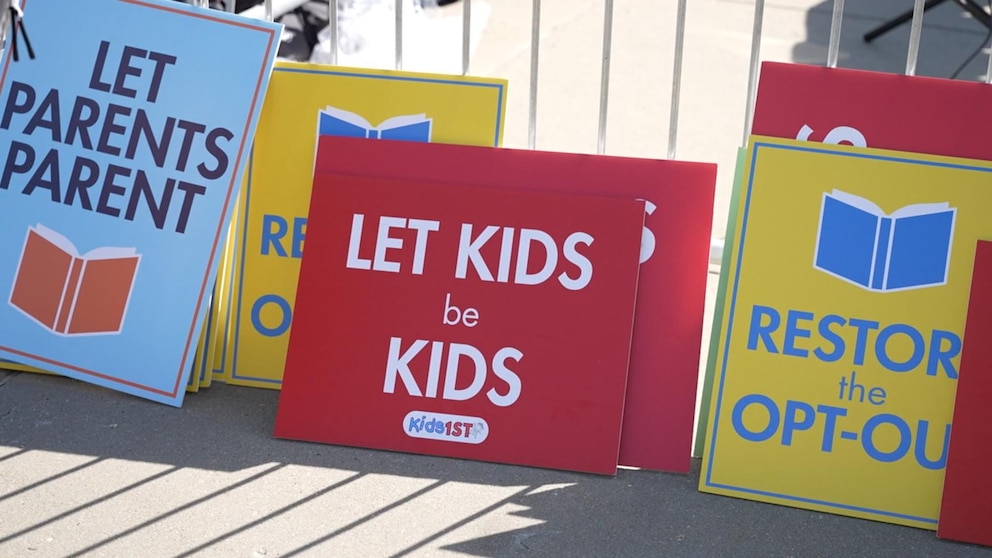
The Supreme Court is currently examining one of the most contentious educational debates in America today: whether parents have a constitutional right to prevent their children from being exposed to books containing LGBTQ themes in public schools. This case, reported by ABC News’ Devin Dwyer, touches the heart of ongoing cultural conversations about education, religious freedom, parental authority, and LGBTQ inclusion in classrooms across the nation. The outcome of this case could reshape how public schools handle curriculum decisions and parental opt-out requests for decades to come, affecting millions of families and students nationwide.
At its core, this legal battle pits two fundamental American values against each other: the right of parents to guide their children’s upbringing according to their beliefs, and the responsibility of public schools to provide inclusive education that reflects the diverse society students will encounter. The case has drawn passionate arguments from both sides, with some parents arguing that their religious or moral convictions require them to shield their children from content they view as conflicting with their values, while school districts and LGBTQ advocates contend that exposure to diverse perspectives, including LGBTQ themes, is essential for creating an inclusive educational environment and preparing students for real-world diversity.
The Background and Details of the Case
The case before the Supreme Court originated when parents in a public school district requested that their children be excused from reading certain books or participating in classroom activities that included LGBTQ characters or themes. These parents argued that such content violated their deeply held religious beliefs and that they have a fundamental constitutional right to direct the moral and religious education of their children. The school district denied these opt-out requests, maintaining that the educational materials in question were age-appropriate, aligned with educational standards, and important for teaching students about diversity and inclusion in contemporary society.
The parents filed suit, claiming that the school’s refusal to accommodate their opt-out requests violated their constitutional rights, particularly those protected under the First Amendment’s Free Exercise Clause and the Fourteenth Amendment’s Due Process Clause, which has been interpreted to protect parental rights in raising children. Lower courts delivered mixed rulings on the case, with some finding that schools must provide reasonable accommodations for parents’ religious objections, while others sided with the school district, determining that the educational interest in exposing all students to diverse perspectives outweighed the parents’ objections. This split in lower court decisions contributed to the Supreme Court’s decision to hear the case, as it presents an opportunity to clarify the balance between parental rights and public education requirements.
Arguments from Both Sides of the Debate
Those supporting the parents’ position argue that fundamental parental rights have been recognized throughout American legal history, citing landmark Supreme Court cases such as Pierce v. Society of Sisters (1925) and Wisconsin v. Yoder (1972), which established that parents have a constitutional right to direct the upbringing and education of their children. They contend that forcing children to engage with material that conflicts with their family’s religious teachings represents government overreach and violates religious freedom. Supporters of this view emphasize that they are not seeking to ban these books from schools entirely, but simply requesting that their own children be given alternative assignments—an accommodation they believe is reasonable and doesn’t impose significant burdens on schools.
Furthermore, advocates for parental opt-out rights argue that public schools should serve all families, including those with traditional religious beliefs about marriage and gender. They point out that public education has historically included mechanisms for parents to excuse their children from certain lessons, such as sex education, and that this case simply extends that principle to literary content. Religious liberty organizations backing the parents have emphasized that pluralistic democracy requires respecting diverse viewpoints, including those that may not align with progressive perspectives on gender and sexuality.
On the other side of the debate, school districts and LGBTQ advocacy groups argue that allowing opt-outs based on the presence of LGBTQ characters or themes would send a harmful message to LGBTQ students that their identities are shameful or inappropriate. They contend that education inherently involves exposure to ideas and perspectives that may differ from those taught at home, and that this exposure is essential for developing critical thinking skills and preparing students to participate in a diverse democracy. Denying children access to books featuring LGBTQ characters, they argue, perpetuates stigma and deprives students of the opportunity to develop empathy and understanding for people different from themselves.
Legal scholars supporting the school districts’ position also raise concerns about the administrative chaos that could result from individualized opt-out requests. If parents can exempt their children from books with LGBTQ themes, they ask, what prevents other parents from requesting opt-outs based on books featuring characters from different racial, religious, or cultural backgrounds? Such a precedent, they warn, could fragment curriculum to the point where shared educational experiences become impossible, undermining one of the core purposes of public education: creating common knowledge and shared civic values across diverse populations. Additionally, they argue that the books in question typically feature LGBTQ characters incidentally—they are not primarily about sexuality or gender identity but rather include diverse characters as part of reflecting contemporary society.
The Broader Cultural and Political Context
This Supreme Court case arrives at a moment of heightened political tension surrounding education, particularly regarding how schools address topics related to gender, sexuality, and identity. In recent years, numerous state legislatures have passed laws restricting how teachers can discuss LGBTQ topics, with some states prohibiting classroom instruction on sexual orientation or gender identity in elementary grades. Meanwhile, school board meetings nationwide have become battlegrounds over book challenges, with some communities seeking to remove books with LGBTQ themes from school libraries while others fight to keep these materials accessible to students.
The divide often breaks along political and religious lines, with conservative communities more likely to support parental opt-out rights and restrictions on LGBTQ content, while progressive communities generally favor inclusion of diverse perspectives and characters in educational materials. However, the issue doesn’t split perfectly along partisan lines—some parents who otherwise identify as politically progressive have expressed discomfort with certain age-appropriate determinations, while some conservatives have argued that public schools should teach students about the diversity they’ll encounter in the real world. This complexity makes the Supreme Court’s eventual decision all the more significant, as it will need to navigate competing values that cut across traditional political boundaries.
The case also reflects broader anxieties about childhood, innocence, and the appropriate pace of introducing complex social topics to young people. Parents requesting opt-outs often express concern not necessarily about LGBTQ people themselves, but about when and how their children learn about different family structures and identities. They argue that these conversations should happen at home, where parents can frame them within their family’s value system, rather than in classrooms where teachers may present perspectives that conflict with their beliefs. Educators and child development experts, however, generally counter that children are naturally curious about differences they observe in the world and that age-appropriate books can help them process these observations in healthy ways.
Potential Implications of the Supreme Court’s Decision
The Supreme Court’s ruling in this case could have far-reaching implications for public education, parental rights, and LGBTQ inclusion. If the Court sides with the parents, schools across the country may be required to grant opt-out requests for books and materials containing LGBTQ themes, potentially leading to a patchwork of individualized curricula within the same classroom. Such a decision might embolden parents to request exemptions from other curricular content they find objectionable, making curriculum planning more complicated and potentially undermining teachers’ professional judgment about appropriate educational materials.
Conversely, if the Court rules in favor of the school districts, it would affirm schools’ authority to include diverse perspectives in curriculum without providing opt-outs for content that some families find objectionable. This outcome would likely be celebrated by LGBTQ advocacy organizations as a victory for inclusion and would support educators who believe that exposure to diversity is a crucial part of public education. However, it might also intensify the frustrations of parents who feel that public schools are increasingly out of step with their values, potentially driving more families toward private schooling, homeschooling, or support for school choice policies.
The decision could also influence how courts balance religious freedom claims against anti-discrimination principles more broadly. If the Court determines that religious objections to LGBTQ content must be accommodated in public schools, similar reasoning might extend to other contexts where religious beliefs conflict with inclusive policies. Alternatively, a ruling favoring schools might reinforce the principle that while individuals are free to hold religious beliefs, public institutions need not accommodate those beliefs when doing so would undermine legitimate governmental interests, such as providing equitable, inclusive education.
Conclusion: Awaiting a Decision That Will Shape American Education
As the Supreme Court deliberates on this case, parents, educators, students, and advocates on all sides await a decision that will significantly impact American public education. The fundamental tension at the heart of this case—between parental authority over children’s upbringing and the government’s interest in providing comprehensive, inclusive education—does not have an easy resolution. Whatever the Court decides, it will likely satisfy some constituencies while deeply disappointing others, reflecting the profound divisions in American society about how to address LGBTQ topics in contexts involving children.
The case also highlights the evolving nature of what inclusion means in public education. As society has become more accepting of LGBTQ individuals and families, many educators have embraced the inclusion of LGBTQ characters and themes in books and curriculum as a natural extension of teaching about diversity. For others, particularly those whose religious traditions hold traditional views on marriage and sexuality, this shift feels like a departure from values they hold sacred, creating genuine moral dilemmas about their children’s participation in public education. The Supreme Court’s decision will either validate one of these perspectives or attempt to find middle ground that acknowledges both the importance of parental rights and the value of inclusive education. Regardless of the outcome, this case serves as a reminder that public schools, as institutions serving diverse communities with varying values, will continue to navigate difficult questions about whose perspectives are represented in educational materials and how much control parents should have over their children’s exposure to ideas that differ from those taught at home. The ruling, expected in the coming months, will undoubtedly shape these conversations for years to come.