

Team USA’s Stars Shine Bright: Your Guide to American Athletes at the 2026 Milano Cortina Winter Olympics
The Stage is Set for America’s Winter Warriors
As the world turns its attention to the snow-capped peaks and frozen tracks of Italy, nearly 2,900 elite athletes from across the globe are preparing to chase Olympic glory at the 2026 Milano Cortina Winter Olympics. Among them, approximately 230 American athletes will carry the hopes of a nation that has historically dominated winter sports competition. Team USA enters these games with an impressive legacy—330 Winter Olympic medals through Beijing 2022, trailing only the powerhouse nation of Norway. From February 6 to February 22, these dedicated athletes will compete across 116 different events, each one representing years of sacrifice, training, and unwavering determination. The American contingent includes returning champions seeking to defend their titles, seasoned veterans making what might be their final Olympic appearances, and fresh faces hoping to make their mark on the world’s biggest sporting stage. Their stories are as diverse as the sports they compete in, but they share a common thread: an unshakeable commitment to excellence and the profound honor of representing the United States on the international stage.
Freestyle Skiing’s Fearless Competitors Push Boundaries
Alex Ferreira, the 31-year-old freestyle skiing sensation, is making his third Olympic appearance with an impressive track record that includes silver from PyeongChang 2018 and bronze from Beijing 2022. For Ferreira, who has been skiing since age 3 and competing since 10, representing Team USA carries special significance. “It’s awesome representing Team USA, because I look at us and I think we’re the best team in the world,” he recently shared, emphasizing the deep pride he feels competing for his country, state, and hometown. Ferreira’s journey to Olympic excellence includes an unexpected start—his mother enrolled him in his first aerials competition without even telling him. Now specializing in halfpipe, he’s dominated recent competitions, sweeping five world cups during the 2023-2024 season along with victories at X Games Aspen and the Dew Tour. Adding character to his competitive persona, Ferreira occasionally performs under his alter ego, “Hotdog Hans,” an older gentleman character that delights fans worldwide.
Joining Ferreira on the slopes is 27-year-old Alex Hall, who won gold in slopestyle at Beijing 2022 and has collected gold medals in four different X Games disciplines. Born in Alaska to an Italian mother, Hall spent over half his life in Europe, growing up just hours from where he’ll compete in Milano Cortina. This multilingual athlete—fluent in English, French, Italian, and German—brings a unique international perspective to Team USA. Hall’s approach to these Olympics differs markedly from his debut in PyeongChang 2018; he’s now focused on appreciating the smaller, more meaningful moments rather than getting caught up in the spectacle. His excitement extends beyond the competition itself to the opportunity to connect with athletes from around the world and hear their stories. Meanwhile, Nick Goepper, the 31-year-old veteran making his fourth Olympic appearance, brings three previous Olympic medals—bronze from Sochi 2014 and silver from both 2018 and 2022. After retiring following Beijing, Goepper returned less than a year later, switching from slopestyle to halfpipe, demonstrating that the Olympic pull proved too strong to resist.
Figure Skating’s New Era of Artistry and Authenticity
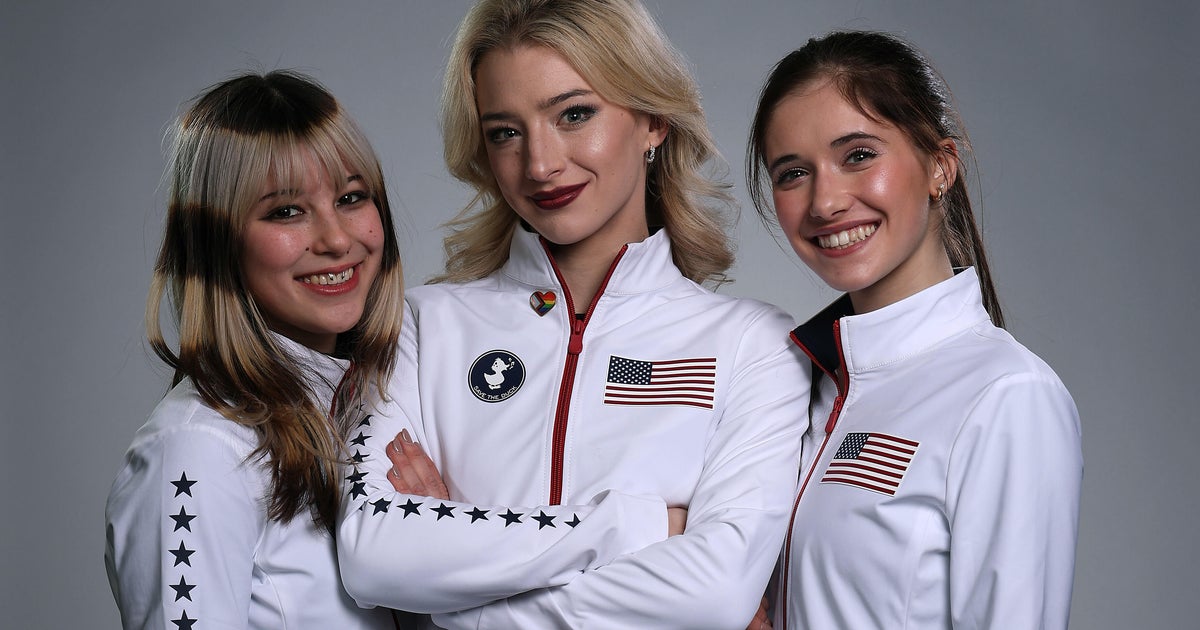
The American figure skating contingent showcases both remarkable comebacks and inspiring advocacy. Twenty-year-old Alysa Liu represents one of sports’ most extraordinary return stories. After becoming the youngest U.S. figure skating national champion in history at age 13, winning another title at 14, and competing in the 2022 Olympics, Liu surprised everyone by retiring at 16. Her comeback culminated in winning the women’s singles world title at the 2025 World Championships, prompting Olympic men’s skating gold medalist Brian Boitano to call it “the biggest comeback in sports history.” Liu’s perspective on skating has evolved; she now views herself more as an artist than an athlete, telling “60 Minutes” that she sees “competitions more as, like, a stage for performing.” This artistic approach may well be the key to her renewed success and enjoyment of the sport.
Twenty-six-year-old Amber Glenn brings not just exceptional skating skills but also powerful advocacy to Milano Cortina. Fresh off winning her third consecutive U.S. title—making her the first woman since Michelle Kwan to achieve this feat—Glenn is using her platform to champion mental health awareness and LGBTQ+ rights. After coming out as bisexual and pansexual in 2019, Glenn faced her fears about potential score impacts head-on. “When I came out initially, I was terrified. I was scared it would affect my scores or something, but I didn’t care,” she explained. “It was worth it to see the amount of young people who felt more comfortable in their environments at the rink.” Her courage has made her a role model for countless young people who see themselves represented in her success. Meanwhile, 21-year-old Ilia Malinin, known as the “Quad God,” makes his Olympic debut as the first athlete to successfully land all six types of quadruple jumps in a single program. The son of Olympic figure skaters who competed for Uzbekistan, Malinin started skating at 6 and has already won gold at both the 2024 and 2025 World Championships. Ice dancers Madison Chock, 33, and Evan Bates, 36, return as both skating partners and newlyweds, having married in 2024. Their partnership, which began in 2011, has yielded Olympic gold in the team event and three consecutive World Championships titles starting in 2023.
Speed Demons and Ice Warriors Break Records
Brittany Bowe, the 37-year-old Florida speedskater, brings wisdom earned from three previous Olympic appearances to her fourth games. The two-time Olympic bronze medalist in long track has learned invaluable lessons about focusing on process rather than outcomes. “In years past, it’s been really easy to be outcome-oriented, and I have found that that doesn’t work,” Bowe explains. “That can become really debilitating in your preparation.” Her journey includes the honor of carrying the American flag during the 2022 Beijing opening ceremony, and she’s brought her family along on this incredible ride, making the experience even more meaningful. Twenty-one-year-old Jordan Stolz represents speedskating’s future, inspired to try the sport after watching Apolo Ohno and Shani Davis in the 2010 Vancouver Olympics. Starting out skating on the pond behind his family home, Stolz has become a dominant force, achieving world champion status in the 500-meter, 1,000-meter, and 1,500-meter categories at the ISU Single Distance World Championships in both 2023 and 2024. Remarkably, Stolz also skates professionally for the Dutch team Albert Heijn Zaanlander and hopes to bring the enthusiasm for speedskating that’s common in the Netherlands back to American audiences.
Erin Jackson, the 33-year-old speedskating gold medalist, will lead Team USA as a flagbearer during the opening ceremony alongside bobsledder Frank Del Duca. Jackson made history in 2022 by becoming the first Black woman to win gold in an individual event at the Winter Olympics—after nearly missing the team entirely. When Jackson slipped at U.S. trials, teammate Brittany Bowe gave up her spot in the 500-meter race to ensure Jackson could compete in Beijing, an act of sportsmanship that exemplifies Olympic values. What makes Jackson’s story even more remarkable is that she first stepped onto an ice rink in 2016, just two years before her first Olympic appearance, after years of inline skating. “I’m just super grateful to be able to skate in circles for a living, and I just want to keep doing it as long as I can,” Jackson says with characteristic humility. Kristen Santos-Griswold, 31, nearly walked away from speedskating after heartbreak in Beijing 2022, when a bump from an opponent caused her to fall while in bronze medal position with just two laps remaining. Though the bump was ruled a penalty, the devastating finish led Santos-Griswold to seriously consider retirement. “When I decided that I was going to keep going, I was like, ‘All right, I’m doing it for me,'” she explains, a decision that has reinvigorated her approach to the sport.
Ice Hockey’s Powerhouse Women and Alpine Skiing’s Legendary Return
The American women’s ice hockey team brings formidable talent and experience to Milano Cortina. Caroline Harvey, now 23, fulfilled her childhood prediction when she became the youngest member of the 2022 U.S. Olympic team, helping secure silver in Beijing. The three-year-old who told her aunt she’d make the Olympics wasn’t just dreaming—she was prophesying her future. Named best defender at both the 2024 and 2025 IIHF Women’s World Championships and a two-time NCAA champion with the Wisconsin Badgers, Harvey defines success not just by medals but by “knowing we did everything we could to be successful in playing our team game.” Hilary Knight, 36, represents ice hockey royalty, making her fifth Olympic appearance with an astonishing record of medaling at all four previous games—one gold and three silvers. “Never would I have imagined being able to compete in five Olympic Games,” Knight marvels. Her contributions extend beyond the ice; she played a crucial role in creating the Professional Women’s Hockey League, ensuring future generations of women will have professional opportunities in the sport. Kendall Coyne Schofield, 33, brings a new perspective to her fourth Olympics as a first-time Olympic mom. She credits motherhood with making her a better hockey player, providing patience and life perspective she didn’t have before. Her young son chants “USA, USA” whether the team wins or loses—a reminder of what truly matters.
Perhaps no story captures the imagination quite like that of Lindsey Vonn, the 41-year-old alpine skiing legend making her fifth Olympic appearance despite retiring in 2019 due to severe knee damage. Vonn, who holds the distinction of being the only American woman to win Olympic gold in downhill and has more victories in a single discipline than any other skier, male or female, underwent knee surgery and returned to competition. Just a week before the games, disaster struck when Vonn crashed during a final downhill tune-up, rupturing her ACL and requiring airlift evacuation from the mountain. Yet true to her indomitable spirit, Vonn assured fans her Olympic dream was “not over,” declaring, “This is a very difficult outcome one week before the Olympics… but if there’s one thing I know how to do, it’s a comeback.” She’s determined to race in the women’s downhill wearing a brace, stating emphatically, “I’m not letting this slip through my fingers. I’m gonna do it. End of story.” Vonn started skiing at age 3 alongside her father and grandfather, both competitive skiers, and made her Olympic debut at 17. After six years away from the grueling travel schedule of competitive skiing, Vonn admits the road routine has been challenging, but her physical condition tells a different story—she feels stronger now than in her twenties.
Rising Stars and Resilient Spirits Round Out Team USA
The depth of American talent extends across numerous disciplines, each athlete carrying their own compelling narrative. Thirty-one-year-old Mystique Ro makes her Olympic debut in skeleton racing after transitioning from track and field in 2016 when coaches suggested she was too small for bobsled. In skeleton, racers hurtle head-first and face-down down icy tracks at speeds approaching 80 miles per hour, using subtle body shifts to guide their sleds. “Once you get away from the fear, it starts to become a game,” Ro explains, though she’s quick to note this isn’t childhood sledding—”The speed is significantly faster, and there’s a lot more peril involved if you’re not prepared for it.” In 2024, Ro became the first American to win a skeleton race on the World Cup circuit in eight years. Thirty-year-old curler Korey Dropkin describes his sport as “like religion,” having grown up at the curling club where his parents were heavily involved. After graduating high school, Dropkin relocated to Duluth, Minnesota—America’s curling capital—dedicating his entire life to reaching the Olympics. “I’ve dedicated my whole life to getting to the Olympics and hopefully medaling at the Olympics,” he says. “I moved myself and relocated and really dedicated a lot of blood, sweat and tears.”
Figure skater Maxim Naumov’s journey to Milano Cortina is marked by profound tragedy and emotional resilience. His first Olympic appearance comes one year after losing both parents—former world champions Vadim Naumov and Evgenia Shishkova—in the devastating plane crash near Washington, D.C. that killed 67 people. His parents, beloved coaches at the Skating Club of Boston, inspired Naumov’s Olympic dreams. After competing in the men’s short program at the U.S. Figure Skating Championships in January, Naumov held a photo of his parents while awaiting his scores, a poignant tribute to the people who made his journey possible. “Having role models be right there in the house, at the rink, just everywhere, they inspired me to want this dream,” Naumov shared. “Doing it for them would be even more beautiful.” His presence at these Olympics represents not just athletic achievement but the healing power of pursuing dreams even in the face of unimaginable loss. Paula Moltzan, the 31-year-old alpine skier making her second Olympic appearance, acknowledges the tremendous family sacrifice behind her success, including her parents taking second mortgages and her siblings giving up opportunities like summer camp so she could attend ski camp. “But it all becomes worth it when you’re there with your team, representing Team USA,” Moltzan reflects, carrying the weight and honor of those sacrifices with her down every slope.