



OpenAI Steps Into Military Technology: Partnership with Defense Contractors Raises Questions About AI’s Role in Warfare
A Strategic Partnership Takes Shape
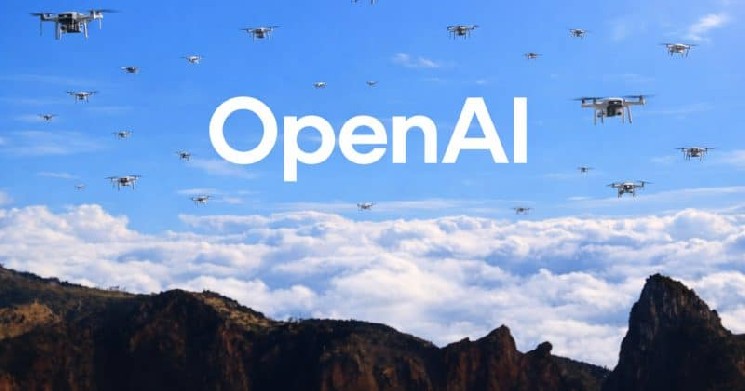
In a development that signals a significant shift in OpenAI’s relationship with the defense sector, the artificial intelligence company has entered into a partnership with two defense technology firms handpicked by the Pentagon for a groundbreaking military initiative. According to recent reports from Bloomberg, these partnerships center around a $100 million competition launched by the U.S. military to develop cutting-edge voice-controlled drone swarm software. This collaboration marks a notable expansion of OpenAI’s engagement with defense-related projects, even as the company maintains careful boundaries around the extent of its involvement in weapons development.
The competition itself was initiated in January by two specialized military units: the Defense Innovation Unit and the Defense Autonomous Warfare Group, which operates under Special Operations Command. The ambitious goal of this contest is to create prototype systems capable of managing autonomous drone swarms through simple spoken commands, essentially bringing science fiction-style battlefield control into reality. This represents a major leap forward in military technology, potentially transforming how future conflicts might be conducted by enabling soldiers to coordinate multiple unmanned systems simultaneously through natural language rather than complex manual controls.
Understanding OpenAI’s Limited but Crucial Role
While OpenAI’s involvement in this military project might initially raise eyebrows, the company has been careful to define and limit the scope of its participation. According to individuals with direct knowledge of the arrangement, OpenAI’s contribution is specifically focused on a single but critical component: translating battlefield voice instructions into digital commands that unmanned systems can understand and execute. This narrow function represents a technological bridge between human intention and machine action, but stops well short of direct involvement in combat operations.
Importantly, OpenAI’s technology will not be responsible for actually controlling the drones themselves, nor will it have any role in integrating weapons systems or making targeting decisions. These limitations appear designed to address potential ethical concerns about AI companies becoming directly involved in lethal military operations. Furthermore, OpenAI did not submit its own independent bid for the competition, and the company has characterized its involvement as quite limited in scope. The organization is reportedly providing only open-source versions of its models, which suggests a level of transparency and a desire to maintain some distance from proprietary military applications that might raise additional ethical questions.
The Competition’s Structure and Future Implications
The Pentagon’s drone swarm competition has been designed as a multi-phase process that will unfold over six months, allowing for progressive development and refinement of the technology. The initial phase focuses on software development, giving the competing teams time to create and perfect their systems in controlled environments before advancing to more demanding real-world applications. Following the software development stage, the competition will progress to live testing, where the systems will be evaluated under conditions that more closely simulate actual battlefield scenarios.
Looking even further ahead, later stages of the competition envision something even more ambitious: multi-domain coordination across both air and sea systems. This would represent a quantum leap in military capability, potentially allowing commanders to orchestrate complex operations involving drones operating in different environments simultaneously, all through voice commands. Pentagon officials have indicated that the mission execution elements being developed could directly affect system lethality and effectiveness, acknowledging the very real potential for these technologies to change the nature of warfare itself. This frank admission underscores the serious implications of this technological development, raising important questions about how autonomous systems will be deployed and controlled in future conflicts.
OpenAI’s Expanding Defense Footprint
The drone swarm partnership represents just one element of OpenAI’s growing relationship with the U.S. Department of Defense. This same week brought news of another significant arrangement that will make ChatGPT, OpenAI’s flagship conversational AI system, available to approximately 3 million Defense Department personnel. This separate agreement suggests that the military sees broad applications for OpenAI’s technology beyond just drone control, potentially including logistics support, training, information analysis, and administrative functions that could help military personnel work more efficiently.
This expanding partnership between a civilian AI company and the military establishment reflects a broader trend in modern defense strategy, where technological innovation increasingly depends on collaboration with private sector companies that possess cutting-edge capabilities. For OpenAI, these arrangements represent a significant business opportunity and a chance to contribute to national security, but they also bring the company into territory that some of its employees, users, and observers may find uncomfortable given the potential applications of AI in warfare.
Navigating Ethical Boundaries in an Uncertain Future
OpenAI’s Chief Executive Officer, Sam Altman, has previously addressed concerns about the company’s potential involvement in weapons development, offering statements that attempt to balance openness with reassurance. Altman has said that the company does not expect to develop AI-enabled weapons platforms “in the foreseeable future,” a carefully worded position that acknowledges current intentions while avoiding absolute commitments. Notably, he has not completely ruled out such involvement at some point down the line, leaving the door open to future possibilities that might depend on circumstances we cannot yet anticipate.
This qualified stance reflects the complex ethical terrain that AI companies must navigate as their technologies become more powerful and their potential military applications become more apparent. On one hand, contributing to defensive technologies and supporting the efficiency of military operations without directly enabling lethal force might seem like a reasonable middle ground. On the other hand, critics might argue that any involvement in military systems contributes to an ecosystem of warfare and that the boundaries between “support” functions and combat operations can become blurry in practice. The distinction between translating voice commands and actually making targeting decisions, while real, may seem uncomfortably narrow to those who worry about the militarization of artificial intelligence.
Broader Implications for AI, Society, and Warfare
The partnership between OpenAI and defense contractors working on drone swarm technology represents more than just a business arrangement or a technological development project. It serves as a tangible example of how artificial intelligence is moving from research laboratories and consumer applications into the realm of military capability, with all the profound implications that entails. As AI systems become more sophisticated and their ability to process information, understand natural language, and coordinate complex operations improves, their potential military applications will only expand.
This raises fundamental questions that society will need to grapple with in the coming years. How much autonomy should AI systems have in military contexts? What safeguards need to be in place to prevent unintended escalation or targeting errors? How can we ensure meaningful human control over systems that can act faster than humans can think? And perhaps most fundamentally, does the development of these technologies make future conflicts more or less likely? These questions don’t have easy answers, but the OpenAI partnership forces us to confront them in concrete rather than abstract terms. As voice-controlled drone swarms move from science fiction to reality, we’re entering a new era of warfare where the relationship between human decision-making and machine action will be fundamentally redefined, with consequences that will extend far beyond the battlefield itself.