


Ripple Strengthens Middle East Presence with Major UAE Banking Partnership Expansion
A Strategic Alliance Takes Center Stage in the Digital Finance Revolution
In a significant development for the cryptocurrency and digital finance sectors, Ripple has announced an expansion of its strategic partnership with Zand, a prominent banking institution based in the United Arab Emirates. Reece Merrick, who serves as Ripple’s senior executive overseeing operations across the Middle East and Africa regions, shared this exciting news with the global crypto community. The San Francisco-headquartered blockchain and payments company is doubling down on its commitment to the Middle Eastern market, with this enhanced collaboration representing a major milestone in Ripple’s international expansion strategy. What makes this partnership particularly noteworthy is its dual focus on promoting the adoption of Ripple’s own stablecoin, RLUSD, while simultaneously providing technical and operational support for Zand’s proprietary stablecoin, AEDZ, which is pegged to the United Arab Emirates Dirham. This mutually beneficial arrangement showcases how traditional financial institutions and innovative blockchain companies can work together to create value in the rapidly evolving digital economy.
Building on Last Year’s Foundation with Enhanced Stablecoin Integration
The relationship between Ripple and Zand isn’t starting from scratch – rather, it’s building upon a solid foundation established in the previous year. Merrick took the opportunity to remind the cryptocurrency community about the initial partnership announcement that brought these two financial powerhouses together in 2025. At that time, the collaboration focused primarily on payment solutions, but the vision has now evolved into something much more comprehensive and ambitious. The expanded partnership reflects both organizations’ commitment to pushing the boundaries of what’s possible in digital finance. According to Merrick’s statements, the renewed focus of this collaboration will place significant emphasis on Ripple’s RLUSD stablecoin, integrating it deeply into Zand’s operations and service offerings. One of the most exciting aspects of this expansion involves creating direct liquidity solutions specifically designed for Zand’s AEDZ stablecoin, which is denominated in the UAE Dirham and serves as a bridge between traditional fiat currency and the digital asset ecosystem.
The XRP Ledger Becomes Home to AEDZ Stablecoin
Perhaps the most technically significant aspect of this partnership expansion is the decision to issue Zand’s AEDZ stablecoin on the XRP Ledger, Ripple’s flagship blockchain infrastructure. This move represents a strong vote of confidence in the XRP Ledger’s capabilities, security, and efficiency from a major regional banking institution. By choosing the XRP Ledger as the platform for AEDZ issuance, Zand gains access to one of the most established and reliable blockchain networks in the cryptocurrency industry, known for its fast transaction speeds, low costs, and environmental sustainability compared to other major blockchain platforms. Merrick indicated that the partnership would encompass “a whole range of initiatives” related to both the RLUSD and AEDZ stablecoins, suggesting that what has been announced so far is just the beginning of a much broader strategic vision. The integration will enable support for RLUSD within Zand’s regulated digital asset custody services, providing institutional-grade security and compliance for clients who want to hold and transact with Ripple’s stablecoin. This regulatory-compliant approach is particularly important in the UAE market, where financial authorities have been progressive yet careful in establishing frameworks for digital asset operations.
Both Companies Express Optimism About Digital Economy Advancement
The enthusiasm for this partnership isn’t one-sided – Zand has been equally vocal about the potential impact of this collaboration. Through its official social media channels, the UAE-based bank shared its perspective on the partnership, emphasizing that the joint effort with Ripple aims to “help advance and support the digital economy” through innovative solutions powered by both AEDZ and RLUSD. Zand’s public statements highlighted the transformative potential of blockchain technology, stablecoins, and asset tokenization, noting that these innovations “can unlock powerful new use cases as traditional finance moves on-chain.” This vision aligns perfectly with broader trends in the financial services industry, where traditional institutions are increasingly recognizing that blockchain technology isn’t a threat to be feared but rather a tool to be embraced and integrated into existing operations. Both organizations have expressed confidence that their partnership will contribute significantly to the global growth of the digital financial ecosystem, positioning the UAE as a leading hub for blockchain innovation and digital asset services in the Middle East and beyond.
Massive XRP Transfer Signals Continued Market Activity
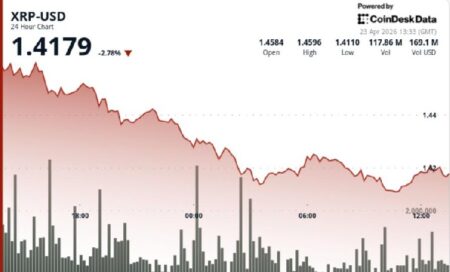
In related news that has captured the attention of XRP investors and market watchers, blockchain monitoring service Whale Alert detected a massive transfer of XRP tokens between cryptocurrency wallets. The transaction involved an impressive 116,661,476 XRP tokens, valued at approximately $165,955,281 at the time of the transfer. Such large movements of cryptocurrency always generate speculation within the trading community, as they can sometimes signal significant market events or institutional activity. However, upon closer examination of the transaction details, analysts determined that this substantial XRP transfer actually occurred between sub-wallets belonging to two of the cryptocurrency industry’s most prominent exchanges – Binance and Kraken. This type of inter-exchange transfer typically indicates either over-the-counter (OTC) trading activity or liquidity rebalancing operations, both of which are routine aspects of cryptocurrency exchange management. The timing of this transfer is particularly interesting, as it took place after XRP’s price recovered from a dramatic 30% decline that occurred within a single trading day the previous week, after which the token entered a period of sideways trading consolidation.
Looking Ahead: Implications for Ripple, XRP, and Digital Finance
The expansion of Ripple’s partnership with Zand represents more than just a business deal – it’s a statement about the future direction of financial services in the Middle East and globally. As traditional banks like Zand increasingly embrace blockchain technology and digital assets, they’re validating the years of development and advocacy that companies like Ripple have invested in bringing these innovations to market. The integration of RLUSD into a regulated banking environment, coupled with support for a bank-issued stablecoin on the XRP Ledger, demonstrates how the boundaries between traditional finance and cryptocurrency are becoming increasingly blurred. For Ripple, this partnership provides valuable real-world use cases for both its technology and its stablecoin products, strengthening its position in the competitive digital payments landscape. For Zand, the collaboration offers access to cutting-edge blockchain infrastructure and expertise that would be difficult and expensive to develop independently. Meanwhile, the continued high-volume trading activity of XRP, as evidenced by the massive inter-exchange transfer, suggests sustained institutional interest in Ripple’s native token despite recent market volatility. As both organizations move forward with their “range of initiatives,” the cryptocurrency community will be watching closely to see how this partnership evolves and what new use cases emerge from the combination of traditional banking services and blockchain innovation in one of the world’s most forward-thinking financial markets.