


The Rise and Fall of Bored Ape Yacht Club: Five Years Later
A Muted Fifth Birthday Celebration
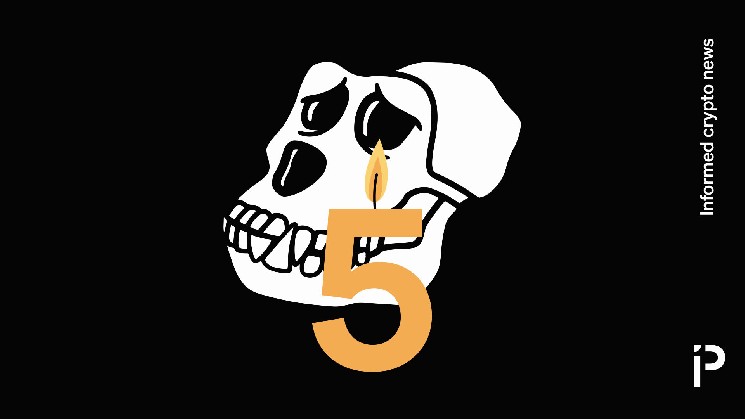
Five years ago, the Bored Ape Yacht Club burst onto the scene as one of the most exciting and talked-about NFT projects in the digital art world. Today, as BAYC marks its fifth anniversary, the celebration feels remarkably subdued compared to the hysteria that once surrounded these cartoon primates. What was once the darling of celebrities, crypto enthusiasts, and digital collectors alike has become a cautionary tale about the volatility of digital assets and the fleeting nature of internet fame. The project that once commanded headlines and attracted A-list celebrity endorsements now finds itself struggling to maintain relevance in an increasingly skeptical market. Google Trends data paints a sobering picture: interest in “Bored Ape Yacht Club” has plummeted by an astounding 97% compared to its peak during the 2022 NFT frenzy. The celebrity supporters who once proudly displayed their Apes on social media and red carpets have gone noticeably silent, and the once-thriving community has significantly contracted. This dramatic reversal of fortune raises important questions about the sustainability of NFT projects, the role of celebrity endorsements in driving speculative bubbles, and what happens when the hype train finally runs out of steam.
The Celebrity Exodus and Massive Financial Losses
The list of celebrities who once championed Bored Ape Yacht Club reads like a who’s who of entertainment royalty: Eminem, Snoop Dogg, Justin Bieber, Paris Hilton, Jimmy Fallon, Serena Williams, Neymar Jr., Post Malone, DJ Khaled, and Mark Cuban all publicly supported the project at various points. These weren’t casual endorsements either—many of these stars put serious money behind their enthusiasm. Eminem reportedly dropped approximately $462,000 on a single Ape, while Justin Bieber went even bigger, spending roughly $1.3 million on his digital primate. Brazilian football superstar Neymar Jr. invested over $1.1 million across two Apes, and Snoop Dogg paid $366,000 for four of them back in 2021. At the time, these purchases seemed like savvy investments in a revolutionary new asset class that promised to reshape digital ownership and online community building.
Fast forward to today, and the financial picture looks drastically different. Eminem’s $462,000 Ape now has a top offer of around $20,000—a staggering loss of over 95%. Justin Bieber’s situation is even more painful, with his $1.3 million investment now worth approximately $19,000. Neymar’s two Apes, once valued at over a million dollars, currently have offers totaling around $57,000. Snoop Dogg’s four-Ape collection, which cost him $366,000, is now valued at just under $28,000. Jimmy Fallon’s $224,000 purchase has similarly cratered to roughly $19,000 in value. These aren’t just minor corrections or temporary dips—they represent life-changing amounts of money that have effectively evaporated. Perhaps most tellingly, none of these celebrities have posted about BAYC or NFTs on their social media accounts since 2022, and not a single one wished the project a happy fifth birthday. The silence is deafening and speaks volumes about how these influencers now view their investments and association with the brand.
From Cultural Phenomenon to Promotional Tool
Snoop Dogg stands out as one of the few celebrities who has maintained any connection to BAYC, but even his relationship with the project has evolved in telling ways. Where he once called it a “cultural juggernaut” and seemed genuinely enthusiastic about the community and vision, his recent interactions suggest he now views it more as a promotional vehicle for other ventures rather than something he’s passionate about in its own right. A perfect example came during the 4/20 celebration last year, when BAYC organized a special trip for holders to visit Snoop’s compound. What holders might have expected to be a BAYC-focused celebration turned out to be primarily a promotional event for Dr. Bombay, Snoop’s family ice cream brand named after his Ape character. While Snoop made a brief appearance, there was minimal BAYC-themed content or promotion from him on social media—just a poorly produced AI-generated video featuring his Ape and a single repost of an old image.
This shift represents a broader pattern in how celebrity associations with BAYC have transformed. What began as seemingly genuine enthusiasm and belief in a revolutionary project has morphed into something more transactional and opportunistic. The celebrities who remain connected to BAYC appear to be leveraging whatever residual brand recognition the project still has rather than actively promoting it or contributing to its community. The other celebrities who once loudly championed the project—including Paris Hilton, Mark Cuban, Serena Williams, DJ Khaled, and Post Malone—have completely stopped mentioning it on their social media platforms. The dramatic shift from active promotion to complete radio silence suggests these public figures either recognize the reputational risk of continuing to associate with a failing project or simply have nothing positive left to say about their involvement.
The Numbers Tell a Devastating Story
Beyond the celebrity headlines and social media silence, the raw financial data surrounding BAYC paints an even grimmer picture of the project’s decline. The floor price—the minimum amount you need to pay to own any Bored Ape—has crashed by 94.3% from its all-time high reached in May 2022. This means that the baseline value of membership in what was once considered an elite digital club has essentially evaporated. ApeCoin, the cryptocurrency token associated with the BAYC ecosystem, has suffered an even more catastrophic fate, plummeting 99.6% from its peak, which also occurred around the same time in 2022. These aren’t just abstract numbers—they represent real wealth destruction for thousands of people who believed in the project’s vision and invested accordingly.
The human stories behind these statistics are often heartbreaking. One BAYC buyer’s experience encapsulates the financial devastation many holders have experienced. This individual purchased two Apes and held them through the entire 2022 boom period when they were worth a combined $4.3 million. Despite holding through the peak, hoping for even greater returns, this person eventually sold both NFTs for just $420,000—a staggering 92% loss from their maximum value. This story illustrates how the combination of greed, hope, and the sunk cost fallacy can trap investors in deteriorating assets. The broader decline in interest has created a self-reinforcing cycle: as enthusiasm wanes and prices fall, more holders lose faith and sell, which further depresses prices and drives away potential new members, which leads to even less interest and lower prices. Breaking out of this spiral requires either a fundamental reinvention of the project’s value proposition or an entirely new catalyst for interest—neither of which appears imminent.
Legal Troubles and Public Relations Disasters
BAYC’s journey hasn’t just been marked by financial decline—the project has also faced serious legal and public relations challenges that have further damaged its reputation and credibility. The celebrity endorsements that once seemed like brilliant marketing came back to haunt the project when a 2022 lawsuit accused Yuga Labs, BAYC’s creator, of using celebrity promotion without properly disclosing compensation arrangements. The lawsuit also made the more serious claim that the NFTs should be classified as securities, which would have subjected them to extensive regulatory oversight and potentially opened the company to significant legal liability. After three years of legal wrangling, a judge finally dismissed the lawsuit in 2025 and ruled that NFTs are not securities—a victory for Yuga Labs and the broader NFT industry, but one that came after years of uncertainty that undoubtedly contributed to declining confidence in the project.
The 2023 ApeFest in Hong Kong represents perhaps the most visible public relations disaster in BAYC’s history. What should have been a triumphant celebration bringing together the community for three days of networking and entertainment instead turned into a health crisis when UV lighting used during stage performances temporarily blinded multiple attendees. The incident generated widespread negative media coverage and reinforced growing perceptions that the project’s organizers were careless and unprofessional. Beyond these specific controversies, Yuga Labs’ broader business decisions have also raised questions. The company spent $450 million developing Otherside, an ambitious web3 game, only to launch it as what critics described as a “virtually unplayable buggy mess.” In 2022, Yuga Labs acquired the rights to CryptoPunks, another prominent NFT collection, in a move that seemed to signal expansion and consolidation of power in the NFT space. However, by 2025, the company sold that stake to the non-profit Node Foundation for just $20 million—suggesting either that the acquisition had failed to deliver expected value or that Yuga Labs needed to raise cash to address other challenges.
What the Future Holds for BAYC
As Bored Ape Yacht Club enters its sixth year, the project finds itself at a crossroads. Recent leadership changes, including the replacement of former CEO Greg Solano with Michael Figge, suggest the company recognizes the need for fresh direction and strategy. Yuga Labs continues to organize meetups and events for holders, attempting to maintain some sense of community among those who remain invested in the project. However, the fundamental challenges facing BAYC are significant and multifaceted. The project must overcome not only the massive financial losses suffered by its community members but also the reputational damage from legal troubles, safety incidents, and the highly visible retreat of celebrity supporters. Perhaps most importantly, BAYC must find a compelling answer to a question that has plagued NFT projects since the market crashed: what enduring value do these digital assets actually provide to their owners?
The rise and fall of Bored Ape Yacht Club offers important lessons for anyone interested in digital assets, celebrity culture, or internet phenomena more broadly. It demonstrates how quickly hype can build around novel concepts and how celebrity endorsements can create the illusion of legitimacy and staying power. It shows how speculative bubbles form when people buy assets not because of their intrinsic value but because they believe someone else will pay more for them later. It illustrates the dangers of making investment decisions based on fear of missing out rather than careful analysis of fundamentals. Whether BAYC can reinvent itself and provide genuine long-term value to its community remains to be seen. What’s already clear, however, is that the project’s first five years will be remembered less for revolutionizing digital ownership and more for being a cautionary tale about the intersection of celebrity culture, speculative mania, and the often harsh realities of emerging technology markets. The silence from those celebrities on BAYC’s fifth birthday speaks louder than any promotional tweet ever could.