


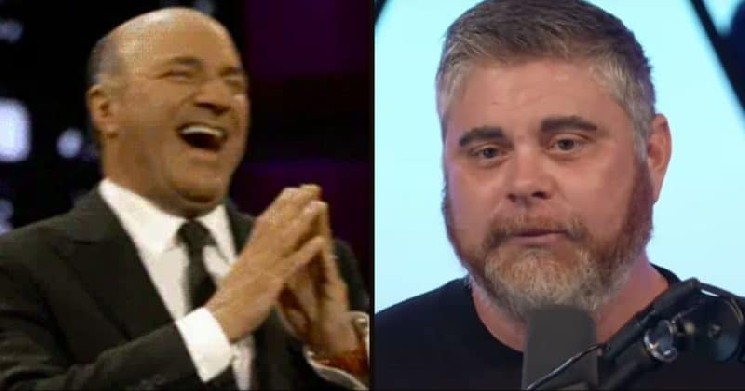

Kevin O’Leary Wins $2.8 Million Defamation Lawsuit Against Crypto Influencer BitBoy
The High-Stakes Legal Battle Between a TV Star and a Crypto Creator
In a significant legal victory that highlights the serious consequences of online defamation, Kevin O’Leary—the sharp-tongued businessman famous for his role on the hit investment show Shark Tank—has been awarded $2.8 million in damages against Ben Armstrong, a cryptocurrency content creator who built his following under the online persona “BitBoy.” The judgment, handed down this week by a federal court in Miami, serves as a stark reminder that what people post on social media can have very real and expensive consequences. The case centered around false and damaging accusations Armstrong made against O’Leary on social media platforms, specifically regarding a tragic boating accident from 2019. What makes this case particularly noteworthy isn’t just the substantial dollar amount involved, but the fact that Armstrong essentially lost by default—he failed to show up to court or properly defend himself against the allegations, leading to what legal experts call a “default judgment.” This wasn’t a situation where both sides vigorously battled it out in court; instead, Armstrong’s absence allowed O’Leary to present his case without opposition, ultimately leading to this multi-million dollar award.
Breaking Down the Damages: Why O’Leary Was Awarded Nearly $3 Million
The US District Court for the Southern District of Florida didn’t just pull numbers out of thin air when determining what Armstrong owed O’Leary. The award was carefully broken down into three distinct categories, each addressing different types of harm that O’Leary suffered as a result of Armstrong’s posts. First, the court awarded O’Leary $750,000 specifically for emotional distress—the mental anguish and psychological harm that came from having false accusations spread about him to hundreds of thousands of people online. Anyone who has experienced cyberbullying or online harassment on even a small scale can imagine how disturbing it would be to have damaging lies told about you to a massive audience. Second, O’Leary was awarded $78,000 for harm to his reputation, recognizing that these false posts damaged his standing in the business community and in the public eye more broadly. For someone like O’Leary, whose personal brand is integral to his business ventures, speaking engagements, and media opportunities, reputation is quite literally worth money. Finally, and most substantially, the court hit Armstrong with $2 million in punitive damages—money that goes beyond simply making O’Leary whole and is instead meant to punish Armstrong for his conduct and deter others from engaging in similar behavior. Punitive damages are reserved for cases where someone’s actions are particularly egregious, suggesting the court found Armstrong’s conduct especially troubling.
The Accusations That Started It All: What Armstrong Posted About O’Leary
The controversy that sparked this expensive legal battle traces back to March 2025, when Armstrong published posts on social media making serious accusations against Kevin O’Leary. Specifically, Armstrong alleged that O’Leary was somehow involved in a fatal boating accident that had occurred years earlier in 2019. This wasn’t just spreading gossip or expressing an opinion—Armstrong was making factual claims about O’Leary’s involvement in an incident that resulted in someone’s death, one of the most serious accusations you can level against another person. The reality was quite different from what Armstrong suggested: O’Leary had indeed been involved in a boating accident, but he was a passenger, not the operator of the vessel. His wife had been operating the boat and subsequently faced legal scrutiny, but she was later cleared of any wrongdoing following a proper trial. By the time Armstrong made his posts, the legal system had already examined the incident and determined there was no criminal liability. Armstrong’s posts weren’t just false—they dredged up a traumatic incident from O’Leary’s past that had already been legally resolved. Making matters worse, Armstrong’s content reached approximately 156,000 viewers, meaning these false accusations were spread to a massive audience. In today’s digital age, that kind of reach can cause damage that spreads far beyond the original post, as people share, comment, and repeat claims without always checking whether they’re true.
Crossing the Line: Doxxing and Harassment That Increased Security Costs
What elevated Armstrong’s conduct from merely posting false information to something far more sinister was his decision to include O’Leary’s personal phone number in his posts and actively encourage his followers to contact the Shark Tank star. This practice, known as “doxxing,” involves publicly releasing someone’s private contact information with the intent of facilitating harassment. It’s one thing to criticize a public figure or even spread misinformation about them—it’s quite another to hand your audience the tools to directly harass that person and encourage them to do so. The consequences were immediate and severe. The social media platform where Armstrong posted this information responded by suspending his account, recognizing that this crossed a clear line into harassment. But the damage had already been done. O’Leary found himself fielding unwanted calls and messages from strangers who had seen Armstrong’s posts, creating a genuine security concern. In response to this breach of his privacy and the potential threats that came with it, O’Leary was forced to substantially increase his personal security measures, adding an estimated $200,000 to his annual security budget. That’s not a trivial expense, even for someone of O’Leary’s wealth, and it represents tangible, quantifiable harm that resulted directly from Armstrong’s actions. The court clearly took this into consideration when determining damages, recognizing that Armstrong’s conduct created real-world consequences that went far beyond hurt feelings or temporary embarrassment.
The Court’s Findings: Actual Malice and a Pattern of Troubling Behavior
When the federal court examined Armstrong’s conduct, it didn’t just find that he had made false statements—it determined that he had acted with “actual malice,” a specific legal standard that’s particularly important in defamation cases involving public figures. Actual malice means that Armstrong either knew his statements were false when he made them or that he acted with reckless disregard for whether they were true or false. This is a higher bar than simple negligence or carelessness; it suggests Armstrong either deliberately lied or simply didn’t care whether what he was saying was true, as long as it served his purposes. The court’s finding was bolstered by evidence of Armstrong’s broader pattern of hostile and inappropriate communications. Notably, the court referenced messages Armstrong had sent to judges in separate legal proceedings—conduct that demonstrates a troubling disregard for legal boundaries and professional decorum. When someone is willing to send hostile messages to judges, it paints a picture of someone who either doesn’t understand or doesn’t respect the seriousness of legal proceedings and the potential consequences of their words and actions. This pattern of behavior likely influenced the court’s decision to award such substantial punitive damages, as it suggested Armstrong’s defamation of O’Leary wasn’t an isolated mistake but rather part of a broader pattern of reckless and harmful conduct online.
Armstrong’s Failed Attempt to Overturn the Judgment
After the default judgment was entered against him, Armstrong did eventually try to get back into the legal fight by asking the court to set aside the judgment and give him another chance to defend himself. His legal team argued that there were extenuating circumstances that explained his failure to participate in the proceedings, specifically pointing to Armstrong’s incarceration and mental health struggles, including a diagnosis of bipolar disorder. These are serious issues that courts do sometimes consider when someone has missed deadlines or failed to appear, as mental health conditions and incarceration can genuinely interfere with someone’s ability to participate in legal proceedings. However, the court was not persuaded by Armstrong’s arguments and denied his request to overturn the default judgment. The judge pointed out that Armstrong had been properly served with notice of the lawsuit and was fully aware that legal action had been filed against him, yet he waited nearly a full year before attempting to do anything about it. This delay suggested to the court that Armstrong’s failure to participate wasn’t simply due to circumstances beyond his control, but rather reflected a choice—whether deliberate or neglectful—not to take the legal proceedings seriously until after judgment had already been entered against him. Additionally, the court noted that allowing Armstrong to set aside the judgment at this late stage would unfairly prejudice O’Leary, who had already invested significant time, money, and effort into the case. O’Leary’s legal team had prepared extensive motions, commissioned expert reports, and attended a full evidentiary hearing—all expensive and time-consuming work that would essentially be wasted if Armstrong were allowed to start the process over from scratch. The court’s decision reflects a balance between giving defendants fair opportunities to defend themselves and preventing people from gaming the system by ignoring lawsuits until after they’ve lost.