


The $210,000 Lottery: How a Small-Scale Bitcoin Miner Beat Astronomical Odds
A David vs. Goliath Moment in Bitcoin Mining
In what can only be described as winning the cryptographic lottery, a solo Bitcoin miner operating a relatively modest home setup successfully validated block 943,411 on Thursday, walking away with 3.139 Bitcoin worth approximately $210,000. What makes this achievement particularly remarkable isn’t just the payout—it’s the astronomical odds this miner overcame to claim it. Running roughly 230 terahashes per second of computing power, this individual operator controlled such a tiny fraction of Bitcoin’s total network hashrate that most mining dashboards would round their share down to essentially zero. Yet against all statistical probability, they found the winning combination that unlocked this substantial reward, proving once again that in the world of Bitcoin mining, the improbable remains possible.
The successful miner was connected to solo.ckpool.org, an anonymous solo mining pool that has been operating since 2014. Unlike traditional mining pools where participants combine their computing power and split rewards proportionally, solo pools allow individual miners to swing for the fences—keeping their entire block reward if they successfully validate a block, minus only a modest 2% service fee. CKpool developer Con Kolivas confirmed the victory on social media platform X, providing some eye-opening context about just how unlikely this win was. According to his calculations, a miner of this size had approximately a 1-in-28,000 chance of finding a block on any given day. To put that in perspective, those odds are roughly similar to being struck by lightning in your lifetime, yet this miner hit the jackpot after what may have been days, weeks, or months of persistent effort.
The Hardware Behind the Miracle
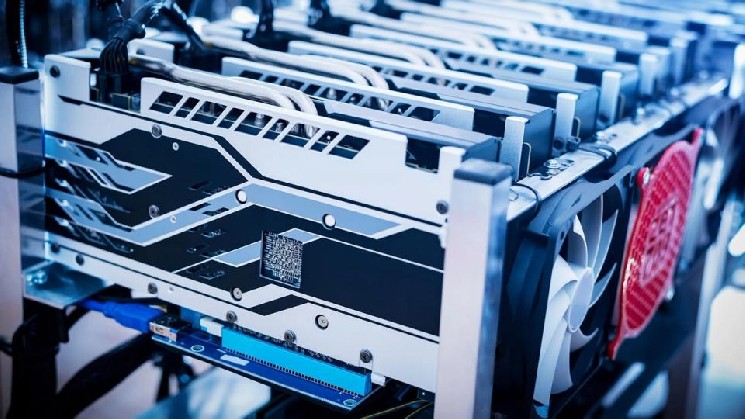
To understand just how remarkable this achievement is, it’s essential to consider the scale of Bitcoin’s global mining network. At 230 terahashes per second, this winning mining rig represents approximately 0.00002% of Bitcoin’s total estimated hashrate, which hovers around 1 zetahash per second as of early April 2025. That level of output is consistent with what you’d expect from a small collection of home-scale ASIC (Application-Specific Integrated Circuit) miners—perhaps a handful of specialized machines humming away in a basement, garage, or spare room—rather than the industrial-scale warehouses filled with thousands of machines that dominate today’s mining landscape.
The contrast becomes even starker when you compare this solo miner to the industry giants. Take Riot Platforms, one of the publicly listed Bitcoin mining companies, which alone operates more than 30 exahashes of computing power. That’s roughly 130,000 times the hashrate of Thursday’s lucky winner. In other words, if the Bitcoin network were a voting system where computing power equals votes, this solo miner would have one vote for every 130,000 that just one major company controls—not to mention all the other industrial operations worldwide. This David-versus-Goliath dynamic makes the victory all the more compelling and serves as a reminder that Bitcoin’s proof-of-work system, while heavily dominated by large players, still offers a path—however narrow—for smaller participants to claim significant rewards.
A Rare But Recurring Phenomenon
Thursday’s block represents the 312th solo win registered on CKpool since the pool’s inception over a decade ago, and notably, it was the first since February 28, ending what had been a 33-day drought without a solo mining victory. The statistics around solo mining paint a picture of just how rare these events truly are. Over the past twelve months, solo pools have successfully found just 20 Bitcoin blocks, distributing a combined total of 62.96 BTC to lucky miners. That works out to roughly one solo block discovery every 18.7 days on average, though the distribution is far from regular—the longest gap between solo block discoveries stretched to 58 days, a testament to the extreme variance involved in this high-risk, high-reward approach to mining.
What’s particularly fascinating is that this win continues a pattern that has repeated with surprising regularity throughout this Bitcoin cycle, creating a series of underdog success stories that capture the imagination of the crypto community. Each of these victories represents not just a financial windfall for the miner involved, but also a powerful narrative about persistence, probability, and the democratizing potential of decentralized networks. While the expected return from solo mining with modest equipment is typically negative when you factor in electricity costs and hardware depreciation, these occasional jackpots demonstrate that the theoretical possibility of winning remains very real, even if the probability remains vanishingly small.
Recent Lightning Strikes in the Mining World
The December 2024 solo mining win provides another compelling example of these lottery-like payouts. A miner running approximately 270 terahashes per second—slightly more powerful than Thursday’s winner but still minuscule by industry standards—cleared similarly daunting 1-in-30,000 daily odds to claim a block reward worth $284,633. Then in November, the mining community witnessed what might be the most statistically improbable win in recent memory: a miner running just 6 terahashes per second, equivalent to the output of a single older-generation ASIC that wouldn’t normally expect to find a block in hundreds of years of continuous operation, somehow beat approximately 1-in-180-million odds to land a reward worth roughly $265,000. That’s comparable to winning certain national lottery jackpots—except instead of buying a ticket, this miner was simply running outdated equipment that most industry professionals would consider economically unviable.
Perhaps most intriguing of all was the late February incident where a miner essentially rented their way to riches, turning approximately $75 worth of cloud-based hashrate into a $200,000 windfall. By pointing just 1 petahash of rented computing power at CKpool for a few hours—a modest and time-limited experiment rather than a sustained mining operation—this operator hit the cryptographic jackpot in spectacular fashion. This particular case raises interesting questions about mining strategy and risk tolerance: was this someone experimenting with a calculated gamble, or simply someone who got extraordinarily lucky while testing the waters of Bitcoin mining? Regardless of intent, the result was life-changing, demonstrating that in the probabilistic world of proof-of-work mining, even brief participation can theoretically yield outsized returns.
The Economics and Philosophy of Solo Mining
These remarkable success stories prompt important questions about the economics and rationality of solo mining in the modern Bitcoin era. From a purely expected-value perspective, solo mining with modest equipment makes little economic sense for most participants. When you calculate the average return accounting for electricity costs, hardware depreciation, and the vanishingly small probability of actually finding a block, traditional pool mining—where rewards are distributed proportionally based on contributed hashrate—offers more predictable and generally more favorable economics. Yet solo mining persists, and the reasons extend beyond simple mathematical optimization.
For some miners, the appeal is philosophical and ideological. Solo mining represents the purest form of participation in Bitcoin’s decentralized network—a direct connection to the protocol’s fundamental proof-of-work mechanism without intermediaries or pooled resources. There’s an undeniable appeal to the idea that an individual with modest equipment, operating independently from anywhere in the world, might solve the cryptographic puzzle that validates the next block and claims the full reward. This captures something essential about Bitcoin’s original vision: a peer-to-peer system where participation isn’t gated by institutional membership or minimum thresholds. Others are drawn by the lottery-like excitement—the thrill of knowing that each hash computed represents a minuscule but real chance at a life-changing payout. And finally, some solo miners may simply enjoy the technical challenge and hobby aspect, viewing any potential reward as a bonus rather than an expected return on investment. The $210,000 win on Thursday, along with the string of similar successes over recent months, serves to keep this dream alive and validates the decision of those who choose the solo path despite its long odds.