
Another Arson Attack Strikes Golders Green: Community on Edge as Tensions Rise
A Memorial to Iranian Regime Victims Targeted
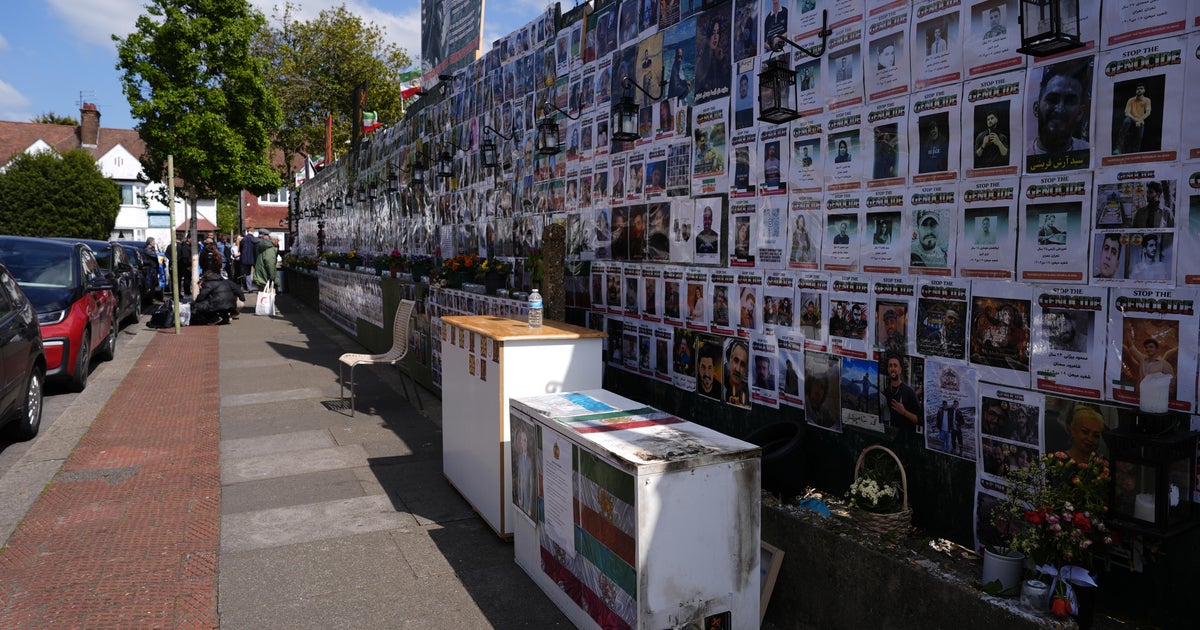
In the early hours of Monday morning, Golders Green in north London became the site of yet another suspected arson attack, this time targeting a memorial wall that pays tribute to individuals who lost their lives at the hands of the Iranian regime. According to British police who released a statement on Tuesday, while the attack was attempted, the memorial wall itself escaped damage. The Metropolitan Police have confirmed they are investigating the incident, though they’ve stated they are not currently treating it as terror-related. Interestingly, despite this classification, counter-terror police are taking the lead on the investigation—a detail that underscores the serious nature of these attacks and their potential implications. The memorial wall, which displays photographs of victims, stands directly across from a Jewish care home for elderly residents, adding another layer of concern to an already anxious community. As of now, the identity of those responsible remains a mystery, with no group claiming responsibility and no arrests made. Police have emphasized they’re keeping an open mind regarding the motive, though the location and target suggest troubling possibilities.
A Pattern of Attacks Emerges in the Area
This latest incident doesn’t exist in isolation but rather forms part of a disturbing pattern of attacks that have plagued the Golders Green neighborhood. Just last month, the same area witnessed another arson attack, this time targeting vehicles belonging to a Jewish ambulance service. That attack was claimed by a group calling itself Harakat Ashab al-Yamin al-Islamia, or The Islamic Movement of the Companions of the Righteous. A representative from this group spoke to CBS News in March, delivering a chilling message: “We’ll keep threatening U.S. and Israeli interests worldwide until we’ve avenged every child in Gaza, Iran, Lebanon, and the resistance nations.” This statement reveals the ideological motivations behind at least some of the attacks in the area, connecting local incidents to broader geopolitical tensions in the Middle East. The group’s explicit targeting of Jewish institutions and their stated mission of “avenging” deaths in various conflict zones demonstrates how international conflicts are increasingly manifesting as violence on British streets, leaving local communities caught in the crossfire of disputes that originated thousands of miles away.
Law Enforcement Response and Community Concerns
The repeated attacks have understandably left residents of Golders Green on edge, a sentiment acknowledged by local law enforcement officials. The head of policing in northwest London addressed these concerns directly on Tuesday, stating, “We recognize that this incident will heighten concerns in the Golders Green area, where residents have already faced a series of attacks.” In response to the escalating situation, police have significantly increased their presence in the neighborhood. Since last month’s attack, authorities have implemented enhanced security measures including armed police patrols—a sight that, while reassuring to some, serves as a stark reminder of the threats facing the community. Additionally, officers from Project Servator have been deployed to the area. These specially trained personnel possess expertise in identifying individuals who may be planning or preparing to commit criminal acts, representing a proactive approach to preventing future incidents. The visible police presence aims to both deter potential attackers and provide reassurance to a community that has endured multiple attacks in recent weeks, though the psychological toll of living under such circumstances cannot be easily measured or remedied through increased patrols alone.
A Wider Campaign Targeting Jewish Institutions
The Harakat Ashab al-Yamin al-Islamia group has not limited its activities to Golders Green, instead claiming responsibility for a broader campaign targeting Jewish institutions across both London and Europe. Within London alone, the group has been connected to several recent incidents that paint a picture of coordinated intimidation and violence. On April 15, an attempted arson attack was carried out at the offices of a Persian-language media outlet in northwest London, an attack that likely aimed to silence voices critical of certain political regimes in the Middle East. Just four days later, on April 19, a synagogue in Kenton, also in northwest London, suffered an arson attack. In this case, authorities achieved a breakthrough when a 17-year-old pleaded guilty to participation in the incident—a rare success in what has otherwise been a series of unsolved attacks. The fact that a teenager was involved in such a serious crime raises troubling questions about radicalization and recruitment, particularly among young people who may be vulnerable to extremist messaging online or within certain community circles. These attacks, taken together, suggest not random acts of vandalism but rather a systematic campaign designed to intimidate and terrorize Jewish communities throughout the region.
Rising Antisemitism Across the United Kingdom
The attacks in Golders Green and elsewhere in London occur against a backdrop of sharply rising antisemitism throughout the United Kingdom. According to the Community Security Trust, an organization that monitors and records antisemitic incidents, 3,700 such incidents were documented in 2025—representing the second-highest total ever reported to the organization. This staggering figure reflects a troubling trend that has seen Jewish communities facing increased hostility, harassment, and violence. These incidents range from verbal abuse and online harassment to physical attacks and property damage like the arson attempts in Golders Green. The correlation between international events in the Middle East and spikes in antisemitic incidents in the UK has been well documented, with tensions in Gaza, Israel, and surrounding regions often followed by increased attacks against British Jewish communities who have no direct connection to the conflicts. This pattern reveals how ancient prejudices are being reactivated and justified through contemporary political disputes, creating a dangerous environment where British citizens are targeted because of their religious or ethnic identity. The Community Security Trust’s figures serve as a quantitative reminder of what many in Jewish communities already feel qualitatively—that they are living through a particularly dangerous period requiring constant vigilance.
The Human Cost and Path Forward
Behind the statistics and police statements are real people whose lives have been disrupted, whose sense of security has been shattered, and whose daily routines now include calculations about safety that most citizens never need to make. The elderly residents of the care home across from the targeted memorial wall, many of whom may have survived historical persecution, now face fresh threats in what should be their golden years of peace. The paramedics of the Jewish ambulance service, whose mission is saving lives regardless of background, had their vehicles torched simply because of the community they serve. And throughout Golders Green, families are grappling with anxiety about whether their neighborhoods, synagogues, or businesses might be next. The presence of armed police, while necessary under the circumstances, transforms the character of a community, replacing the casual openness of daily life with constant reminders of danger. As authorities continue their investigations and work to prevent future attacks, the challenge extends beyond policing to addressing the underlying currents of hatred and radicalization that fuel such violence. Until the ideology that justifies attacking civilians because of their religion or ethnicity is confronted and countered, communities like Golders Green will remain vulnerable, and the essential work of building a cohesive, tolerant society will be undermined by those who seek division through violence and intimidation.