


World Liberty Financial Under Fire: Understanding the Controversy Surrounding Trump’s Crypto Venture
Growing Concerns and Accusations in the Crypto Community
World Liberty Financial, the cryptocurrency project associated with the Trump family, has recently become the center of intense criticism and controversy within the digital asset community. The platform, which was originally launched in fall 2024 with significant fanfare and presidential backing, is now facing serious questions about its legitimacy and the level of involvement from its most famous backers. The controversy has been particularly intense on Crypto Twitter, where users have been debating whether the project represents a legitimate business venture or something more sinister. Two main issues have fueled this debate: a questionable lending position involving the project’s $WLFI token and the mysterious removal of the Trump family from the project’s official team member page on its website. These developments have led many cryptocurrency enthusiasts and investors to question whether the Trump family is attempting to quietly distance themselves from the project, possibly in anticipation of future problems. The situation has become so contentious that the word “scam” has been frequently used in discussions about World Liberty Financial, though the project’s leadership vehemently denies any wrongdoing and insists that concerns are nothing more than “FUD” (fear, uncertainty, and doubt) spread by critics.
The Rise and Evolution of World Liberty Financial
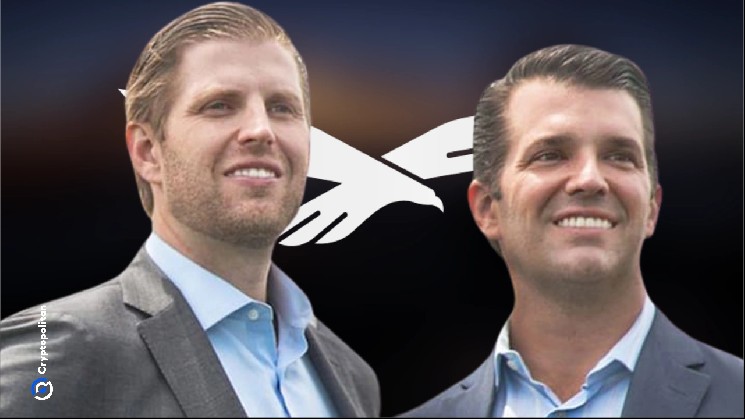
When World Liberty Financial first launched in the fall of 2024, it was positioned as a revolutionary platform that would serve as a bridge between the traditional banking world and the emerging field of decentralized finance (DeFi). The project’s team member page prominently featured U.S. President Donald Trump and his sons Eric, Donald Trump Jr., and Barron as co-founders, alongside other team members including Chase Herro, Zak Folkman, and members of the Witkoff family. This high-profile backing gave the project instant credibility and attracted significant attention from both cryptocurrency enthusiasts and traditional investors. The project’s native token, $WLFI, serves as the governance token for the platform, giving holders voting rights on important decisions. Between its launch and March 2025, World Liberty conducted three phases of token sales, ultimately raising an impressive $550 million from investors eager to be part of what they believed would be a groundbreaking financial platform. However, $WLFI tokens didn’t become tradable until September 2025, creating a lengthy period during which early investors couldn’t liquidate their positions or fully participate in the broader cryptocurrency market. As time went on, observers began noticing subtle but significant changes in how the Trump family was presented in relation to the project, with their formal titles being downgraded from “co-founders” to the more ambiguous designation of “Web3 Ambassadors.”
The Disappearing Act: Trump Family’s Vanishing Presence
The most alarming development for World Liberty Financial investors came when the entire team member page disappeared from the project’s website, leaving many to wonder what had happened behind the scenes. Where once there had been prominent photographs and biographies of the Trump family members detailing their involvement, there was now nothing but a carefully worded disclaimer at the bottom of the page. This disclaimer states explicitly that “None of Donald J. Trump, his family members or any director, officer or employee of Trump Organization or of DT Marks LLC is an officer, director or employee of, WLF Holdco LLC or World Liberty Financial LLC.” This legal language suggests a deliberate effort to create distance between the Trump name and the operational aspects of the project, even while the family continues to profit from it. Adding fuel to the fire, observers noted that Eric Trump had deleted several posts related to $WLFI from his Twitter account earlier in the year, a move that many interpreted as another sign that the family was trying to reduce their public association with the project. When Eric Trump deleted these posts, the $WLFI token briefly fell more than 8%, demonstrating how closely the token’s value was tied to the Trump family’s perceived commitment. At the same time, the project’s stablecoin, $USD1, temporarily lost its dollar peg and fell to $0.9802 against USDT, raising additional concerns about the stability of the entire ecosystem.
World Liberty’s Defense and the Reality of Trump Involvement
In response to mounting concerns and accusations, World Liberty Financial CEO Zach Witkoff took to social media to defend the project and dismiss critics’ concerns as mere FUD designed to undermine confidence in the platform. Witkoff pointed out that the website had been redesigned months earlier, suggesting that the removal of the team page was part of a routine update rather than a deliberate attempt to hide the Trump family’s involvement. He also noted that both Donald and Eric Trump continue to tweet about the project on a weekly basis, and that both have World Liberty Financial mentioned in their Twitter biographies, which he argued demonstrates their ongoing commitment. Indeed, Eric Trump’s bio does describe him as an advocate for World Liberty Financial, while Donald Trump Jr.’s profile still identifies him as a co-founder. However, critics argue that social media mentions are a far cry from the operational involvement that was initially promised when the project launched. Despite the disclaimer stating that the Trump family holds no formal operational roles, they do maintain significant financial interest in the project’s success. Through DT Marks DEFI LLC, the Trump family owns approximately 38% of WLF Holdco LLC, which controls all rights to net protocol revenues from the WLF protocol. This stake has actually decreased from a previous high of 60% in March 2025, according to Reuters reporting. Additionally, DT Marks DEFI LLC holds 22.5 billion $WLFI tokens and is entitled to receive 75% of the net revenue from token sales, as well as interest earned on reserve assets backing the $USD1 stablecoin, ensuring that the family profits handsomely regardless of their day-to-day involvement.
The Controversial Loan Deal That Sparked Outrage
Beyond the questions about the Trump family’s involvement, World Liberty Financial has faced intense criticism over a recent loan transaction that many in the DeFi community consider reckless or potentially exploitative. The controversy centers on World Liberty’s use of the Dolomite lending protocol, where the project deposited approximately 5 billion $WLFI tokens valued at around $440 million as collateral to borrow either $75 million or $150 million in stablecoins (reports vary between $USD1 and USDC). The situation is made more complicated by the fact that Corey Gellar, co-founder of Dolomite, also serves as an advisor to World Liberty Financial, raising questions about potential conflicts of interest. Critics argue that World Liberty essentially used its own governance tokens to drain Dolomite’s lending pool to such an extent that many other depositors found themselves unable to withdraw their funds, a situation that undermines the fundamental promise of DeFi platforms to provide liquid, accessible financial services. In response to concerns, the World Liberty team attempted to frame their actions as beneficial, claiming that serving as an “anchor borrower” allows them to generate yield that makes $WLFI Markets more attractive for all participants. Perhaps most controversially, the team stated that even if market conditions moved dramatically against them and pushed them toward liquidation, they would simply supply more $WLFI tokens as additional collateral rather than repaying the debt. This statement alarmed many cryptocurrency veterans who remembered similar collateralization strategies employed by failed projects like Terraform Labs (which created the collapsed Terra/Luna ecosystem) and FTX (whose fraudulent use of customer funds led to one of the industry’s most spectacular failures).
Current State and Future Uncertainties
As the controversy continues to unfold, the $WLFI token has suffered significant price declines, currently trading at approximately $0.07989, representing a 1.4% decline over 24 hours and a devastating 44% decrease year-to-date. These price movements reflect growing investor concern about both the project’s management and its long-term viability. DeFi analyst Ignas, who commands significant respect in the cryptocurrency community, publicly criticized World Liberty’s strategy, noting that depositing more volatile governance tokens as collateral rather than repaying stablecoin debt might lower the immediate liquidation price but “makes the problem worse, not better in the longer term.” This expert opinion echoes concerns that World Liberty Financial may be employing unsustainable financial strategies that could eventually lead to a collapse similar to other high-profile crypto failures. The situation raises broader questions about the intersection of politics and cryptocurrency, particularly when powerful political figures lend their names to projects without apparently taking responsibility for day-to-day operations. For ordinary investors who bought $WLFI tokens based on the Trump family’s initial prominent involvement, the current situation represents a troubling evolution from what they believed they were investing in. Whether World Liberty Financial can overcome these controversies and deliver on its original promise of bridging traditional and decentralized finance remains to be seen, but the project will need to rebuild significant trust within the cryptocurrency community if it hopes to succeed long-term.