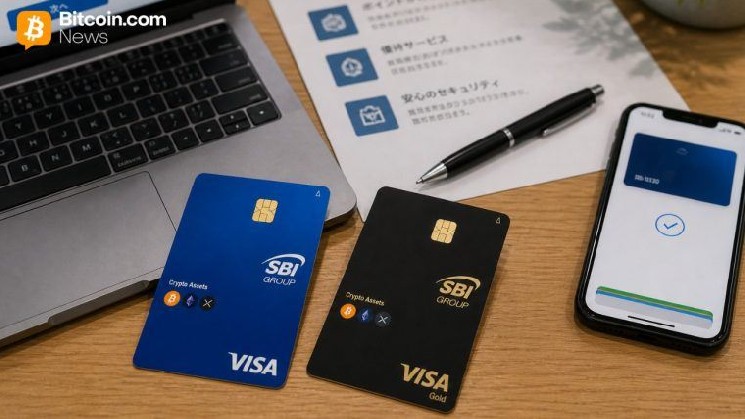

SBI Group Launches Crypto-Rewarding Visa Cards in Japan: A New Era of Digital Asset Integration
Bridging Traditional Finance and Cryptocurrency Through Everyday Spending
In a groundbreaking move that signals the deepening integration of cryptocurrency into mainstream financial services, Japanese financial giant SBI Group has unveiled a innovative credit card program that transforms everyday purchases into digital asset accumulation. Announced on May 1, 2026, the SBI Visa Crypto Card and its premium Gold variant represent a significant step forward in making cryptocurrency ownership accessible and automatic for ordinary consumers. Unlike traditional cashback or points programs that offer modest discounts or travel perks, these cards directly convert spending rewards into three of the world’s most established cryptocurrencies: Bitcoin ($BTC), Ethereum ($ETH), or Ripple’s XRP ($XRP). This initiative reflects SBI’s position as one of Japan’s most influential financial conglomerates and demonstrates the company’s commitment to positioning itself at the forefront of the evolving digital economy. The launch comes at a time when cryptocurrency adoption continues to grow globally, yet many potential investors still face barriers to entry, whether psychological, technical, or financial. By embedding crypto accumulation into the familiar framework of credit card rewards, SBI is effectively removing these obstacles and allowing consumers to build digital asset portfolios through their normal spending habits without requiring active trading or investment decisions.
How the Crypto Reward System Actually Works
The mechanics of the SBI Visa Crypto Card system are designed for simplicity and automation, addressing one of the major hurdles that has historically prevented mainstream crypto adoption: complexity. When applying for either card version, users must make a single, straightforward decision—selecting which cryptocurrency they want to accumulate from the three available options: Bitcoin, Ethereum, or XRP. This choice is made at the application stage, creating a set-it-and-forget-it approach that removes the need for ongoing decisions about asset allocation. Once the card is activated and the cryptocurrency preference is established, the reward mechanism operates entirely in the background. Every purchase made with the card generates points according to the card’s reward structure, and these points are then automatically converted into the selected cryptocurrency on a monthly basis. Importantly, SBI has eliminated exchange fees from this conversion process, meaning cardholders receive the full value of their earned rewards without the typical transaction costs that can erode returns in cryptocurrency exchanges. To participate in the program, users must maintain an account with SBI’s cryptocurrency asset service, though the company has streamlined the process for existing customers, who can link their current accounts without opening additional ones. This integration keeps the accumulation process consistent and directly tied to spending activity, creating a passive investment strategy that requires no additional effort beyond normal credit card use. The system also extends into broader investment activities through SBI Securities’ credit card investment trust accumulation service, which the company promotes as a Japanese first—enabling users to earn cryptocurrency while simultaneously contributing to monthly investment funds, thereby building both traditional and digital asset portfolios in parallel.
Reward Rates, Fees, and the Difference Between Standard and Gold Cards
Understanding the financial structure of the two card offerings reveals a carefully calibrated system designed to appeal to different spending levels and user needs. The standard SBI Visa Crypto Card offers a base reward rate of up to 0.8% on purchases under normal conditions, while the premium Gold version provides a more generous rate of up to 1.3%. These percentages represent the portion of spending that gets converted into the user’s selected cryptocurrency during regular operations outside of promotional periods. The fee structure for both cards follows a common pattern in the credit card industry: the first year is free for both versions, allowing users to test the service without initial commitment. After the introductory period, the standard card carries an annual fee of ¥1,650 (approximately $11-12 USD depending on exchange rates), though this fee is completely waived for users who spend at least ¥100,000 (roughly $670-750 USD) annually—a threshold that many regular credit card users would naturally exceed through ordinary expenses. The Gold card commands a higher annual fee of ¥6,600 (approximately $44-50 USD) after the first year, positioning it as a premium product for more substantial spenders. However, SBI has built in an incentive for high-volume users: those who spend at least ¥2 million (approximately $13,400-15,000 USD) yearly on the Gold card receive cryptocurrency rewards equivalent to the annual fee, effectively making the card free for their level of usage. Beyond the crypto rewards that distinguish these cards from traditional offerings, both versions include standard protections expected in modern credit cards, such as theft and loss coverage. The Gold card, befitting its premium status, adds several enhanced benefits including travel accident insurance, shopping protection against damaged or stolen purchases, and access to airport lounges—though lounge access is capped at three visits per year, a limitation that distinguishes it from ultra-premium travel cards. These traditional benefits operate independently of the cryptocurrency reward system and the promotional campaign, providing ongoing value regardless of market conditions or promotional timing.
The Launch Campaign: Dramatically Boosted Rewards for Early Adopters
To generate momentum and attract early adopters, SBI has designed a limited-time launch campaign with substantially elevated reward rates that significantly exceed the standard earning structure. This promotional period is carefully defined by specific dates: applications must be submitted between May 1 and May 31, 2026, and qualifying spending must occur through August 5, 2026, giving participants approximately three to four months of enhanced earning potential depending on when they apply. During this campaign window, standard cardholders can earn rewards at a rate of up to 2.5%—more than three times the normal 0.8% rate—though this enhanced earning is capped at 1,500 points total. Gold cardholders benefit from even more dramatic promotional terms, with rewards reaching up to 10% of spending—nearly eight times the standard 1.3% rate—with a higher cap of 5,000 points. These campaign parameters create interesting strategic considerations for potential applicants. The point caps mean that standard users would maximize their promotional benefit after spending ¥60,000 (approximately $400-450 USD) if earning at the full 2.5% rate, while Gold users would hit their 5,000-point cap after ¥50,000 in spending (approximately $335-375 USD) at the maximum 10% rate. This structure makes the campaign particularly attractive for users planning significant near-term purchases—such as travel bookings, electronics, home furnishings, or other major expenses—as they could concentrate this spending into the promotional period to maximize cryptocurrency accumulation. The temporary nature of these elevated rates also serves a strategic marketing purpose, creating urgency for prospective customers while allowing SBI to manage the financial cost of the promotion by limiting both the time frame and the total points that can be earned at the enhanced rates.
Strategic Implications for SBI and the Broader Crypto Industry
SBI Group’s launch of crypto-rewarding credit cards represents more than just a novel product offering—it signals important strategic positioning within both the traditional financial sector and the evolving cryptocurrency ecosystem. As one of Japan’s largest and most respected financial conglomerates, with operations spanning banking, securities, insurance, and asset management, SBI brings institutional credibility to cryptocurrency adoption in a way that standalone crypto companies cannot match. This move follows the company’s pattern of strategic investments and initiatives in the blockchain and digital asset space over the past several years, including stakes in cryptocurrency exchanges and blockchain technology companies. By integrating crypto rewards directly into payment cards carrying the globally recognized Visa brand, SBI is effectively normalizing cryptocurrency ownership and making it accessible to consumers who might never visit a cryptocurrency exchange or download a crypto wallet application. This approach addresses a fundamental challenge in crypto adoption: while awareness of Bitcoin, Ethereum, and other digital assets has grown substantially, actual ownership and usage remain limited by perceived complexity, concerns about security, and simple inertia. The SBI cards eliminate these barriers by embedding crypto accumulation into the familiar, trusted framework of credit card rewards—a system that millions of consumers already understand and use regularly. The selection of Bitcoin, Ethereum, and XRP as the three available options is also strategically significant. These represent three different categories within the cryptocurrency ecosystem: Bitcoin as the original and most recognized digital currency and store of value; Ethereum as the leading platform for smart contracts and decentralized applications; and XRP as a payment-focused cryptocurrency with particular strength in cross-border transactions—an area of strategic interest for SBI given the company’s financial services focus. By limiting choices to these three established assets rather than offering access to hundreds of smaller cryptocurrencies, SBI balances user preference with risk management, focusing on assets with substantial market capitalization, liquidity, and regulatory acceptance in Japan.
What This Means for Consumers and the Future of Crypto Integration
For individual consumers, the SBI Visa Crypto Cards present a genuinely novel opportunity to participate in cryptocurrency markets through passive accumulation rather than active trading, fundamentally changing the risk-reward calculation that typically governs crypto investment decisions. Traditional cryptocurrency investment requires users to make explicit decisions to purchase digital assets, typically involving setting up exchange accounts, transferring funds, timing purchases, and managing security—all activities that require time, knowledge, and psychological commitment to a volatile asset class. The SBI card model inverts this dynamic: users make a single initial decision about which cryptocurrency to accumulate, then receive ongoing crypto rewards simply by using their credit card for purchases they would make anyway. This passive accumulation strategy has several important psychological and practical advantages. First, it employs dollar-cost averaging automatically, as monthly conversions of spending rewards spread crypto purchases across different price points, potentially reducing the impact of volatility compared to lump-sum investments. Second, it removes the emotional decision-making that often leads to poor timing—buying during euphoric market peaks or panic-selling during downturns. Third, it allows users to build crypto positions without dedicating separate funds specifically for cryptocurrency investment, making participation accessible even for those with limited disposable income. The cards essentially create a “set and forget” approach to crypto accumulation that may prove particularly appealing to crypto-curious individuals who are interested in digital assets but intimidated by the complexity or uncomfortable with the volatility. Looking forward, the success or failure of SBI’s initiative will likely influence whether other major financial institutions in Japan and globally pursue similar integration strategies. If the cards achieve significant adoption and user satisfaction, we can expect competing offerings from other banks and card issuers, potentially expanding beyond the current three-cryptocurrency selection to include additional digital assets. This could accelerate the normalization of cryptocurrency as a standard component of diversified financial portfolios rather than a speculative niche. Conversely, if adoption proves limited or users express dissatisfaction with the structure, it might signal that cryptocurrency remains too volatile or complex for successful integration into everyday financial products. Either way, SBI’s bold move represents an important experiment in bridging the gap between traditional finance and the digital asset economy, with implications that extend far beyond Japan’s borders.