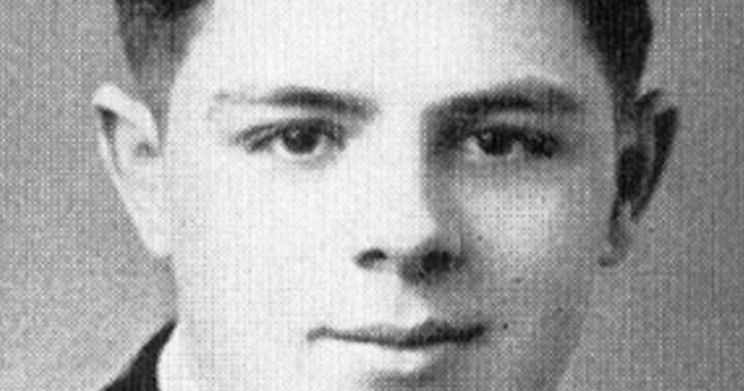

A Hero Returns Home: The 80-Year Journey to Bring WWII Radioman Robert L. Cyr Jr. Back to His Family
A Young Man’s Courage in the Pacific Theater
Robert L. Cyr Jr. was just a teenager when he made the decision that would define his short life. At only 17 years old, this brave young man enlisted in the U.S. Navy during one of history’s most challenging periods—World War II. He became an Aviation Radioman 2nd Class, taking on one of the most dangerous roles in the Pacific theater of operations. His job required him to fly countless hours over hostile territory, spotting enemy positions and relaying critical information that could mean the difference between victory and defeat for American forces. During a leave just one year after his enlistment, the 18-year-old Cyr spoke with remarkable humility to his local newspaper about his service. By that time, he had already logged an astonishing 112,000 miles on patrol flights—a distance that would circle the Earth more than four times. His youth belied the weight of responsibility he carried, flying over Southern Pacific combat areas including the fierce Battle of the Solomon Islands, where some of the war’s most intense fighting took place.
The Dangerous Work of Patrol Squadron Life
In his interview with the hometown newspaper, young Cyr provided a glimpse into the perilous nature of his daily duties. “Our regular job is to spot the enemy’s position, course and probably objective, and then get out of there if possible,” he explained with the matter-of-fact tone of someone who had already witnessed far more than most people his age. But patrol work wasn’t just about reconnaissance and survival. Cyr and his crewmates also participated in daring rescue missions, searching for and retrieving other American fliers who had been forced down over the vast Pacific Ocean or on remote islands. He noted that “the natives are friendly,” explaining how indigenous peoples in the region would help hide U.S. troops from Japanese forces—a testament to the complex alliances and human connections forged in the chaos of war. These local populations often risked their own lives to protect American servicemen, providing shelter, food, and guidance through unfamiliar terrain. For a teenager from the United States, these experiences must have been simultaneously terrifying and eye-opening, exposing him to cultures and situations far beyond anything he could have imagined growing up.
The Tragic Day That Changed Everything
By 1944, Cyr had been assigned to Navy Patrol Squadron 91, continuing his dangerous work in the Pacific. On January 22 of that year, the 19-year-old radioman boarded a PBY-5 Catalina seaplane with eight other crew members for what should have been a routine mission. The Catalina, nicknamed the “Cat,” was one of the most versatile aircraft of World War II, used for patrol, rescue, and reconnaissance missions throughout the Pacific. However, this particular flight would never get airborne. During takeoff near what is now the Republic of Vanuatu in the South Pacific Ocean, the aircraft crashed. The impact was devastating. Of the nine men aboard, only three survived the initial crash. In the days immediately following the tragedy, search teams managed to recover the remains of four crew members who had perished. But two airmen, including young Robert Cyr, could not be found. The ocean had claimed them, and despite search efforts, their remains were lost beneath the waves. Cyr was officially listed as missing in action, a designation that would stand for more than eight decades. His name was inscribed on the Tablets of the Missing at the National Memorial Cemetery of the Pacific in Honolulu, Hawaii—a memorial dedicated to those whose final resting places remained unknown.
A Family’s Unresolved Grief
Back home, Cyr’s family was shattered by the news. His parents and sister held a memorial mass, gathering with friends and community members to mourn a son and brother who would never return. Yet there was no closure, no grave to visit, no certain knowledge of what had happened in those final moments. For Cyr’s mother and father, the pain of losing their teenage son was compounded by the lack of answers. His sister grew up, married, and had children of her own, always carrying the memory of the brother who had left home as a boy and died as a hero in a distant ocean. As the years turned into decades, the family tried to move forward while never forgetting. Cyr’s parents eventually passed away, as did his sister and later his nephews, all without ever knowing what happened to Robert’s remains or having a place to properly say goodbye. The case went cold, joining thousands of others from World War II—stories of young men and women who served their country and never came home, their fates uncertain, their sacrifices remembered but their physical remains lost to time and the elements.
The Remarkable Work of Modern Science and Dedication
For nearly 80 years, Cyr’s case remained unsolved, but it was never truly forgotten. The Defense POW/MIA Accounting Agency (DPAA) maintains records of all American service members who are still unaccounted for from past conflicts, working tirelessly to bring them home. In July 2022, a breakthrough came when researchers and divers from Sealark Exploration, an underwater archaeology organization, located what they believed to be the crash site of Cyr’s aircraft. Working on behalf of the DPAA, these dedicated professionals dove to the wreck, documenting its condition and location. This initial expedition was followed by two more missions in 2024 and 2025, conducted by another DPAA partner called Cosmos Archaeology. These weren’t simple operations—underwater archaeology in the Pacific requires sophisticated equipment, extensive training, and meticulous attention to detail. The teams carefully excavated the site over the course of three separate expeditions, documenting everything they found and recovering possible evidence, including what appeared to be human remains and bone fragments. Once recovered, these materials were transported to DPAA laboratories where specialists began the painstaking process of identification. Scientists conducted anthropological studies, examining the physical characteristics of the remains. They performed mitochondrial DNA analysis, comparing genetic markers to family members’ DNA. They also studied material evidence found at the site and circumstantial evidence related to the crash. On November 5, 2025—more than 81 years after that fateful day in January 1944—the DPAA officially confirmed the identification: the remains were those of Aviation Radioman 2nd Class Robert L. Cyr Jr.
Coming Home at Last: A Hero’s Final Honor
The announcement that Cyr had been identified brought mixed emotions to his surviving family members. While his parents, sister, and nephews had all passed away before this day could come, Cyr still has a niece and dozens of extended family members who can now finally lay him to rest. The family recently received a full briefing on the identification process, learning the details of how modern science and dedicated researchers brought their long-lost relative home. This Saturday, Robert L. Cyr Jr. will receive the burial he deserved more than eight decades ago. He will be laid to rest with full military honors in Clearwater, Florida, where other members of his family are also buried. The ceremony will include the traditions befitting a fallen hero: a flag-draped coffin, a rifle salute, the playing of Taps, and the presentation of the flag to his family. At the National Memorial Cemetery of the Pacific in Honolulu, a rosette will be placed next to Cyr’s name on the Tablets of the Missing—a symbol that he has been found and accounted for. According to his obituary, Cyr was awarded numerous honors for his service, including the Purple Heart given to those wounded or killed in action, a Navy Presidential Unit Citation recognizing extraordinary heroism, and the Navy Expeditionary Medal for service in remote areas. Cyr’s story is a powerful reminder that service and sacrifice are never forgotten. Though he died at just 19 years old, having barely begun his adult life, his contribution to his country’s fight for freedom has been honored across generations. The dedication of modern scientists, historians, and underwater archaeologists ensures that heroes like Robert Cyr are not lost to history, but are brought home to rest among the families and communities they served. For the dozens of family members gathering this weekend in Clearwater, the funeral represents both an ending and a beginning—the close of an 81-year wait and the start of finally having a place to honor their remarkable relative who gave everything for his country.