



Trump’s 2027 Budget: A Historic Military Expansion and Domestic Spending Cuts
A Massive Shift in Federal Priorities
President Trump has unveiled an ambitious and controversial budget proposal for fiscal year 2027 that fundamentally reimagines the role of the federal government. The 92-page document, released by the White House on Friday along with several detailed summaries, requests an eye-popping $1.5 trillion for defense spending—a staggering 42% increase from current levels. At the same time, the proposal slashes nondefense spending by $73 billion, representing a 10% cut across domestic programs. This budget serves as the administration’s opening position in what will likely be lengthy and contentious negotiations with Congress over the government’s spending priorities. While presidential budget requests rarely become law exactly as proposed, they reveal an administration’s values and goals, and this one makes Trump’s priorities crystal clear: military strength first, with domestic programs taking a distant back seat.
The proposed military spending increase is historic by almost any measure. According to the White House’s own summary, the defense budget would “exceed even the Reagan buildup by approaching the historic increases just prior to World War II.” That’s an extraordinary comparison that places this moment alongside some of the most significant military expansions in American history. The administration justifies this unprecedented peacetime increase by pointing to “the current global threat environment” and the need to “restore the readiness and lethality of our forces.” The timing is particularly significant given that the United States is currently engaged in a costly war with Iran, with billions of dollars already spent and the White House preparing to request additional supplemental funding from Congress to cover ongoing conflict costs. This budget essentially bakes substantial military growth into the baseline spending levels, setting a new normal for defense expenditures that would continue long after current conflicts end.
Where the Military Money Would Go
The $1.5 trillion defense budget isn’t just a symbolic number—the administration has outlined specific priorities for how this massive influx of funding would be spent. A significant portion would go directly into the pockets of service members, with the budget including a 5 to 7% pay raise for troops, recognizing both the sacrifices military families make and the need to remain competitive in recruiting and retaining quality personnel. Beyond personnel costs, the proposal allocates $65.8 billion specifically for building new ships to expand and modernize the Navy’s fleet, a clear signal of the administration’s focus on power projection and maritime dominance. Perhaps most urgently, substantial funding would go toward replenishing critical munition stocks that have been severely depleted during the ongoing war with Iran. Modern conflicts consume precision-guided missiles, artillery shells, and other munitions at rates that can quickly exhaust even well-stocked arsenals, and the military has been sounding alarms about inventory levels for months. This budget attempts to address those concerns while also investing in the long-term capabilities needed for potential future conflicts.
Cutting the Domestic Side: “Woke, Weaponized, and Wasteful”
While defense spending soars, the domestic side of the federal ledger faces significant cuts under Trump’s proposal. The administration frames the 10% reduction in nondefense spending as eliminating waste and returning power to state and local governments, but the cuts would affect programs that millions of Americans rely on. According to the White House summary, “Savings are achieved by reducing or eliminating woke, weaponized, and wasteful programs, and by returning state and local responsibilities to their respective governments.” That colorful language—particularly the repeated use of “woke” and “weaponized”—reflects the administration’s broader political messaging and its belief that the federal government has overreached into areas better handled locally or not at all.
One specific target is the Department of Justice, which the budget aims to reshape by eliminating nearly 30 grant programs. The administration characterizes these grants as duplicative, ineffective at reducing crime, or “weaponized against the American people”—likely a reference to Trump’s longstanding complaints about federal law enforcement. However, not everything faces cuts: the budget proposes a $481 million increase to hire more air traffic controllers and enhance aviation safety, responding to concerns about the safety and reliability of America’s air travel system. It also includes $605 million for National Guard mobilizations in Washington, D.C., suggesting continued concerns about security in the nation’s capital. These selective increases highlight how the administration distinguishes between federal functions it views as legitimate (security, infrastructure) and those it sees as inappropriate federal involvement.
The Philosophy: States Should Handle “Daycare, Medicaid, Medicare”
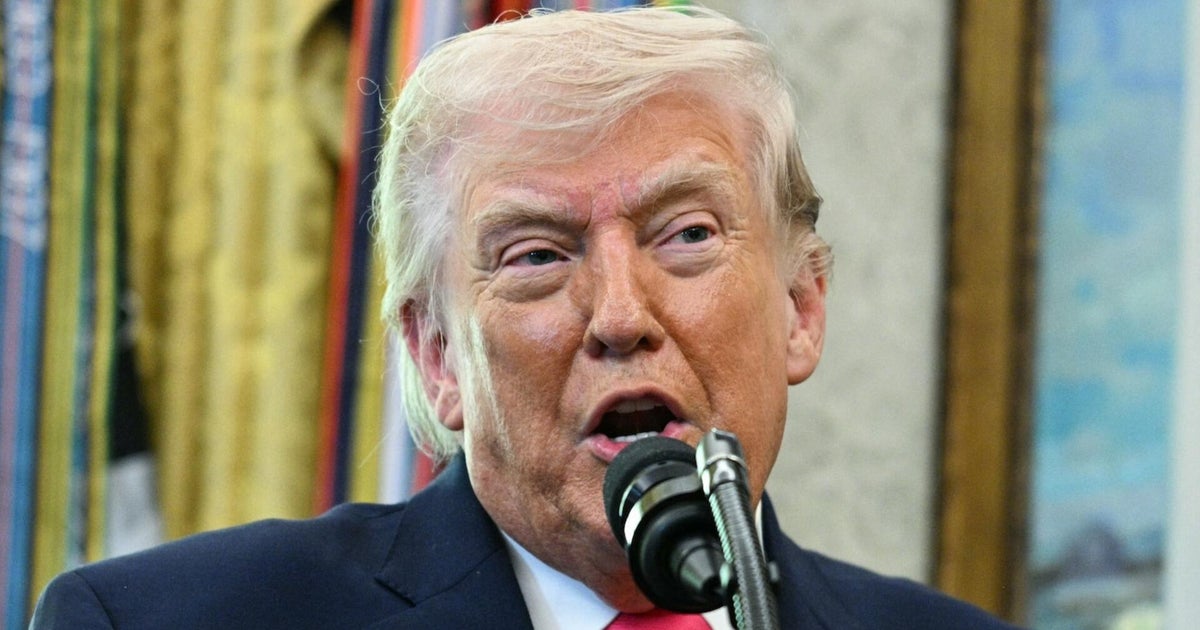
President Trump articulated his budget philosophy in remarkably blunt terms during an Easter luncheon at the White House this week, offering an unfiltered explanation of his vision for federalism. “The United States can’t take care of daycare — that has to be up to a state,” Trump insisted. “We can’t take care of daycare, we’re a big country. We have 50 states, we have all these other people, we’re fighting wars. We can’t take care of daycare.” He went on to include even major entitlement programs in his list of responsibilities that should shift to states: “You’ve got to let a state take care of daycare, and they should pay for it, too. They should pay. They have to raise their taxes. But they should pay for it. And we could lower our taxes a little bit to them to make up for, but we, it’s not possible for us to take care of daycare, Medicaid, Medicare, all those individual things.”
This represents a dramatic philosophical break from the federal government’s role as it has evolved since the New Deal. Trump’s argument is straightforward: the federal government should focus on functions that only a national government can perform—particularly military defense and war-fighting—while social programs should be handled by state and local governments that can tailor them to local needs and preferences. “We have to take care of one thing — military protection,” Trump summarized. The president’s proposal to “lower our taxes a little bit” to compensate states for taking on these responsibilities suggests some form of revenue sharing or tax restructuring, though the budget documents don’t detail exactly how this would work. Critics will certainly point out that states have vastly different fiscal capacities and that shifting programs like Medicaid to state responsibility would likely result in enormous disparities in benefits depending on where someone lives. Wealthy states might maintain robust programs while poor states could be forced to dramatically scale back services, potentially creating a patchwork of dramatically different safety nets across the country.
What Happens Next: Congress Has the Final Say
Despite the attention any presidential budget receives, it’s crucial to remember that this document is merely a proposal—the opening bid in a complex negotiation process. Under the Constitution, Congress holds the “power of the purse,” meaning that only the legislative branch can actually appropriate money for government programs. The president’s budget serves as a starting point for these negotiations, but as the White House document itself acknowledges, “The spending levels that Congress ultimately sets can substantially differ from the president’s proposal.” This is especially true when different parties control different parts of government, or when there are significant philosophical disagreements even within the same party.
Congressional leaders will now begin the laborious process of crafting actual spending bills, holding hearings, negotiating compromises, and eventually voting on appropriations that may look dramatically different from what Trump has proposed. Some aspects of this budget—like the historic defense increase—might find support among defense hawks in both parties, while other elements will face fierce opposition from Democrats who view the domestic cuts as cruel and the rhetoric around “woke” programs as divisive culture-war politics. Even some Republicans may balk at cuts to popular programs in their districts or at the proposal to shift major entitlements to state control. The budget process typically extends throughout the year, with Congress ideally passing appropriations bills before the fiscal year begins on October 1st, though continuing resolutions to maintain current spending levels have become increasingly common when agreements prove elusive. Whatever ultimately emerges from Congress will reflect not just Trump’s priorities but the political realities of governing in a divided nation, the lobbying efforts of countless interest groups, and the electoral considerations of lawmakers facing voters. What’s certain is that this budget proposal has set the terms of debate, drawing stark lines between competing visions of what the federal government should do and how it should spend taxpayers’ money.