


The Strait of Hormuz Crisis: A Turning Point for Global Finance and Digital Currency
When Geography Forces Financial Evolution
Something remarkable is happening in one of the world’s most strategically important waterways, and it could fundamentally change how nations conduct business with each other. The Strait of Hormuz, that narrow passage through which nearly a fifth of the world’s oil supply flows, has become more than just a geopolitical flashpoint. According to financial analyst Mickle, the current crisis unfolding there might be the catalyst that teaches the world a crucial lesson: international trade doesn’t need to depend on the U.S. dollar anymore. As tensions escalate and traditional shipping routes face unprecedented challenges, countries are scrambling to find alternative ways to settle their transactions. This isn’t just about finding another currency to replace the dollar—it’s about discovering that perhaps we don’t need any single national currency to dominate global trade at all. The situation is forcing nations to confront a reality that many have been quietly preparing for: the era of the petrodollar’s absolute dominance may be drawing to a close, and digital assets like XRP and Ethereum are waiting in the wings as viable alternatives.
The End of Currency as We Know It
To understand what’s really at stake here, we need to step back and look at the bigger economic picture that’s been developing over decades. Ray Dalio, one of the world’s most respected economic thinkers, has long studied the rise and fall of reserve currencies throughout history. His research identifies a predictable pattern: when a reserve currency begins to collapse, there’s a final stage where people don’t simply flee to another national currency—they flee from the very concept of centralized currency itself. For years, the conventional wisdom suggested that if the dollar ever weakened, the Chinese Yuan would step up to fill the void, becoming the next global reserve currency in a familiar pattern repeated throughout history. But Mickle argues that something fundamentally different is happening this time. Even Dalio himself, who has historically championed gold as the ultimate safe haven, seems to be reconsidering his position and broadening his perspective. The critical question facing the global economy today isn’t which country’s currency will dominate next—it’s whether any single country’s currency should or will dominate at all. According to Mickle’s interpretation, we’re witnessing that final stage of reserve currency decline right now, but instead of jumping to another fiat currency, the world has a new option: digital assets that exist outside the control of any single government, offering decentralized and neutral ways to store and transfer value across borders.
Why Digital Assets Like XRP Are Perfectly Positioned
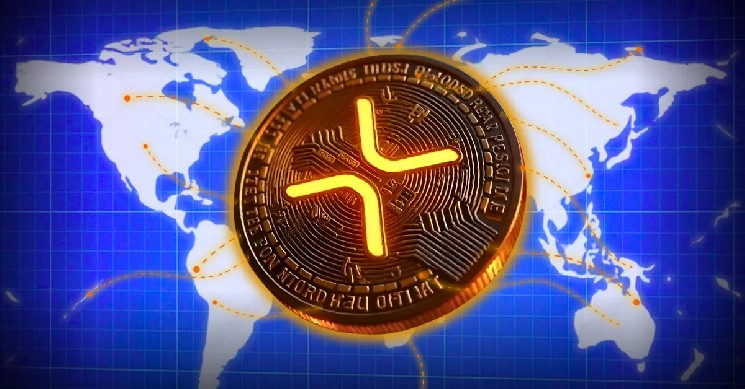
When you’re a nation looking for ways to conduct international trade without relying on traditional currency systems, you need very specific capabilities that not just any asset can provide. Mickle breaks down exactly what matters in this new financial landscape: you need deep liquidity pools so that large transactions don’t cause wild price swings; you need proven international settlement capability so transactions can clear between countries reliably; you need the ability to move value at speed because modern commerce can’t wait days for settlements; and perhaps most importantly, you need neutrality—no single government should control the asset or be able to weaponize it for political purposes. When you apply these criteria, the field of viable options narrows considerably. “There’s only a handful of tokens that fall into that category and XRP is one of them,” Mickle explains, highlighting how this particular digital asset has been specifically designed and positioned for exactly this kind of cross-border settlement use case. The strategic positioning isn’t accidental—it’s the result of years of development specifically targeting the international settlement space. Gold, for centuries, played the role of that neutral store of value that no single nation controlled, and it served that function admirably in its time. But here’s the thing: gold, for all its historical importance and intrinsic value, simply cannot keep pace with modern commerce. You can’t settle 130 ships passing through a strait in real time using physical gold bars. The logistics are impossible, the security concerns overwhelming, and the speed far too slow. Digital assets, on the other hand, can handle this kind of rapid, high-volume settlement with ease, making them not just an alternative to traditional systems but actually superior in many practical ways.
The Long Game: Decades in the Making, Years to Unfold
It’s important to understand that what we’re witnessing isn’t a sudden revolution that will completely transform global finance overnight. Mickle is careful to emphasize that his perspective operates on a long-term timeline, looking at trends that will unfold over decades rather than months or years. The processes of dedollarisation—where countries reduce their reliance on the U.S. dollar—and deglobalisation—where nations build more regional rather than global trade networks—are massive, structural shifts that have been building momentum for years. What makes this moment particularly significant is that the technology needed to actually enable these transitions is only now reaching maturity at the exact same time that these geopolitical and economic trends are accelerating. It’s a convergence of readiness and necessity, of capability meeting demand. “I think we’re just at the very start of a technology being introduced to allow that to happen,” Mickle observes, suggesting that we’re witnessing the beginning of something much larger. Using the metaphor of falling dominoes, he paints a picture of a chain reaction that has just begun, where each development triggers the next in an increasingly rapid cascade of change. The technology exists, the geopolitical pressures are mounting, and the traditional systems are showing their age and limitations—all the ingredients are in place for transformation.
From Theory to Reality: The Strait of Hormuz as a Testing Ground
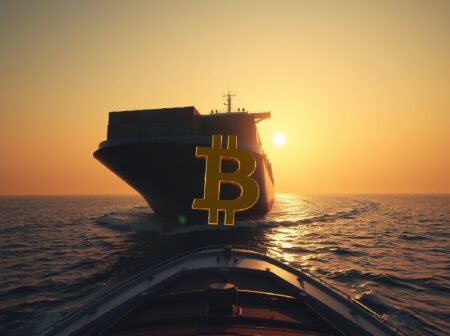
What elevates this discussion from abstract theorizing to immediate relevance is that the scenario Mickle describes isn’t some distant hypothetical anymore—it’s being tested in real time in one of the world’s most critical shipping lanes. The Strait of Hormuz situation has escalated dramatically, with Iran reportedly demanding cryptocurrency payments as tolls for passage, the strait facing closures that disrupt global shipping, and direct diplomatic talks between the United States and Iran collapsing in Islamabad without resolution. This isn’t a thought experiment or a prediction for some distant future; it’s happening right now, forcing countries and companies to find practical solutions to immediate problems. When traditional systems break down or become unavailable, alternatives that might have seemed exotic or unnecessary suddenly become essential. Countries that previously had no interest in cryptocurrency settlements are now being forced to consider them seriously. Companies that always transacted in dollars are discovering they need backup plans. The current crisis is essentially providing a real-world stress test for the theories about alternative settlement systems, and it’s happening under conditions of genuine urgency where billions of dollars in trade hang in the balance. Every day that conventional payment and settlement systems prove inadequate or unavailable is another day that pushes more participants toward exploring digital alternatives. The lessons being learned in the Strait of Hormuz today will inform financial and trade policy decisions for years to come.
The Bigger Picture: A New Chapter in Economic History
What we’re really talking about here is potentially witnessing the early stages of one of those rare moments when the fundamental structure of the global economy shifts. Throughout history, these transitions have happened periodically—the rise of the British pound sterling, its eventual replacement by the U.S. dollar, the creation of the petrodollar system in the 1970s—but they’re rare enough that most people never see one in their lifetime. If Mickle’s analysis proves correct, we’re living through the opening chapters of the next great transition, one where the very nature of what we consider money and how we settle international obligations undergoes transformation. The shift from centralized, government-controlled fiat currencies to decentralized digital assets would represent not just a change in which currency dominates, but a fundamental change in the entire system—from monopolistic to plural, from controlled to neutral, from physical to digital. The implications extend far beyond finance into geopolitics, sovereignty, and international relations. A world where trade can be settled without any single nation’s currency having privileged status is a world where economic sanctions become less powerful, where reserve currency status matters less, and where smaller nations gain more financial independence. Whether this vision fully materializes or not, the fact that it’s moving from theory to practical testing in response to real crises like the Strait of Hormuz situation suggests we’re at an inflection point. The dominoes, as Mickle says, are just beginning to fall, and where they ultimately land will shape the economic landscape for generations to come.