


A 30-Year Mystery Solved: Missing Arizona Teen Found Alive After Three Decades
The Disappearance That Haunted a Small Arizona Town
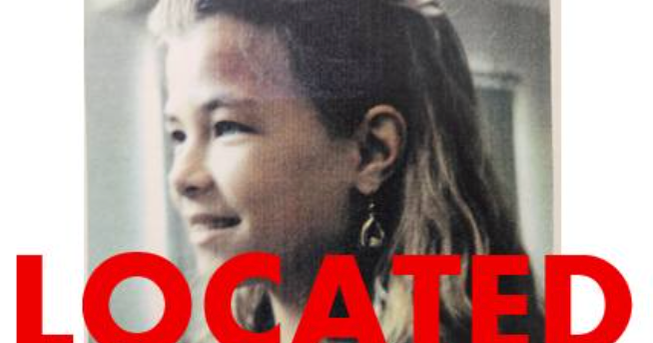
On a seemingly ordinary spring day in 1994, thirteen-year-old Christina Marie Plante walked out of her home in Star Valley, Arizona, heading to visit her horse at a nearby stable. It was around 12:30 in the afternoon on May 19th, and she was dressed casually in shorts, a t-shirt, and tennis shoes – typical attire for a young girl going to tend to her beloved horse on a warm Arizona day. What no one could have imagined was that this routine afternoon would mark the beginning of a mystery that would span three decades, leaving a family devastated and a community searching for answers. Christina never made it to the stable that day, and she was never seen again – at least not for the next thirty years. The circumstances surrounding her disappearance were immediately concerning to investigators, who classified her as “missing/endangered” under suspicious circumstances, suggesting that from the very beginning, authorities suspected something sinister might have occurred.
Three Decades of Searching and Never Giving Up
When Christina first disappeared, the response from local law enforcement and the community was immediate and comprehensive. According to Gila County Sheriff Adam J. Shepherd, extensive search efforts were launched involving not just local resources but regional agencies as well. Teams scoured the rugged Arizona landscape, hoping to find any trace of the missing teenager. Christina’s face appeared on missing persons posters that were distributed throughout the region, across Arizona, and eventually nationwide. Her information was entered into national missing children databases, ensuring that her case would remain in the system and accessible to law enforcement agencies across the country. Despite these exhaustive efforts – the ground searches, countless interviews with potential witnesses, and thorough investigative follow-up – no viable leads emerged in those critical early days and weeks. For the investigators working the case, it must have been incredibly frustrating. They had a young girl who had simply vanished, seemingly without a trace, and despite their best efforts, they couldn’t find any solid information about what had happened to her or where she might be.
The Long Years of an Open Case
As months turned into years and years turned into decades, Christina’s case remained officially open, never forgotten by the investigators who had worked on it or by the new generation of law enforcement officers who inherited these cold cases. Throughout those long years, detectives periodically re-examined the evidence, reviewing everything they had collected during the initial investigation and looking at it with fresh eyes. Whenever new information came in – a tip from the public, a possible sighting, any fragment of information that might be relevant – investigators would pursue it, hoping that this might be the lead that would finally crack the case. The evolution of technology over these thirty years also offered new opportunities. DNA analysis techniques that didn’t exist or weren’t widely available in 1994 became standard tools. Digital databases became more sophisticated and interconnected. The internet made it possible to share information and connect cases in ways that previous generations of investigators could never have imagined. The Gila County Sheriff’s Office eventually established a dedicated cold case unit, recognizing the importance of having investigators who could focus specifically on these unresolved cases without the distraction of current emergencies and active investigations.
The Breakthrough That Changed Everything
It was this cold case unit that finally achieved what had seemed impossible for so long. The detectives in this specialized unit brought together advances in technology, modern investigative techniques, and a detailed review of all the case materials accumulated over three decades. They looked at the evidence with the benefit of hindsight, modern forensic capabilities, and investigative methodologies that simply didn’t exist when Christina first disappeared. Somehow, this combination of old information reviewed with new tools and techniques led to the development of new leads – leads that had been impossible to generate or pursue back in 1994. These new leads ultimately resulted in a breakthrough, though the sheriff’s office has been deliberately vague about the specific details that led to Christina being found. What we do know is remarkable enough on its own: Christina Marie Plante, who was thirteen years old when she disappeared in 1994, has been found alive. After thirty years of being missing, after three decades of questions without answers, Christina’s fate has finally been determined, and miraculously, she survived whatever circumstances led to her disappearance.
Respecting Privacy While Celebrating Resolution
Sheriff Shepherd’s announcement of Christina being found alive was necessarily limited in detail. Out of respect for Christina’s privacy and well-being – and one can only imagine what she must be going through after thirty years – the sheriff’s office chose not to disclose where she was found or share the circumstances of her disappearance. At 43 years old now, Christina is an adult who deserves to have control over her own story and her own privacy. The sheriff’s office confirmed that they have definitively verified her identity, leaving no doubt that this is indeed the same girl who vanished in 1994, and that her status as a missing person has been officially resolved. For the investigators who worked this case over the years, some of whom may have since retired, this resolution must bring a profound sense of relief and accomplishment. For the community of Star Valley, which has lived with this mystery for three decades, the news that Christina is alive surely brings a mix of joy, relief, and undoubtedly many questions. And for Christina herself, and any family members who never stopped hoping she might be found, this represents the end of one incredibly difficult chapter and the beginning of what will undoubtedly be a complex journey forward.
Hope for Other Families Still Waiting
Sheriff Shepherd emphasized that Christina’s case “underscores the importance of cold case review initiatives and the impact of evolving technology in bringing long-awaited answers to families and communities.” This statement is particularly meaningful for the countless other families across America and around the world who are still waiting for answers about their own missing loved ones. Christina’s case demonstrates that even when decades have passed, even when it seems like all hope is lost, breakthroughs can still happen. Technology continues to advance, investigative techniques continue to improve, and dedicated law enforcement professionals continue to work these cases, refusing to let them be forgotten. The Gila County Sheriff’s Office stated that they “remain committed to pursuing all unresolved cases,” a promise that surely brings some comfort to families in similar situations. Christina’s story is exceptional because of the length of time she was missing and the fact that she was found alive – tragically, many long-term missing persons cases don’t end this way. But her case also represents something universal: the unwavering determination of investigators who refuse to give up, the power of hope even in the darkest circumstances, and the possibility that families might someday get the answers they desperately need. As Christina begins whatever comes next in her life, her story will undoubtedly inspire continued efforts to solve other cold cases and bring closure to families who are still searching for their missing loved ones.