



NASA’s Artemis II: Humanity’s Bold Return to Lunar Exploration
A Historic Launch Marks the Beginning of a New Era
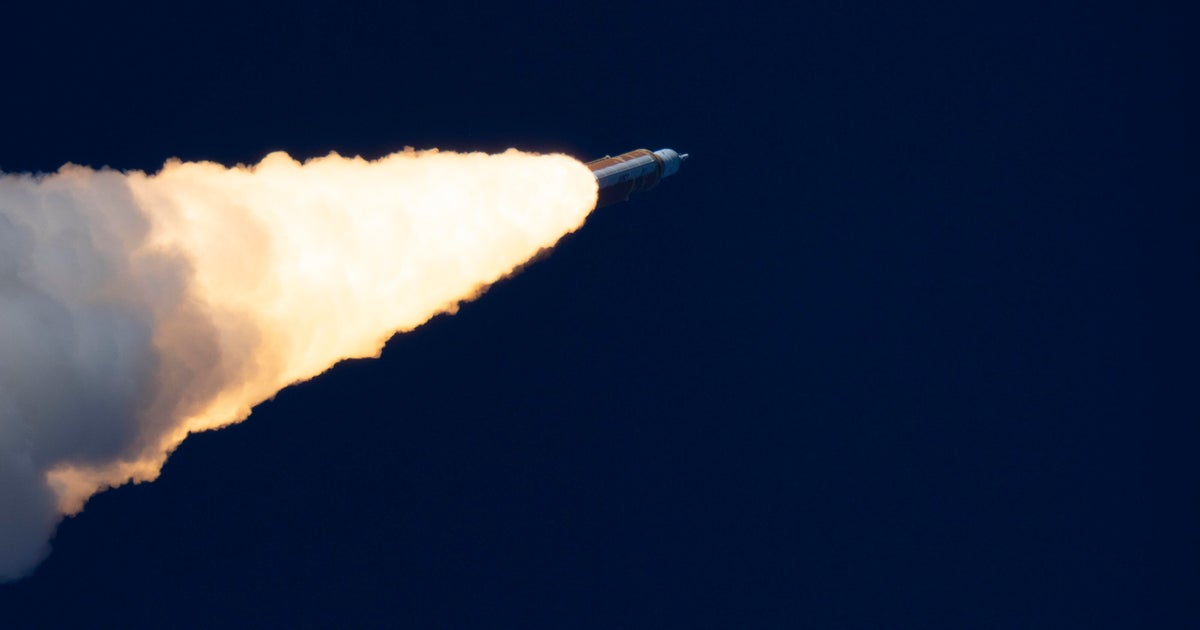
After more than five decades away from the Moon, humanity has taken its most significant step back toward our celestial neighbor. NASA’s Artemis II mission launched Wednesday evening from Kennedy Space Center in Cape Canaveral, Florida, sending four astronauts on a trajectory that will take them farther from Earth than any human has ever traveled. The crew—Commander Reid Wiseman, Pilot Victor Glover, Mission Specialist Christina Koch, and Canadian astronaut Jeremy Hansen—are now embarking on what they’ve described as a “crazy first day” in space as they begin their historic journey around the Moon. This mission represents the first piloted moonshot since Apollo 17 concluded NASA’s lunar program in 1972, marking a momentous occasion not just for space exploration, but for humanity’s aspirations to establish a permanent presence beyond Earth. As NASA Administrator Jared Isaacman emphasized, this is just “the opening act in a series of missions that will send astronauts to and from the moon with great frequency as we return to stay.”
Testing Systems During a Critical First 24 Hours
The immediate challenge facing the Artemis II crew isn’t the Moon itself—it’s ensuring their Orion capsule can safely carry them there and back. For approximately 24 hours, the four astronauts will remain in an elliptical orbit around Earth, methodically testing every critical system aboard their spacecraft. This phase is absolutely essential because Orion is making only its second flight ever, and this is the first time it’s carried human passengers. Commander Wiseman candidly described what they’re facing: checking everything from carbon dioxide scrubbing systems to water supplies to basic facilities like the toilet. Speaking of which, the crew encountered their first technical hiccup when Koch reported problems with the waste management system shortly after reaching orbit. A flight controller informed her that while the toilet could still be used for solid waste collection, they would need to use contingency bags for liquid waste until engineers developed a repair plan. It’s a reminder that even in the most sophisticated spacecraft, the basics of human survival require careful attention and backup plans.
During this crucial first day, the crew will also test Orion’s communications, navigation, and propulsion systems—essentially verifying that the spacecraft can do everything it was designed to do before they venture hundreds of thousands of miles from Earth. About three hours into the mission, Glover took manual control of the Orion capsule for the first time, testing how the spacecraft handles under human guidance. He reported that the thrusters produced “a little rumble, like driving on a rocky road” as he precisely maneuvered around the upper stage that had boosted them into orbit. This testing isn’t just about the spacecraft; it’s also about validating the procedures and training that flight controllers and astronauts will need for future missions, including planned long-duration stays on the lunar surface and the eventual establishment of a moon base.
The Journey to the Moon and Beyond Previous Boundaries
If all systems check out during their first day in orbit, the Artemis II crew will receive the “go” for the most important engine firing of their mission: the trans-lunar injection burn. Scheduled for Thursday evening, this six-minute firing of the service module engine will increase their velocity by about 900 mph, breaking them free from Earth’s gravitational hold and sending them on a carefully calculated trajectory toward the Moon. Unlike the Apollo missions, Artemis II won’t enter lunar orbit or attempt a landing. Instead, the crew will execute what’s called a “free-return trajectory”—a path that will take them around the Moon and use lunar gravity to naturally bend their course back toward Earth for a Pacific Ocean splashdown on April 10.
The four-day journey to the Moon will culminate in a moment of historic significance on Monday when the spacecraft enters the “lunar sphere of influence,” where the Moon’s gravity finally exceeds Earth’s pull. Later that day, the Artemis II crew will reach approximately 248,650 miles from Earth, matching and then surpassing the distance record set by the ill-fated Apollo 13 mission in 1970. No human has traveled farther from our home planet. As the Orion passes behind the Moon, the crew will lose contact with mission control for about 40 minutes—a reminder of the isolation they’ll experience as they sail over the lunar far side, approaching within 4,100 miles of the surface at their closest point and reaching a maximum distance from Earth of approximately 252,800 miles.
Unprecedented Views of the Lunar Far Side
The passage around the Moon’s far side offers the Artemis II crew an opportunity that few humans have ever experienced and none have seen quite this way. With about a quarter of the Moon illuminated during their flyby, the astronauts will have the chance to observe, photograph, and record video of features on the lunar far side that have never been witnessed by human eyes. Mission Specialist Koch expressed the crew’s excitement about maximizing every moment of observing the far side, noting that the timing of their launch window provides illumination that will allow them to see previously unseen features, which matters significantly to scientists analyzing lunar data back on Earth.
Glover added a particularly intriguing observation: “Twenty-four men have seen the moon, and we’re going to send the first set of woman’s eyes. They think that she can potentially see colors that we may not see.” This comment highlights not only the historic nature of Koch’s participation—she’ll be one of the first women to travel to the Moon—but also suggests that biological differences in color perception between men and women might provide new scientific insights about lunar features. After their close approach, the spacecraft will emerge from behind the Moon, restoring communications with mission control in Houston and beginning their journey back to Earth as our planet’s gravity once again becomes the dominant force pulling them homeward.
The Return Journey and Reentry Challenge
As the Artemis II crew leaves the lunar sphere of influence on Tuesday afternoon, they’ll begin accelerating toward Earth, picking up speed as they approach home. Next Thursday, April 9, they’re scheduled to attempt a ship-to-ship communication with astronauts aboard the International Space Station—a symbolic moment connecting humans in low Earth orbit with those returning from the deepest reaches of space humans have ever explored. Following this call and a crew news conference, the astronauts will prepare for the most dangerous phase of their entire mission: reentry.
On Friday, April 10, the Orion capsule will slam into Earth’s atmosphere at approximately 25,000 miles per hour—about 32 times the speed of sound. Flying heat shield forward, the spacecraft will experience temperatures reaching 5,000 degrees Fahrenheit as atmospheric friction rapidly decelerates the vehicle. This is where the spacecraft’s heat shield technology will face its ultimate test, protecting the crew from temperatures that could vaporize most materials. Once through the zone of maximum heating, a series of parachutes will deploy in sequence to slow the capsule from several hundred miles per hour to a relatively gentle 15 mph splashdown in the Pacific Ocean off the Southern California coast. Navy recovery crews will be standing by to help the astronauts out of their spacecraft for short helicopter rides to a nearby ship. Koch reflected on the bittersweet nature of that moment: “When that hatch opens on the Pacific Ocean, we’ll probably be pretty ready to get out. But a part of us will know that there are some moments left that we will miss forever and probably won’t ever get to have back.”
Looking Ahead: The Future of Lunar Exploration
The successful completion of Artemis II will pave the way for even more ambitious missions in the coming years. NASA’s immediate focus after this mission will shift to Artemis III and beyond, with plans to send another Orion crew next year to test rendezvous and docking procedures with lunar landers being developed by SpaceX and Blue Origin. If those tests succeed, NASA aims to launch one and possibly two actual moon landing missions in 2028, returning astronauts to the lunar surface for the first time since 1972.
But the Artemis program represents far more than nostalgia for past achievements or a simple return to familiar territory. NASA Administrator Isaacman articulated the broader vision: “It’s important because we’re fulfilling a promise for America’s return to the moon as a stepping stone for all the things that we are going to do farther out into our solar system, like some day American astronauts planting the stars and stripes on Mars.” The Moon will serve as humanity’s proving ground—a place to develop and test technologies, life support systems, and operational procedures that will eventually enable missions to Mars and potentially beyond. The economic and scientific potential of sustained lunar operations could transform our understanding of space resource utilization, sustainable off-world habitation, and the fundamental questions about our solar system’s history.
Perhaps most importantly, missions like Artemis II remind us of humanity’s capacity for achievement and inspire future generations. As Isaacman asked, “How many kids after this mission are going to dress up as astronauts for Halloween and want to grow up and contribute to this great adventure?” The Artemis II crew’s journey around the Moon isn’t just about testing spacecraft systems or breaking distance records—it’s about rekindling humanity’s sense of wonder and possibility, demonstrating that the cosmos remains within our reach, and ensuring that the next generation sees space exploration not as history but as their future.