



The Rising Cost of Aging: How Senior Roommates Are Coping with New York’s Housing Crisis
Living Together Out of Necessity, Not Choice
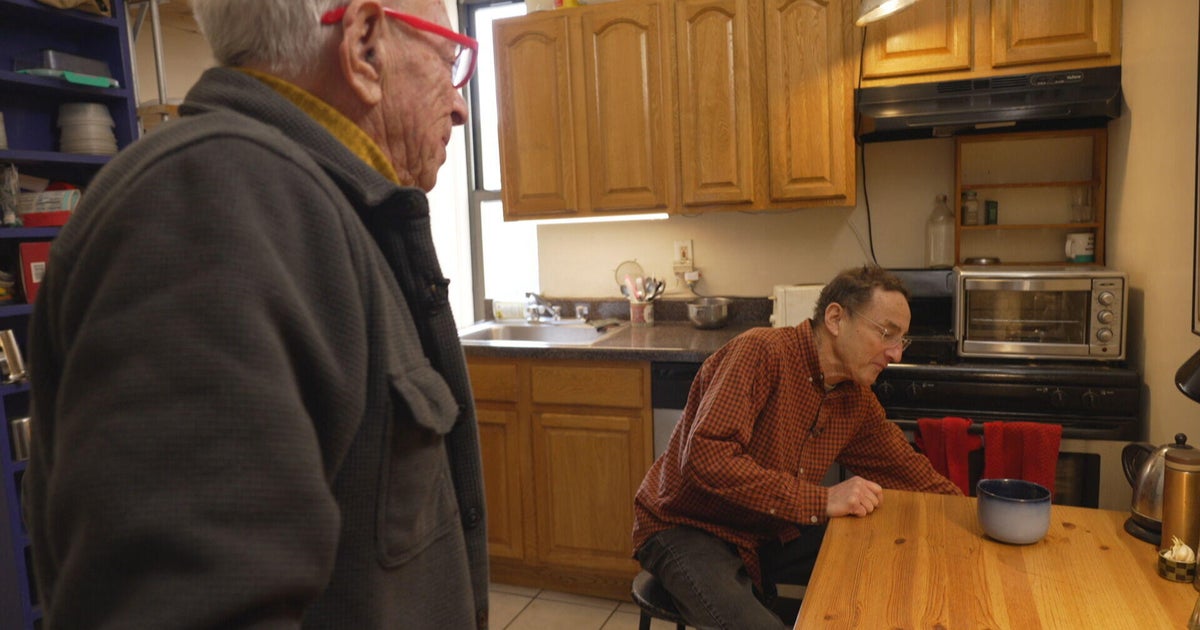
In a modest fourth-floor walk-up apartment in New York City, two men have found an unconventional solution to an increasingly common problem facing America’s elderly population. Alan Ferber, 87, and Daniel Yafet, 69, share a cramped 500-square-foot space, splitting the $2,000 monthly rent between them. This living arrangement isn’t about companionship or lifestyle preference—it’s about economic survival. Ferber is candid about the situation: the cost of housing in New York has become “insanely crazy,” and maintaining his own place has simply become financially impossible on a fixed income. Yafet, an enthusiastic cyclist who sleeps in the apartment’s loft area, echoes this sentiment with a telling observation: “I wouldn’t be in New York if I retired.” Their story represents a growing trend among older Americans who are finding themselves priced out of independent living and forced to make compromises they never anticipated in their golden years.
The two men found each other through the New York Foundation for Senior Citizens, a nonprofit organization that has been matching seniors since 1981. What started as a service primarily focused on helping isolated seniors find companionship has undergone a dramatic transformation. Today, the foundation reports that nearly all participants are driven by one overwhelming concern: affordability. The shift reflects a broader crisis in housing accessibility for older Americans, particularly in expensive urban markets like New York City. The foundation’s free matching service pairs “hosts” who have extra bedrooms with compatible “guests” across all five boroughs, with the requirement that at least one participant must be 60 years or older. Yafet explained his decision simply: “I was by myself for a bit, and I thought I should get a roommate just to help.” That word—”help”—carries the weight of financial necessity that millions of seniors across America now understand all too well.
A National Trend: Seniors Sharing Space in Record Numbers
The living arrangement between Ferber and Yafet is far from unique. Across the United States, more than one million Americans over the age of 65 lived with unrelated roommates in 2024, representing a striking 16% increase from 2019, according to research from the Harvard Joint Center for Housing Studies. This dramatic rise in co-living among seniors has occurred over just five years, suggesting that economic pressures are accelerating rapidly. The trend contradicts traditional expectations about retirement and aging, which typically envision older Americans enjoying privacy and independence in their later years. Instead, a growing segment of the elderly population finds itself returning to a living situation more commonly associated with young adults just starting out—sharing bedrooms, bathrooms, and kitchens with relative strangers out of financial necessity rather than choice.
This surge in senior roommate arrangements coincides with mounting financial pressure on older Americans struggling to cover basic necessities. The cost of living has risen sharply across the board, but housing expenses have proven particularly burdensome. According to a recent study by loan marketplace LendingTree, rent for one-bedroom apartments in the 50 largest U.S. cities climbed an average of 41% between 2020 and 2025. New York City led the nation with the steepest increase, with monthly rent for a one-bedroom apartment rising by $854 over that five-year period. For seniors living on fixed incomes—primarily Social Security benefits and whatever modest savings they’ve managed to accumulate—these increases have proven devastating. What was affordable five years ago has become a luxury, forcing difficult decisions about where and how to live.
The Retirement Savings Crisis Fueling the Housing Struggle
The housing affordability crisis facing seniors is compounded by a broader failure in retirement preparedness that affects Americans across all age groups. A sobering new report from the National Institute on Retirement Security reveals that the average American worker has saved less than $1,000 for retirement. This shocking statistic exposes the fragility of financial security for millions of people approaching or already in their retirement years. The report further found that workers from all age demographics are falling significantly short of recommended benchmarks for retirement savings, suggesting that the problem will only intensify as younger generations age. The traditional three-legged stool of retirement security—Social Security, employer pensions, and personal savings—has effectively become a one-legged stool for many Americans, with Social Security bearing the entire weight.
For people like Alan Ferber, this savings crisis isn’t an abstract statistic—it’s daily reality. When asked whether he could cover all his expenses using only Social Security without a roommate, Ferber’s answer was stark: “Barely.” He supplements his government benefits by working three days a week at Costco, a retail job he maintains at 87 years old not for fulfillment or to stay active, but out of financial necessity. The image of an octogenarian stocking shelves or checking receipts to afford rent challenges comfortable narratives about retirement as a time of rest and leisure. Ferber’s situation illustrates how inadequate retirement savings, combined with rising living costs, can extend working life well beyond traditional retirement age. His roommate Yafet accepts the arrangement philosophically, acknowledging the financial reality: “I’m better off, certainly, with having a roommate.”
The Changing Face of Senior Living Arrangements
The transformation of senior housing arrangements reflects broader economic and demographic shifts in American society. For decades, the cultural expectation held that successful aging meant maintaining independence, privacy, and one’s own home. Retirement communities, assisted living facilities, and aging-in-place in family homes represented the standard options. The idea of an 87-year-old and a 69-year-old sharing a small apartment as roommates would have seemed unusual, perhaps even concerning. Today, however, this arrangement represents practical adaptation to economic reality. Organizations like the New York Foundation for Senior Citizens have evolved their services to meet changing needs, shifting from emphasizing social connection to facilitating financial survival.
This evolution raises important questions about housing policy, retirement security, and how society supports its aging population. The fact that more than a million seniors now live with unrelated roommates suggests that traditional safety nets and retirement planning models are failing significant numbers of older Americans. While roommate arrangements can work well—providing both affordability and companionship—they shouldn’t represent the only viable option for people who have worked their entire lives. The situation is particularly acute in high-cost cities like New York, where even modest apartments command premium rents. Ferber and Yafet’s 500-square-foot apartment at $2,000 per month translates to $4 per square foot—a rate that would have seemed astronomical a generation ago but now represents the baseline in many urban markets.
Looking Forward: Solutions and Systemic Changes Needed
The growing phenomenon of senior roommates highlights the urgent need for comprehensive policy responses to address housing affordability and retirement security. Short-term solutions might include expanded housing voucher programs specifically targeted at seniors, tax credits for older renters, and support for nonprofit organizations that facilitate safe, compatible roommate matches. Longer-term strategies must address the root causes: inadequate retirement savings, the decline of employer pension plans, Social Security benefits that haven’t kept pace with living costs, and housing supply shortages that drive up rental prices. Without systemic changes, the number of seniors facing housing insecurity will continue growing as Baby Boomers age and younger generations enter retirement with even less financial preparation.
The stories of Alan Ferber and Daniel Yafet remind us that behind housing statistics and economic reports are real people making difficult choices. Ferber climbs four flights of stairs at 87, works a retail job, and shares a tiny apartment to remain in the city he calls home. Yafet has accepted that retirement in New York requires compromise, sleeping in a loft and sharing his living space. Both men demonstrate resilience and adaptability, but their situation shouldn’t be normalized as an acceptable standard for aging in America. As the senior roommate trend continues its sharp upward trajectory, it serves as both a practical solution for individuals and a troubling indicator of systemic failure. Addressing this crisis requires acknowledging that housing and retirement security are not just personal responsibilities but societal obligations—and that the current system is leaving too many older Americans behind.