


Desperate Search in the Pacific: Rescue Teams Battle Elements to Find Missing Cargo Ship Crew
Elite Forces Deploy in Treacherous Conditions
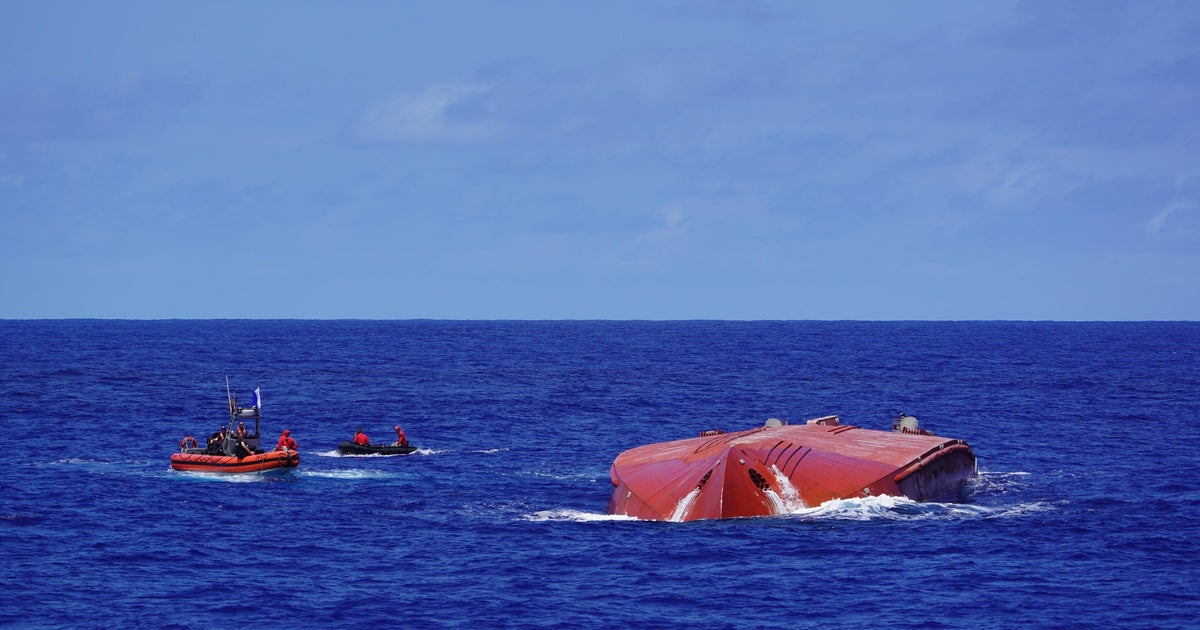
In a heart-wrenching scene unfolding in the vast Pacific Ocean, dramatic footage has emerged showing the extraordinary lengths rescue teams are going to locate five missing crew members from a capsized American cargo vessel. The images and video released by the U.S. Coast Guard paint a vivid picture of courage and determination as elite Air Force pararescuemen literally leap from a massive C-130 Hercules aircraft into the ocean below. These highly trained specialists, known for tackling the world’s most dangerous rescue operations, parachuted into the water on Sunday to rendezvous with Coast Guard personnel aboard a cutter vessel. Together, this combined force of America’s finest rescue professionals made their way to the site where the Mariana, a 145-foot U.S.-flagged cargo ship, now lies capsized in the unforgiving waters northeast of the Northern Mariana Islands. The pararescuemen, considered among the military’s most elite combat forces, are specially trained to execute what the Air Force describes as “the most perilous, demanding, and extreme rescue missions” anywhere on Earth—skills that are being put to the ultimate test in this race against time.
When Disaster Struck During Super Typhoon Sinlaku
The nightmare began on the evening of April 15, 2026, when the Mariana sent out a distress call to Coast Guard watchstanders at the Joint Rescue Coordination Center in Honolulu, Hawaii. The vessel was battling for survival approximately 100 miles north-northwest of Saipan in the Northern Mariana Islands when catastrophe struck. The ship suffered a critical starboard engine failure while being pummeled by Super Typhoon Sinlaku, one of nature’s most terrifying forces. This wasn’t just any storm—meteorologist Nikki Nolan from CBS News confirmed it was the strongest storm to develop anywhere in the world in 2026, with sustained winds reaching a staggering 150 miles per hour. To put that in perspective, these are winds capable of tearing structures apart and turning the ocean into a churning cauldron of deadly waves. After sending their distress signal, communications with the Mariana went ominously silent that same evening. The combination of mechanical failure and one of the most powerful typhoons on record created the perfect storm of disaster. The heavy winds from Sinlaku initially hindered search efforts, preventing rescuers from reaching the area quickly. It wasn’t until Saturday, April 18—three agonizing days after the distress call—that search teams finally located the capsized vessel, now lying helpless in the Pacific waters.
The Massive Search Operation and Heartbreaking Discovery
The scale of the search operation that has unfolded is nothing short of extraordinary, demonstrating the international commitment to finding these missing mariners. Coast Guard teams have scoured more than 100,000 square nautical miles of ocean—an area larger than many U.S. states—in search efforts that have now exceeded 71 hours of continuous searching. The operation has become a truly international effort, with assets from Japan’s Coast Guard and New Zealand’s Air Force joining their American counterparts in the hunt for survivors. The search teams have employed cutting-edge technology alongside traditional methods, including the deployment of a remotely-operated underwater drone to explore the interior of the capsized Mariana. Divers have prepared for and conducted dangerous dive operations in challenging conditions, searching through the submerged sections of the vessel. Aerial crews have flown countless sorties east of the Northern Mariana Islands, their eyes scanning the endless expanse of blue for any sign of the missing crew members. Tragically, on Monday evening, searchers made a heartbreaking discovery—the body of one crew member was recovered from the waters. This grim finding has intensified the urgency of locating the five remaining crew members, though with each passing hour, the likelihood of finding survivors diminishes in the harsh marine environment.
The Human Toll and Community Impact
Behind the statistics and military operations lies a deeply human tragedy that has rippled through families and communities connected to the Mariana and her crew. Commander Preston Hieb, serving as the search and rescue mission coordinator for the Coast Guard Oceania District, expressed the sentiment felt by all involved in the rescue efforts when he stated, “Our hearts are with the families of the Mariana crew members and the communities impacted by this tragic incident.” For the families of these six crew members, the past week has been an unimaginable nightmare of waiting, hoping, and fearing the worst. Every update from the Coast Guard brings both hope and dread—hope that their loved ones might still be found alive, and dread of the alternative. The maritime community, a tight-knit brotherhood that understands the dangers of the sea better than most, has been watching this tragedy unfold with particular pain, knowing that those aboard the Mariana were simply doing their jobs, transporting cargo across the Pacific when nature’s fury struck. The Northern Mariana Islands themselves have been dealing with the aftermath of Super Typhoon Sinlaku, which caused significant wind damage and flooding on Saipan and Tinian. The communities on these islands are no strangers to tropical storms, but Sinlaku’s power was exceptional even by Pacific standards, leaving destruction in its wake.
The Challenges of Pacific Rescue Operations
The photographs and video footage released by the Coast Guard offer a window into just how challenging these rescue operations are in the vast Pacific Ocean. One striking image shows pararescuers drifting down through the air after deploying from their Air Force airplane, tiny figures against the immense backdrop of sky and sea. Another shows U.S. Coast Guardsmen assigned to the fast response cutter USCGC Frederick Hatch (WPC 1143) providing support as an Air Force parajumper enters the water near the capsized vessel. These images underscore the extreme conditions these rescue professionals face—working in the aftermath of a super typhoon, dealing with rough seas, and searching an area of ocean so vast it defies comprehension. The Pacific Ocean is the largest body of water on Earth, covering more than 63 million square miles, and finding anything in it is like searching for the proverbial needle in a haystack. The fact that crews found the capsized Mariana at all is a testament to modern search technology and the dedication of the search teams. The remotely-operated underwater drone represents the cutting edge of search technology, able to navigate spaces too dangerous for human divers and transmit real-time video from inside the submerged vessel.
Continuing Hope and Unwavering Determination
Despite the discovery of one crew member’s body and the passage of time since the Mariana’s distress call, the search continues with undiminished intensity. Commander Hieb emphasized this commitment, stating, “We continue to search in close coordination with our partners, using all available resources to support the ongoing response.” This determination reflects a fundamental principle of maritime rescue: you don’t give up on people at sea. The Coast Guard, Air Force, and their international partners understand that miracles can happen, that survivors have been found in seemingly impossible circumstances, and that every hour of searching is owed to the missing crew members and their families. The coordination between multiple nations’ forces—the U.S. Coast Guard and Air Force, Japan’s Coast Guard, and New Zealand’s Air Force—demonstrates how maritime nations come together in times of crisis, recognizing that anyone who makes their living on the ocean is part of a global community. As the search enters its second week, the questions multiply. What happened in those final moments aboard the Mariana? Did the crew have time to abandon ship? Could survivors be clinging to debris or life rafts somewhere in that vast search area? The answers remain elusive, hidden somewhere in those 100,000 square nautical miles of Pacific Ocean, as rescue teams continue their mission with the professionalism, skill, and compassion that defines their service to those in peril at sea.