



America’s Military Arsenal: The Reality Behind “Unlimited Supply” Claims
The Gap Between Rhetoric and Reality
In the wake of military operations against Iran, President Trump painted a picture of American military might that seemed almost invincible. Standing before reporters, he declared with characteristic confidence that the United States possessed a “virtually unlimited supply” of crucial weapons and ammunition, suggesting America could sustain military operations “forever” if needed. It’s the kind of statement that evokes traditional images of American military dominance – technologically superior, logistically unstoppable, and capable of projecting power anywhere in the world without breaking a sweat. However, when you peel back the layers of political rhetoric and examine what Pentagon officials are actually telling Congress, a far more nuanced and concerning picture emerges. The reality is that while America’s military capabilities remain extraordinary, the actual stockpiles of advanced weapons are far more limited than the president’s confident declarations would suggest. Recent congressional testimony and independent analyses reveal that the U.S. military advantage increasingly relies on highly sophisticated but finite systems, rather than the bottomless arsenals Trump’s words conjured up.
The Munitions That Matter Most Are Running Low
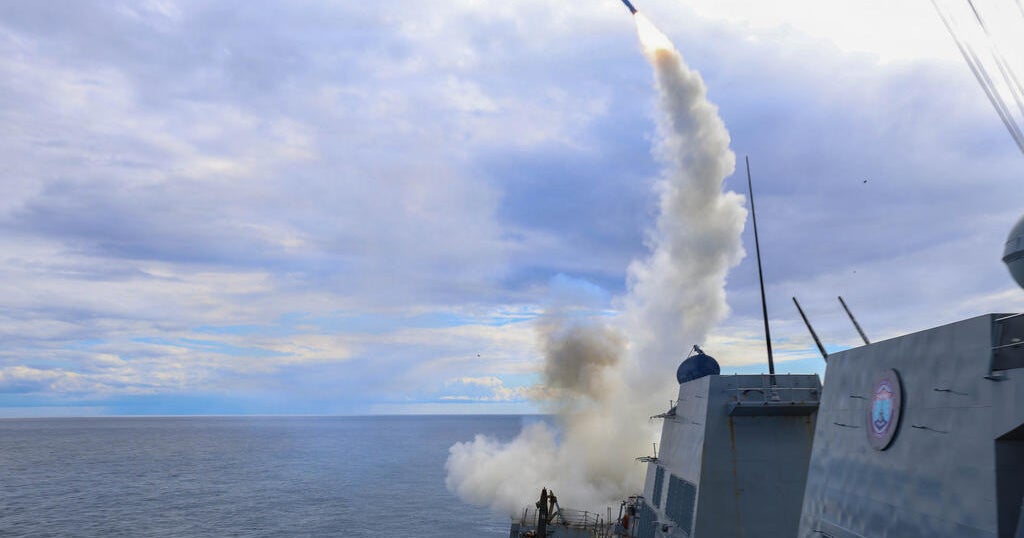
The weapons causing the most concern aren’t your everyday military supplies – they’re the crown jewels of America’s arsenal. We’re talking about advanced long-range missiles capable of striking targets hundreds of miles away with pinpoint accuracy, and sophisticated interceptor systems designed to shoot down incoming enemy attacks before they can harm U.S. forces or allies. These aren’t weapons you can churn out quickly in a factory; they’re incredibly complex systems that take years to produce and cost millions of dollars each. The Center for Strategic and International Studies conducted a deep dive into U.S. munitions stocks and came back with sobering findings: the United States may have already burned through more than half of its pre-war inventory of at least four critical weapon types, including the famous Tomahawk cruise missiles that have been a cornerstone of American military operations for decades. While the analysis concluded that America has enough missiles to continue the current conflict under any realistic scenario, the report issued a stark warning about what this means for the future. The real risk, according to CSIS, isn’t about finishing the current war – it’s about being prepared for potential conflicts that might arise years down the road, when America’s arsenal may still be depleted from today’s operations.
The Production Problem: Why We Can’t Just Make More
When Admiral Samuel Paparo, who commands all U.S. military forces in the Indo-Pacific region, testified before the Senate Armed Services Committee, he laid out the production challenge in plain terms. Scaling up manufacturing of high-end systems like Tomahawk cruise missiles or the stealthy AGM-158 JASSM long-range weapon isn’t something that happens overnight. Even with defense giants like Lockheed Martin and Raytheon’s parent company RTX working at full capacity, Paparo estimated it would take one to two years just to scale up production to meet demand. Perhaps most tellingly, the admiral acknowledged bluntly: “It won’t be soon enough.” His concerns are particularly acute because his job involves preparing for any potential conflict in the Pacific region, including the possibility of a confrontation with China – a scenario that would likely consume vast quantities of precisely these types of advanced weapons. Paparo expressed confidence that current stockpiles are “being employed judiciously,” but his testimony underscored a fundamental truth that defense planners have worried about for years: there’s a crucial difference between capability and capacity. Yes, American weapons systems represent the cutting edge of military technology, with capabilities no other nation can match. But having the best weapons in the world doesn’t help much if you don’t have enough of them when you need them most.
Juggling Limited Resources Across Multiple Theaters
The strain on America’s weapons stockpiles becomes even more apparent when you consider that the United States isn’t just focused on one region or one potential conflict. For years, defense officials have been sounding alarm bells about how stockpiles of key munitions are being stretched thin as the United States tries to support multiple operations simultaneously around the globe. Take air defense interceptors as just one example: these sophisticated missile defense systems are in high demand not only in the Middle East under U.S. Central Command, but also in Europe (where the threat from Russia looms) and across the Indo-Pacific (where tensions with China continue to simmer). These overlapping requirements create painful trade-offs for military planners. Weapons that get used or deployed in one region must be drawn from the same limited inventories that were originally intended for potential conflicts in another part of the world. It’s like trying to fill three buckets from one slowly dripping faucet – something’s got to give. Democratic Senator Richard Blumenthal of Connecticut pressed Admiral Paparo on this exact concern during testimony, asking whether the admiral shared his worry about transferring munitions and military capabilities to the Middle East. Paparo’s response was telling: he acknowledged the reality that modern warfare consumes weapons in staggering volumes, and emphasized the need to both “supercharge our defense industrial base” and find innovative solutions by working with non-traditional defense companies, including tech startups like Palmer Luckey’s Anduril, which produces lower-cost drone technology that might provide alternatives to some of the more expensive traditional weapons systems.
The Push to Ramp Up Production
In early March, President Trump convened a White House meeting with executives from major defense contractors, emerging from the gathering to announce that these companies had agreed to increase production of what he called “Exquisite Class Weaponry” by a factor of four. In Pentagon parlance, “exquisite” weapons represent the absolute pinnacle of the military arsenal – systems defined not just by their precision and range, but by their complexity, cost, and scarcity. These are weapons like the Tomahawk cruise missile, which can strike targets over 1,000 miles away, or the Patriot missile system, capable of shooting down incoming ballistic missiles. “We want to reach, as rapidly as possible, the highest levels of quantity,” Trump posted on social media following the meeting. Since then, the Defense Department has announced several “framework agreements” designed to boost production across multiple critical systems, including the Terminal High Altitude Air Defense (THAAD) systems used to intercept incoming ballistic missiles, essential components for various munitions, and offensive Precision Strike Missiles. Michael Duffey, the Pentagon’s under secretary of defense for acquisition and sustainment, explained that these agreements are meant to send a clear demand signal to industry, encouraging companies to make the substantial long-term investments needed to expand production capacity. The Pentagon’s budget request this year reflected these priorities dramatically, asking for more than $70 billion to procure missiles and related equipment – nearly triple the previous year’s request. Yet even with this massive investment, the timeline for actually getting these weapons into military stockpiles remains sobering. The CSIS analysis noted that current production schedules show it takes several years to deliver these advanced weapons to the military, and rebuilding stockpiles to pre-war levels could take anywhere from one to four years as missiles currently in the production pipeline are gradually delivered.
Looking Ahead: Strategic Concerns and Hard Choices
The concerns about depleted weapons stockpiles aren’t entirely new – they first gained widespread attention after Russia’s full-scale invasion of Ukraine, when it became painfully clear that Ukraine’s allies in the United States and Europe weren’t producing artillery shells and other munitions fast enough to meet Ukraine’s needs on the battlefield. But the current situation presents different and arguably more serious challenges. The Ukraine conflict largely centered on artillery needed for trench-like warfare, whereas the concerns today focus on sophisticated long-range missiles that would be absolutely crucial in a potential conflict with China – a scenario that keeps military planners awake at night. Senator Jack Reed of Rhode Island, a Democrat on the Armed Services Committee, sharply criticized how the Iran conflict has affected America’s military posture elsewhere, noting that “President Trump’s war of choice in Iran has resulted in significant military posture changes in the Indo-Pacific region and on the Korean Peninsula.” Reed detailed how military assets have been transferred from other theaters to Central Command over the past two months, including carrier strike groups, amphibious ready groups, missile defense capabilities, and other munitions. When questioned about reports that THAAD missile systems had been moved from the Korean Peninsula to the Middle East, Army General Xavier Brunson, who commands U.S. Forces Korea, clarified that the THAAD systems themselves remained in place but acknowledged that munitions intended for those systems were being sent forward to other regions – a perfect illustration of how weapons meant for one potential conflict get shuffled to address more immediate needs elsewhere. General Brunson also noted that radar systems moved forward during previous operations, some dating back to June 2025’s “Midnight Hammer” bombing campaign against Iranian nuclear facilities, still haven’t been returned to their original positions. The stark bottom line that emerges from all this testimony and analysis is that even the world’s most powerful military must operate within real constraints. The image of unlimited American military power, while politically appealing and perhaps psychologically comforting, doesn’t match the operational reality that Pentagon officials and military commanders are dealing with every day. America’s military remains extraordinarily capable, but ensuring it stays that way – with adequate stockpiles to deter aggression and prevail in conflicts if deterrence fails – will require sustained investment, difficult strategic choices about priorities, and realistic expectations about what even the mightiest military can accomplish with finite resources.