

A New Era Begins: Hungary Welcomes Prime Minister Péter Magyar
The End of an Autocratic Chapter
After sixteen long years under Viktor Orbán’s increasingly authoritarian grip, Hungary has turned a dramatic new page in its political history. On a significant Saturday in May 2026, Péter Magyar stood before his nation’s lawmakers and took the oath of office as Hungary’s new prime minister, marking the end of what many critics had characterized as autocratic rule. The 45-year-old lawyer’s ascension to power represents more than just a change in leadership—it symbolizes a fundamental shift in Hungary’s direction, both domestically and on the international stage. Magyar’s center-right Tisza party achieved what many political observers had considered nearly impossible just years earlier: they defeated Orbán’s nationalist-populist Fidesz party in a landslide victory that shattered records and expectations alike. The electoral triumph last month wasn’t merely a win; it was a resounding statement from the Hungarian people that they were ready for change. Tisza gained more votes and seats in Parliament than any other party in Hungary’s entire post-Communist history, securing a two-thirds parliamentary majority with 141 seats out of 199. This supermajority gives Magyar’s government the power to fundamentally reshape Hungary’s political landscape and roll back the policies that had given Orbán—an ally of former U.S. President Trump’s administration—his reputation as a far-right authoritarian among international critics.
A Humble Beginning and a Promise to Serve
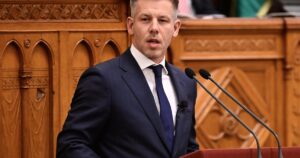
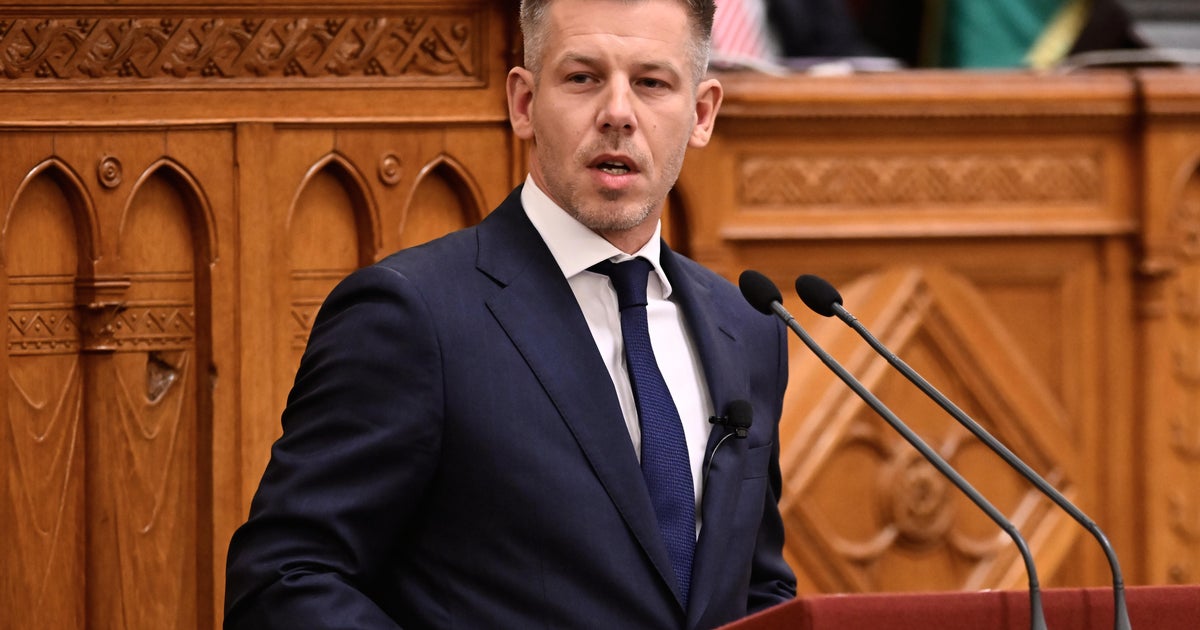
Standing in Hungary’s magnificent neo-Gothic parliament building, surrounded by 140 of his party representatives, Magyar struck a notably different tone from his predecessor. His inaugural speech was marked by humility and a clear understanding that his position was a responsibility, not an entitlement. “I’m not standing here because I’m different from anyone else in the country,” Magyar told the assembled lawmakers, his words resonating with both simplicity and profound meaning. “I stand here because millions of Hungarians decided that they want change. And this trust that we have received is both a weight of honor and a moral obligation, but also a wonderful feeling.” Perhaps most significantly, Magyar explicitly rejected the notion of ruling over Hungary, instead pledging to “serve my homeland.” This language represented a conscious departure from Orbán’s governing style, which critics had characterized as increasingly autocratic and self-serving. The new prime minister’s words were carefully chosen to signal a return to democratic norms and accountable governance, setting the tone for what his administration hopes will be a transformative period in Hungarian politics.
Confronting the Past and Building a Future
Magyar has made no secret of his intention to hold the previous administration accountable for what he and millions of Hungarian voters see as years of corruption and democratic backsliding. During his inauguration speech, he addressed this difficult task head-on, telling lawmakers that voters had “given us a mandate to open a new chapter in Hungary’s history.” But he also acknowledged the complex emotional and political work ahead: “We must understand, however, that there can be no new beginning without reconciliation. There can be no reconciliation without justice. And there can be no justice without confronting the past.” This isn’t just rhetoric—Magyar has outlined concrete plans to investigate and address alleged misconduct from the Orbán years. Among his most ambitious proposals is the establishment of a National Asset Recovery and Protection Office, a new authority specifically tasked with investigating and recovering public funds that were allegedly misused during Orbán’s long tenure. The nearly 3.4 million Hungarians who voted for Tisza are watching closely, expecting Magyar to follow through on these promises and hold Fidesz officials and their business allies accountable for perceived wrongdoing. Magyar has also vowed to suspend the news services of Hungary’s public broadcaster—widely criticized as having become little more than a mouthpiece for Orbán’s party—until objectivity and journalistic integrity can be restored. These are bold moves that signal Magyar’s commitment to rebuilding democratic institutions and governmental checks and balances that had been systematically eroded over the past sixteen years.
Returning to Europe and Democratic Values
One of the most significant shifts under Magyar’s leadership will be Hungary’s relationship with the European Union and the broader community of Western democracies. While Orbán had increasingly positioned Hungary as a spoiler within the EU—frequently vetoing key decisions and most recently blocking support for neighboring Ukraine in its conflict with Russia—Magyar represents a dramatically different approach. The symbolism began immediately: on Saturday afternoon, the EU flag was raised on the Parliament building’s facade for the first time since Orbán’s government removed it in 2014. This simple but powerful gesture signaled Hungary’s intention to rejoin the European mainstream. Magyar, who is far more pro-EU and anti-Russia than his predecessor, has promised to repair his country’s frayed ties with European partners and restore Hungary’s standing among Western democracies. This realignment is expected to transform political dynamics within the European Union, where Orbán’s obstructionism had created significant tensions and delays on crucial policy matters. However, Magyar’s pro-European stance doesn’t mean he’s abandoned all conservative positions. He continues to hold strong conservative anti-immigration views, arguing that the EU needs robust border protection and opposing the redistribution of asylum-seekers across Europe. This combination of pro-EU sentiment with conservative immigration policies may prove crucial to maintaining his diverse coalition of supporters. On a practical level, one of Magyar’s top priorities is unlocking approximately $20 billion in EU funds that were frozen during Orbán’s time in office over rule-of-law and corruption concerns. This money is desperately needed to revitalize Hungary’s struggling economy, which has essentially stagnated for the past four years, leaving many Hungarians feeling economically insecure and frustrated.
A Personal Journey from Insider to Reformer
Magyar’s path to the prime minister’s office is itself a remarkable story of political transformation. For years, he was an insider within Orbán’s own party, giving him an intimate understanding of how the system worked—and how it had been corrupted. But in 2024, Magyar resigned from Fidesz, publicly expressing his deep dissatisfaction with what he characterized as a culture of mass corruption under Orbán’s leadership. Rather than simply walk away from politics, he founded the Tisza party that same year, channeling his insider knowledge and frustration into building an opposition movement that could actually challenge Fidesz’s seemingly unshakable hold on power. His background as a lawyer and former party insider gives him unique credibility and expertise. He knows where the bodies are buried, so to speak, and understands the mechanisms through which power was concentrated and potentially abused. This insider knowledge will prove invaluable as his administration works to investigate past wrongdoing and implement reforms designed to prevent future abuses. The dramatic collapse of Fidesz’s parliamentary representation—from 135 seats to just 52—demonstrates just how thoroughly Magyar’s message resonated with Hungarian voters who were ready for fundamental change after sixteen years of increasingly autocratic rule.
A New Generation and New Hope
The atmosphere outside Parliament on inauguration day captured the sense of possibility and renewal that many Hungarians feel. Responding to Magyar’s call for an all-day “regime-change” celebration, thousands gathered in Kossuth Square, waving Hungarian and EU flags and wearing Tisza T-shirts. As they watched the proceedings inside Parliament on large screens, cheers erupted whenever the new prime minister appeared, reflecting genuine enthusiasm and hope for the future. Among the crowd were Hungarians like 27-year-old web designer Áron Farsang, who expressed hope that the new government would “lead us back toward the European Union” and restore Hungary’s democratic institutions. “I would also really like it if we could get rid of the Russian influence as soon as possible,” he said, referring to the energy dependency and political alignment that had characterized the Orbán years. The new parliament also reflects greater diversity, with 54 women lawmakers—most from the Tisza party—representing more than a quarter of the total and the most in Hungary’s history. Andrea Szepesi, an economist from Budapest attending the celebration, said it was “about time” more female lawmakers held seats in Parliament, noting that under Orbán’s rule, Hungary had fewer women in government than almost all other EU nations. “Finally, women are able to participate in this new, beautiful democratic system and the flourishing of the country,” she told reporters. As the 199 representatives took their oaths around 11 a.m. local time, one notable absence spoke volumes: Viktor Orbán, who had been present at every session since Hungary’s first post-Communist Parliament was formed in 1990, was not among them. His absence marked the definitive end of an era and the beginning of whatever comes next for this central European nation of nearly 10 million people, now embarking on a new democratic experiment under Péter Magyar’s leadership.