

WHO Director-General to Personally Oversee Cruise Ship Hantavirus Evacuation
A Leader’s Compassionate Response to Crisis
In a remarkable show of hands-on leadership during a public health emergency, World Health Organization Director-General Dr. Tedros Adhanom Ghebreyesus has announced he will personally travel to Tenerife in Spain’s Canary Islands to oversee the complex evacuation of over 100 passengers from a cruise ship affected by a rare hantavirus outbreak. This isn’t just another bureaucratic response from a distant office in Geneva—Dr. Tedros is rolling up his sleeves and meeting this crisis at ground level. In a heartfelt letter to the residents of the Canary Islands, he made his intentions crystal clear: “I will be there myself. I intend to travel to Tenerife to observe this operation firsthand, to stand alongside the health workers, port staff, and officials who are making it happen.” His decision to be physically present speaks volumes about the seriousness of the situation and his commitment to both the affected passengers and the communities that will help bring them to safety. More than that, he wants to personally thank the people of Tenerife for their compassion in welcoming this ship during what he acknowledges is an understandably frightening situation.
The Current Situation Aboard the MV Hondius
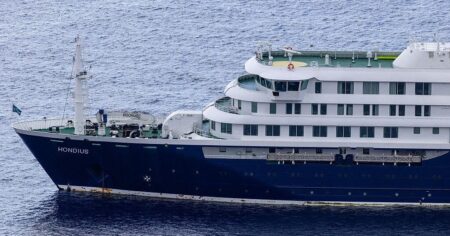
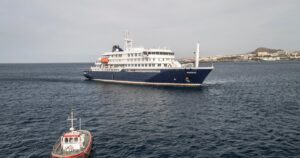
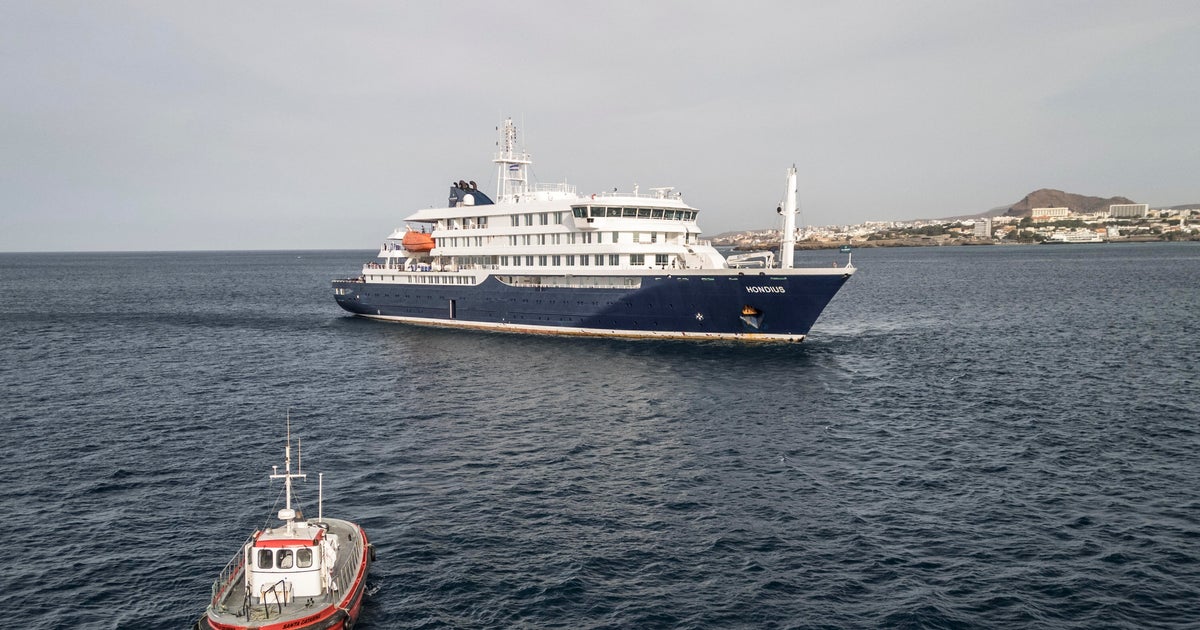
The cruise vessel at the center of this health emergency is the MV Hondius, owned by Oceanwide Expeditions, which is currently making its way toward Tenerife and is expected to arrive just before dawn on Sunday local time—around midnight on Saturday Eastern time in the United States. The ship is carrying 147 people total, including 60 crew members and passengers from multiple countries, with 17 Americans among them. While eight people aboard have had confirmed or suspected cases of hantavirus and tragically three have already died, there’s some cautiously good news: none of the 147 people currently on the ship are showing any symptoms of the disease. The vessel had departed from Argentina on April 1st for what was supposed to be an adventure cruise visiting several remote islands in the south Atlantic, including the British territories of Tristan da Cunha and Saint Helena. Nobody could have predicted that this voyage would turn into an international health incident requiring coordination between multiple governments, health organizations, and emergency response teams from around the world.
Understanding the Andes Strain and How This Outbreak Began
What makes this situation particularly concerning—yet also somewhat manageable—is the specific type of hantavirus involved. Hantavirus is typically contracted through close contact with infected rodents and their droppings, and it usually doesn’t spread from person to person. However, the strain detected on the Hondius is the Andes variant, which is the only type of hantavirus known to be transmissible between humans through close contact with an infected individual. This strain exists exclusively in South America, which is an important clue to how this outbreak started. According to Oceanwide Expeditions, the outbreak appears to have originated with a Dutch couple who spent several months traveling throughout South America before joining the cruise. They had been bird-watching in areas where rodents are known to carry the virus. The husband tragically died aboard the ship on April 11th, while his wife was among 32 people who disembarked at Saint Helena. She continued her journey to South Africa but died days later after being removed from a KLM Airlines flight when she became too ill to continue traveling. This heartbreaking chain of events set off alarm bells throughout the international health community and triggered the extensive contact tracing and monitoring efforts now underway across multiple continents.
The Carefully Orchestrated Evacuation Plan
The evacuation operation being planned for when the ship reaches Tenerife is nothing short of a logistical marvel, requiring precise coordination between Spanish authorities, the WHO, the CDC, and health officials from every country with citizens aboard. The process has been carefully designed to minimize any risk to the local population while getting passengers home safely. For the 17 Americans on board, the plan is particularly detailed: they will be transported from the ship in small boats to shore, then immediately taken to a plane waiting on the runway. This aircraft, provided by the U.S. government with oversight from the Centers for Disease Control and Prevention, will fly them directly to the National Quarantine Center at the University of Nebraska Medical Center in Omaha, one of the most advanced biocontainment facilities in the United States. Maria van Kerkhove, WHO’s acting director of the Department of Epidemic and Pandemic Preparedness and Prevention, acknowledged the anxiety these passengers must be feeling during a press conference on Saturday, saying, “I’m sure they’re very anxious to get home, but (we need) to make sure they do that in the most safe way possible.” Every other country with passengers aboard will follow a similar protocol, with planes standing by to take their citizens directly home. The WHO is recommending that each country keep these passengers in isolation for 42 days from their last point of exposure to the virus—a precautionary measure that might seem extreme but reflects the seriousness with which health authorities are treating even the small risk of further transmission.
A Measured Response: Why This Isn’t Another COVID-19
Dr. Tedros clearly understands that news of an outbreak on a ship heading toward populated islands might trigger traumatic memories of the early COVID-19 pandemic, particularly the nightmare scenarios aboard cruise ships like the Diamond Princess in early 2020. That’s why his letter to the people of the Canary Islands directly addresses these fears with both empathy and scientific reassurance. “I know that when you hear the word ‘outbreak’ and watch a ship sail toward your shores, memories surface that none of us have fully put to rest,” he wrote. “The pain of 2020 is still real, and I do not dismiss it for a single moment. But I need you to hear me clearly: this is not another COVID.” He went on to emphasize that “the current public health risk from hantavirus remains low,” a statement he and his colleagues have made repeatedly and unequivocally. The key differences are significant: unlike COVID-19, hantavirus doesn’t spread easily between people—even the Andes strain requires close contact with someone who is actively ill. There’s no airborne transmission, no asymptomatic spreading, and no potential for the exponential growth that made COVID-19 so devastating. Health experts stress that the chances of widespread transmission are very small, especially with the careful protocols being put in place.
Global Monitoring and the Path Forward
The ripple effects of this outbreak extend far beyond the passengers currently aboard the MV Hondius. Dozens of people who were either on the KLM flight with the infected Dutch woman or who disembarked at Saint Helena during the cruise are already under observation in various locations around the world. In the United States alone, individuals in Texas, Virginia, Georgia, Arizona, New Jersey, and California are being monitored, though none have developed any symptoms of the virus, according to confirmations from their respective state health departments to CBS News. This extensive monitoring network demonstrates how seriously health authorities are taking even the remote possibility of further cases, while also showing how much we’ve learned from COVID-19 about the importance of rapid contact tracing and transparent communication. As the ship approaches Tenerife and Dr. Tedros prepares to oversee this unprecedented operation personally, there’s a sense that while the situation is serious, it’s also under control. The WHO Director-General’s decision to be physically present isn’t just good public relations—it’s a powerful statement that global health leadership sometimes means showing up, standing alongside the people doing the difficult work, and witnessing humanity’s capacity for compassion during crisis. As Dr. Tedros wrote to the people of Tenerife, “Your humanity deserves to be witnessed, not just acknowledged from a distance.”