
Putin Marks Victory Day with Scaled-Down Parade Amid Ukraine War
A Subdued Military Display on Red Square
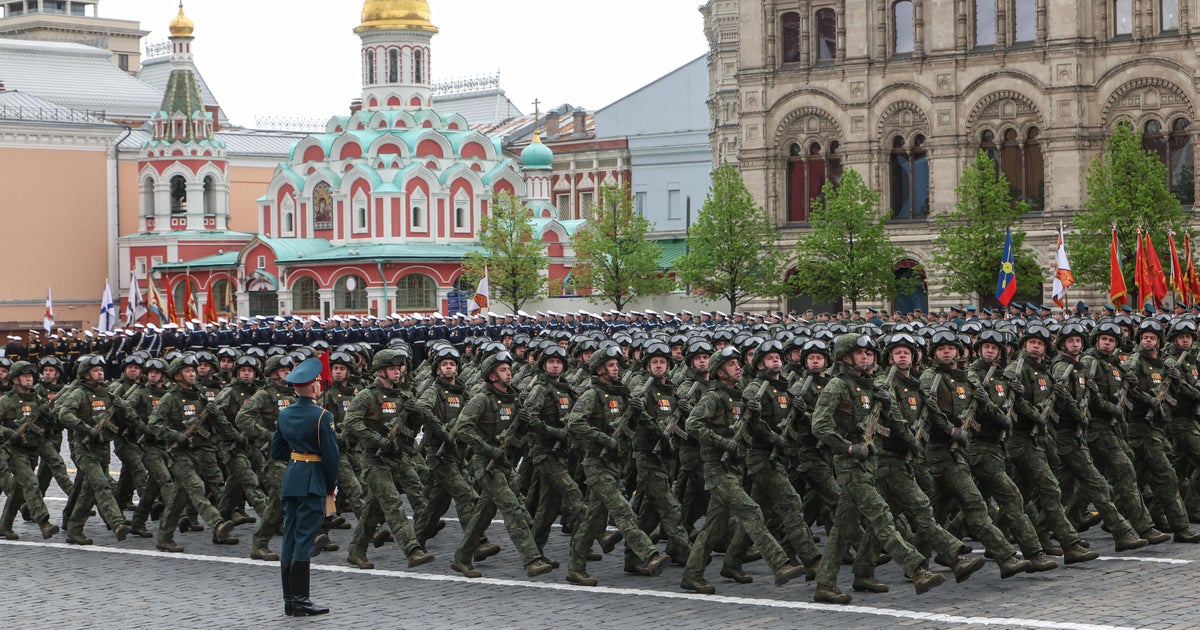
Russian President Vladimir Putin presided over a noticeably different Victory Day celebration this year, as the traditional military parade on Moscow’s Red Square unfolded without the imposing display of heavy weaponry that has become synonymous with this important Russian holiday. For the first time in nearly twenty years, tanks, missiles, and other massive military equipment were conspicuously absent from the procession, marking a significant departure from the grand shows of military strength that have characterized these annual celebrations since 2008. The only heavy military presence came from the skies, as combat jets performed their customary flyover above the historic square. Russian officials attributed this unprecedented change to what they termed the “current operational situation,” suggesting that the military hardware was more urgently needed on the battlefields of Ukraine rather than parading through Moscow’s streets. State television commentators echoed this explanation, emphasizing that the equipment serves a more practical purpose in the ongoing conflict. The scaled-down nature of the parade, combined with heightened security measures throughout the capital, reflected the complex reality facing Russia as it continues its military campaign in Ukraine, now stretching into its fifth year.
Putin’s Defiant Message of Victory
Despite the reduced spectacle, President Putin used the occasion to deliver a characteristically defiant speech, expressing unwavering confidence in Russia’s ultimate victory in Ukraine. Standing before assembled troops and dignitaries, Putin portrayed the conflict as a struggle against not just Ukraine but the entire NATO alliance, framing Russian soldiers as defenders fighting for a “just cause” against what he described as “an aggressive force that is armed and supported by the entire bloc of NATO.” His rhetoric emphasized themes of moral superiority, national unity, and resilience, declaring that “victory has always been and will be ours.” Putin highlighted what he called the key ingredients for success: “our moral strength, courage and valor, our unity and ability to endure anything and overcome any challenge.” The Russian leader has consistently used Victory Day—Russia’s most significant secular holiday—to foster national pride, rally public support for his policies, and reinforce Russia’s image as a major global power. The holiday commemorates the Soviet Union’s enormous sacrifice during World War II, when 27 million Soviet citizens perished in what Russians call the Great Patriotic War. This profound historical trauma remains deeply embedded in Russian national consciousness and represents one of the few unifying narratives that transcends the country’s complicated and divisive Communist past.
New Alliances and International Tensions
This year’s parade featured a significant diplomatic development: for the first time, troops from North Korea participated in the Red Square celebration. This inclusion served as a public acknowledgment of Pyongyang’s military support for Moscow, particularly North Korea’s deployment of soldiers to help Russian forces combat a Ukrainian incursion into Russia’s Kursk region. The presence of North Korean troops at this symbolically important event underscored the deepening military cooperation between the two nations, both of which find themselves increasingly isolated from Western powers. Among the foreign dignitaries attending the Moscow festivities were leaders from Malaysia, Laos, Kazakhstan, Uzbekistan, and Belarus, with Belarusian authoritarian leader Alexander Lukashenko maintaining his position as one of Putin’s most steadfast allies. Notably, Slovak Prime Minister Robert Fico, whose country is a European Union member, also visited Moscow, though he chose to lay flowers at the Tomb of the Unknown Soldier memorial rather than attend the main parade. His presence in Russia drew sharp criticism from German Chancellor Friedrich Merz, who expressed deep regret over the visit and promised to discuss it with the Slovak leader. During his Kremlin meeting with Putin, Fico lamented what he characterized as a new “Iron Curtain” dividing Europe and hampering trade, while stressing Slovakia’s dependence on Russian energy supplies. Putin, in turn, praised Fico for pursuing what he called a “sovereign” foreign policy.
Ceasefire Attempts and Continued Fighting
The Victory Day celebrations unfolded against the backdrop of attempted ceasefires that largely failed to materialize as planned. Russia had declared a unilateral ceasefire for Friday and Saturday, while Ukrainian President Volodymyr Zelenskyy announced a truce that was supposed to begin on May 6, but neither ceasefire held as both sides accused each other of continued attacks. President Trump announced that both Russia and Ukraine had agreed to his request for a ceasefire running from Saturday through Monday, along with a prisoner exchange, optimistically declaring that this pause in fighting could mark “the beginning of the end” of the war. However, the reality on the ground told a different story, with hostilities continuing despite these diplomatic efforts. Zelenskyy, who had earlier in the week suggested that Russian authorities “fear drones may buzz over Red Square” on May 9, issued a decree with obvious mockery, temporarily permitting Russia to hold its Victory Day celebrations and declaring Red Square off-limits for Ukrainian strikes. Kremlin spokesman Dmitry Peskov dismissed Zelenskyy’s decree as a “silly joke,” asserting that Russia didn’t need anyone’s permission to commemorate Victory Day. The war’s trajectory has seen Russia’s larger and better-equipped military making slow but steady territorial gains along a front line stretching more than 1,000 kilometers, while Ukraine has increasingly focused on long-range attacks targeting Russian energy facilities, manufacturing plants, and military depots far behind enemy lines.
Security Concerns and Russian Threats
The security atmosphere in Moscow during the Victory Day celebrations reflected genuine concerns about potential Ukrainian disruption of the festivities. Russian authorities implemented extraordinary security measures, including unprecedented restrictions on mobile internet access and text messaging services throughout the capital, citing public safety concerns. These measures represented yet another tightening of the government’s increasingly stringent controls over online activities and internet censorship, prompting rare public expressions of discontent among Russian citizens. The Russian Defense Ministry issued stark warnings that any Ukrainian attempt to disrupt Saturday’s celebrations would be met with “a massive missile strike on the center of Kyiv,” specifically cautioning civilian populations and employees of foreign diplomatic missions about “the need to leave the city promptly.” The European Union responded by declaring that its diplomats would not abandon the Ukrainian capital despite these Russian threats, demonstrating continued solidarity with Ukraine. Ukrainian officials, for their part, had been vocal in the days leading up to Victory Day about Russia’s security anxieties. The evolving nature of the conflict has seen Ukraine develop increasingly sophisticated drone capabilities, with unmanned aircraft now able to reach targets more than 1,000 kilometers deep into Russian territory—a dramatic expansion beyond Ukraine’s pre-2022 capabilities that has fundamentally altered the strategic calculus of the war.
The Deeper Meaning and Historical Context
Victory Day holds profound significance in Russian culture and politics, representing far more than a simple military commemoration. The holiday serves as the most important secular observance in the Russian calendar, commemorating the Soviet Union’s victory over Nazi Germany in 1945 and honoring the staggering sacrifice of 27 million Soviet lives lost during what Russians call the Great Patriotic War. This enormous loss left an indelible mark on the national psyche that reverberates through Russian society to this day. Putin has masterfully exploited this historical memory, using Victory Day celebrations to cultivate national pride, justify his foreign policy decisions, and position Russia as a major global power deserving of respect and influence. In his speech at the parade, Putin emphasized these themes, speaking of celebrating the day “with feelings of pride and love for our country, with understanding of our shared duty to defend the interests and future of our Motherland.” He praised Soviet soldiers for their “colossal losses” and “colossal sacrifice in the name of freedom and dignity of the peoples of Europe,” describing them as “the embodiment of courage and nobility, fortitude and humanity.” The dramatic scaling back of this year’s parade—eliminating the impressive displays of military hardware that have been featured annually since 2008—speaks to the reality that Russia’s military resources are stretched thin by the prolonged conflict in Ukraine. Smaller Victory Day parades traditionally held across the country were also reduced or canceled altogether for security reasons, further illustrating how the war has transformed even Russia’s most cherished national celebration into an event marked by caution, constraint, and the ever-present shadow of ongoing conflict.