


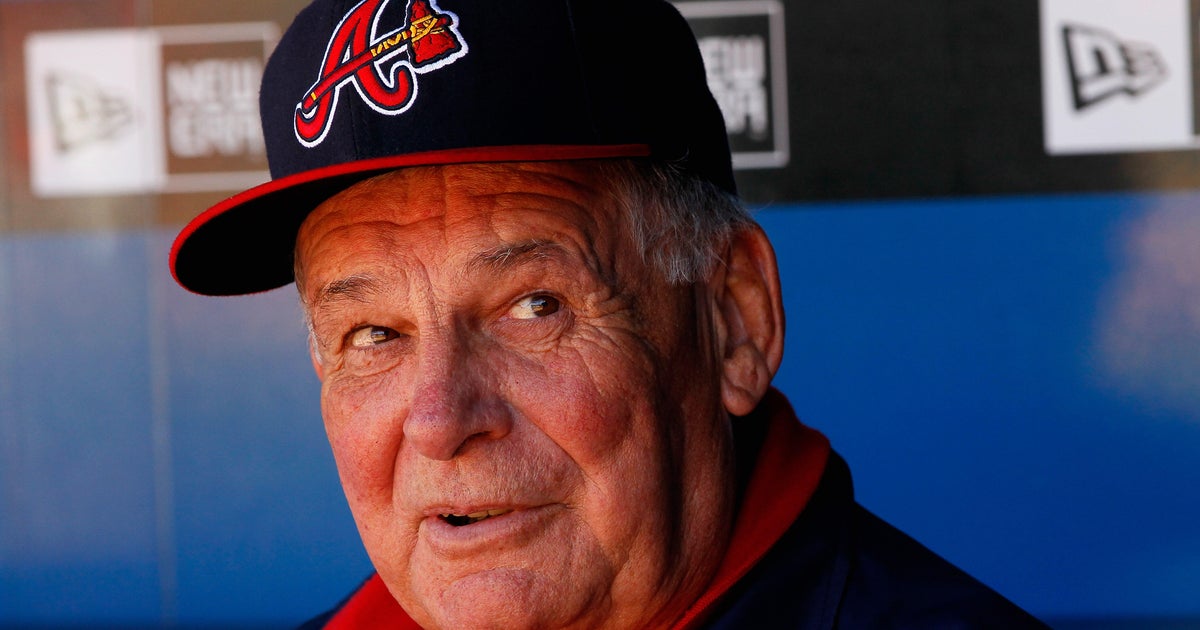

The Passing of a Baseball Legend: Remembering Bobby Cox
A Giant of the Game Says Goodbye
The baseball world mourns the loss of one of its greatest managers as Bobby Cox, the legendary skipper who transformed the Atlanta Braves into a dynasty during the 1990s, has passed away at the age of 84. The Braves organization announced his death on Saturday, though specific details surrounding his passing were not immediately disclosed. Cox had suffered a stroke back in 2019, which had impacted his health in recent years. His death marks the end of an era for baseball fans, particularly those in Atlanta who witnessed firsthand the incredible run of success he orchestrated over more than two decades. The outpouring of tributes and remembrances that followed the announcement spoke volumes about the impact Cox had not just on the Braves organization, but on the entire sport of baseball. In their official statement, the Braves organization didn’t mince words about Cox’s legacy, declaring him “the best manager to ever wear a Braves uniform.” This wasn’t hyperbole—it was a simple statement of fact backed by an extraordinary record of achievement that included 14 straight division titles, five National League pennants, and the unforgettable World Series championship in 1995. The organization added that his “managerial legacy will never be matched,” a sentiment that resonates deeply when you consider the unprecedented consistency and excellence his teams demonstrated year after year.
From Worst to First: The Beginning of a Dynasty
Bobby Cox’s most remarkable achievement began with what seemed like an impossible task. When he took over the Braves in June 1990, he inherited a team languishing in last place, a franchise that had become synonymous with losing and disappointment. What happened next would become the stuff of sports legend. In just over a year, Cox transformed that last-place club into division champions, completing one of baseball’s most dramatic worst-to-first turnarounds in 1991. Though the Braves fell just short in the World Series that year, losing to the Minnesota Twins in a thrilling seven-game series, it was merely the opening chapter of an unprecedented run of dominance. That 1991 season marked the beginning of what would become a record-shattering 14 consecutive division titles—a feat that no professional team in any sport had ever accomplished before or has managed to duplicate since. This wasn’t just about winning; it was about sustained excellence at the highest level, year after year, regardless of player changes, injuries, or the competitive landscape. Cox’s ability to keep his teams focused, motivated, and performing at championship levels for nearly a decade and a half remains one of the most remarkable managerial achievements in sports history. The consistency he brought to the organization gave Braves fans something they could count on every spring: their team would be in contention come October.
The 1995 Championship and a Hall of Fame Career
While the string of division titles was impressive, Bobby Cox and the Braves organization knew that ultimate success would be measured by World Series championships. That validation came in 1995 when Cox led the Braves to their only World Series title during his tenure, cementing his place among baseball’s all-time great managers. The championship was particularly sweet for a franchise and a city that had come so close so many times before. Cox managed the Braves for 25 years total, and when he finally hung up his spikes after the 2010 season, he left behind a statistical legacy that places him among the immortals of the game. His 2,504 career wins rank fourth all-time in baseball history, trailing only legends Connie Mack, John McGraw, and Tony La Russa. He managed 4,508 games (fifth all-time), appeared in the playoffs 16 times (first all-time), won 15 division titles including that record 14 in a row (first all-time), and collected 67 playoff victories (fourth all-time). These aren’t just numbers—they represent decades of excellence, countless clutch decisions, and an innate understanding of how to win baseball games. His induction into the Baseball Hall of Fame in 2014 was a foregone conclusion, a well-deserved honor that recognized not just his wins and titles, but his profound impact on the game itself. The Braves organization noted that his “wealth of knowledge on player development and the intricacies of managing the game” were what made him truly special, earning him baseball’s ultimate individual honor.
The Man Behind the Legend: Old-School Leadership with a Human Touch
What made Bobby Cox truly special wasn’t just found in box scores and championship banners—it was in how he treated people and how he approached the game. Cox brought an old-school sensibility to the dugout that felt authentic rather than nostalgic. He always wore spikes and stirrups, eschewing the more casual attire that many modern managers adopted. But it wasn’t about appearances; it was about respect for the game and setting an example for his players. His fatherly demeanor became legendary among those who played for him, inspiring a loyalty that transcended wins and losses. Players didn’t just respect Cox; they genuinely loved him as a person and mentor. Brian McCann, who caught for the Braves during Cox’s later years, perhaps summed it up best in 2019 when he said simply, “He is the Atlanta Braves. He’s the best.” McCann went further, describing Cox as an “icon” and “one of the best human beings any of us have ever met.” These testimonials speak to something beyond baseball acumen—they reveal a man who understood that managing people was just as important as managing a game. Cox was known throughout the baseball community not for ego or self-promotion, but for his genuine care for his players and his deep understanding of human nature. Interestingly, Cox also holds another record that reflects his passionate defense of his players: 158 regular-season ejections, the most among managers. While some might view this as a negative, those who knew Cox understood that these ejections often came when he was standing up for his players, showing them that he had their backs no matter what.
Recognition and Legacy: Number 6 Forever
The Braves organization made sure to honor Bobby Cox appropriately while he was still able to appreciate it. In 2011, shortly after his retirement, the team retired his No. 6 jersey and inducted him into the Braves’ Hall of Fame, ensuring that no future manager would ever wear his number. This ceremony was more than just a formality; it was the organization’s way of saying thank you to the man who had given them the most successful run in franchise history. The number 6 now hangs alongside other Braves legends, a permanent reminder of Cox’s impact on the organization and the city of Atlanta. During his 29 seasons as a major league manager—which included four years with the Toronto Blue Jays earlier in his career—Cox managed 16 postseason teams, a testament to his consistent ability to build winners. The Braves organization noted in their statement that Cox “was a favorite among all in the baseball community, especially those who played for him,” highlighting how his influence extended far beyond Atlanta. Former players, coaches, and even rival managers respected Cox not just for what he accomplished, but for how he accomplished it—with dignity, class, and an unwavering commitment to doing things the right way. His approach to player development helped countless young players reach their potential, and many of those players went on to become coaches and managers themselves, spreading Cox’s baseball philosophy to new generations.
An Enduring Impact on Baseball
As the baseball world processes the loss of Bobby Cox, it’s clear that his impact on the sport will endure for generations. He didn’t just manage baseball games; he helped define what successful baseball management looks like in the modern era. His ability to balance traditional baseball wisdom with progressive thinking about player development and game strategy created a blueprint that many have tried to follow but few have successfully replicated. The 14-year run of division titles isn’t just a record—it’s a testament to organizational stability, smart player evaluation, consistent execution, and the kind of leadership that inspires excellence day after day, year after year. Cox proved that sustained success was possible even in an era of free agency and increasing player movement. He showed that a manager could be both a friend and a leader, both traditional and innovative, both tough and compassionate. The 1995 World Series championship will forever be remembered as a crowning achievement for the city of Atlanta, but Bobby Cox’s true legacy is found in the countless lives he touched, the players he developed, the games he won with intelligence rather than just talent, and the standard of excellence he established that continues to influence the game today. While the baseball world has lost one of its greatest managers, the lessons Bobby Cox taught and the example he set will continue to inspire future generations of players, coaches, and managers. He was, as Brian McCann said, the Atlanta Braves—and now, he’ll forever be remembered as one of baseball’s true legends.