


Remembering Barry Wilburn: A Super Bowl Champion’s Tragic End
A Football Legend’s Untimely Death
The football world is mourning the loss of Barry Wilburn, a Super Bowl champion and former NFL standout who passed away at just 62 years old under heartbreaking circumstances. The Washington Commanders, the team where Wilburn made his greatest impact, announced his death on Sunday, though the tragedy actually occurred days earlier. According to reports from CBS affiliate WREG in Memphis, Tennessee, which cited the Memphis Fire Department, Wilburn died in a house fire early Friday morning. Emergency crews responded to the blaze in the early hours, and after extinguishing the flames, they discovered Wilburn’s body inside the home. He was pronounced dead at the scene, leaving family, friends, and the football community devastated by the sudden loss. The cause of the fire remains under investigation, adding another layer of sadness to an already tragic situation. Wilburn’s family confirmed the circumstances surrounding his death to Action News 5, and the news sent shockwaves through the Memphis community where he grew up and the NFL community where he made his mark.
From Memphis to NFL Stardom
Barry Wilburn’s journey to NFL greatness began on December 9, 1963, when he was born in Memphis, Tennessee. He would grow up to become one of the city’s most celebrated athletes, first making his mark at Melrose High School where he distinguished himself as an exceptional football talent. His high school career was so impressive that he earned a scholarship to play college football at the University of Mississippi, commonly known as Ole Miss, where he continued to develop his skills as a defensive back. Wilburn’s college performance caught the attention of NFL scouts, and in 1985, the Washington Football Team (now the Commanders) selected him in the NFL Draft. This marked the beginning of what would become a memorable professional career. The transition from college to the professional ranks can be challenging for many players, but Wilburn adapted quickly to the speed and complexity of the NFL game. His natural athleticism, combined with his football intelligence and work ethic, allowed him to compete at the highest level almost immediately. Within just a couple of seasons, he would establish himself as one of the league’s premier playmakers in the defensive backfield.
The Magical 1987 Season
The 1987 NFL season would prove to be the defining year of Barry Wilburn’s professional career, a season where everything came together in spectacular fashion. That year, Wilburn led the entire National Football League in interceptions with an impressive nine picks during the regular season alone. This achievement placed him among the elite defensive backs in the game and showcased his ability to read quarterbacks, position himself perfectly, and make crucial plays when his team needed them most. Wilburn had the privilege of playing in a defensive backfield that also featured the legendary Darrell Green, who would eventually be inducted into the Pro Football Hall of Fame. Playing alongside such a talented teammate only elevated Wilburn’s game, as the two formed a formidable partnership that terrorized opposing offenses throughout the season. The Washington defense became one of the most feared units in the league, with Wilburn’s ball-hawking skills playing a central role in their success. His nine interceptions during the regular season represented nearly half of his career total of 20 interceptions, demonstrating just how exceptional that particular season was for the Memphis native.
Super Bowl Glory
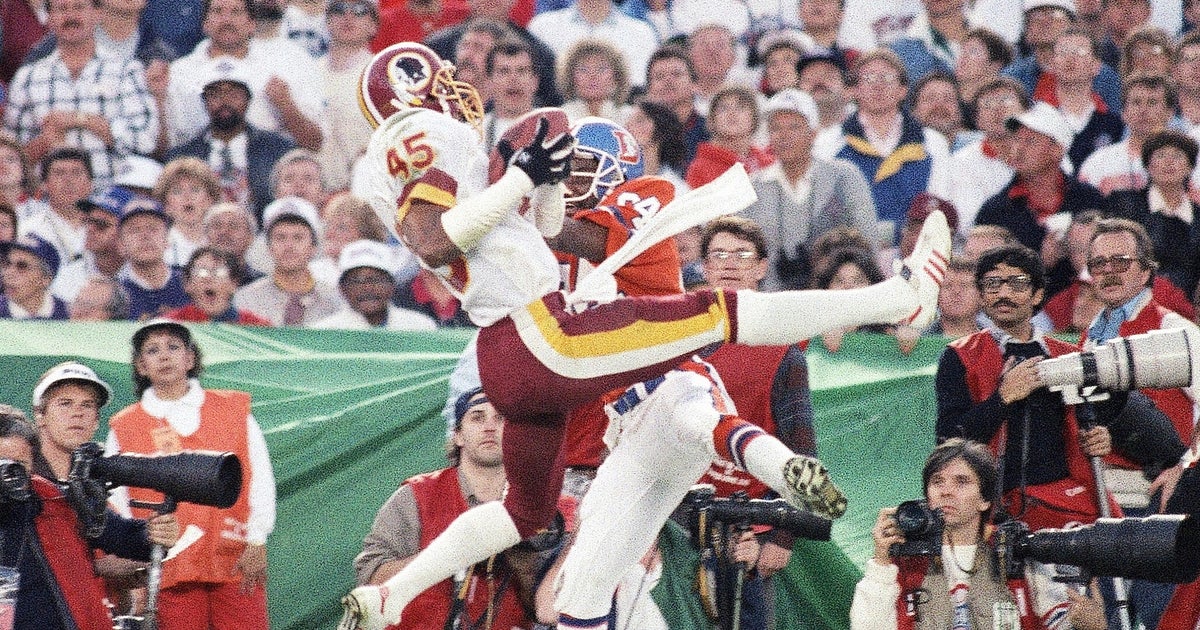
The 1987 season culminated in the ultimate achievement for any NFL player: winning the Super Bowl. Washington advanced through the playoffs and earned the right to face the Denver Broncos in Super Bowl XXII, played on January 31, 1988, in San Diego, California. The game turned into a showcase for the Washington team, which dominated Denver in a 42-10 victory that was never really in doubt. But for Barry Wilburn personally, the Super Bowl became the crowning moment of his career. Not content to simply be part of a championship team, Wilburn made himself a central figure in the victory by intercepting two passes during the game. These clutch playoff performances on football’s biggest stage demonstrated that Wilburn wasn’t just a regular-season star—he was a player who elevated his game when the stakes were highest. The image of Wilburn making one of those interceptions in the second quarter, captured by Associated Press photographer Bob Galbraith, became an iconic representation of Washington’s dominant performance. For a player who had led the league in interceptions during the regular season, capping it off with two picks in the Super Bowl was the perfect ending to a magical year.
A Journeyman’s Career Path
After five successful seasons with Washington from 1985 to 1989, where he established himself as a key contributor to one of the NFL’s best defenses, Barry Wilburn’s career took him to other teams as he continued to pursue his passion for professional football. In 1992, he signed with the Cleveland Browns, bringing his experience and leadership to a different organization. Though his time in Cleveland was brief, he continued to compete at a high level and share the knowledge he had gained from his years of NFL experience. Following his stint with the Browns, Wilburn joined the Philadelphia Eagles, where he spent a couple of seasons before eventually stepping away from professional football. Like many NFL players, Wilburn’s career followed the pattern of a journeyman—a player who brings value to different teams throughout the league, even if he never quite recaptured the individual brilliance of that magical 1987 season. Over the course of his NFL career, which spanned nearly a decade, Wilburn accumulated 20 regular-season interceptions and left an indelible mark on the game. His career trajectory demonstrated both the heights that can be achieved through talent and hard work, and the reality that professional athletic careers are often shorter than we’d like them to be.
A Legacy Remembered
Beyond the statistics and the championship ring, Barry Wilburn’s legacy lives on through the people whose lives he touched, particularly in his hometown of Memphis. Tim Thompson, who was Wilburn’s teammate at Melrose High School, shared touching memories with WREG that illustrate the kind of person Wilburn was off the field. Thompson first met Wilburn when Wilburn was a senior and Thompson was just a sophomore, creating a connection that would last a lifetime. “I always looked up to him,” Thompson told the station, describing Wilburn as a role model who set an example for younger players to follow. The respect and admiration Thompson felt for Wilburn was evident in a meaningful gesture that connected their athletic careers. Thompson decided he wanted to wear Wilburn’s jersey number, number 11, after Wilburn graduated and moved on to Ole Miss. “Barry ended up going to Ole Miss. He wore the number 11,” Thompson recalled. “I asked him when he left Melrose, ‘it would be a privilege for me to wear your number 11’ and he said ‘it was an honor.'” This exchange, simple yet profound, reveals Wilburn’s humility and grace—qualities that made him not just a great player, but a great person. The fact that he viewed it as an honor that someone wanted to carry on his legacy speaks volumes about his character. Now, as the football community processes this tragic loss, they remember not just the interceptions and the Super Bowl championship, but the man who inspired others through his example, who represented his hometown with pride, and who showed that success doesn’t have to change who you are at your core. Barry Wilburn’s life may have been cut short at 62, but the impact he made during his time will continue to resonate with those who knew him, played with him, and looked up to him as a symbol of what dedication and excellence look like.