



Understanding the October 10th Crypto Market Crash: Binance’s Response and Market Reality
What Really Happened on October 10th
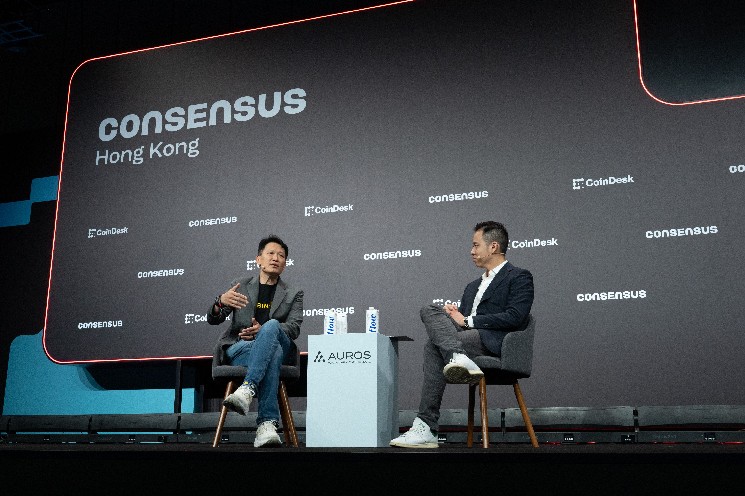
The cryptocurrency world experienced a significant shakeup on October 10th, with approximately $19 billion in liquidations rippling across the entire digital asset ecosystem. Binance Co-CEO Richard Teng stepped forward at CoinDesk’s Consensus Hong Kong conference to address mounting speculation that his exchange was responsible for triggering this market-wide event. According to Teng, the reality is far more complex than a single platform causing chaos. The liquidation event wasn’t isolated to crypto or caused by any particular exchange’s actions. Instead, it was part of a broader global financial reaction to major geopolitical developments, specifically China’s announcement of rare earth metal export controls and the United States’ introduction of fresh tariffs. These announcements sent shockwaves through traditional and digital markets alike, creating a perfect storm of uncertainty that led to massive sell-offs across multiple asset classes. What’s particularly important to understand is that the crypto liquidations, while significant in absolute terms, were actually proportionally smaller than what happened in traditional markets that same day.
The Bigger Picture: Traditional Markets vs. Crypto
To put the crypto market’s $19 billion in liquidations into proper perspective, Teng pointed out that the U.S. equity market alone plummeted by a staggering $1.5 trillion in value on that same fateful day. Within that broader crash, traditional stock markets saw approximately $150 billion in liquidations—nearly eight times the amount that occurred in the cryptocurrency space. This comparison is crucial because it demonstrates that the crypto market wasn’t experiencing an isolated crisis unique to digital assets or any particular platform. Rather, cryptocurrency was simply following broader market trends driven by macroeconomic and geopolitical factors that affect all financial markets. The crypto market, being considerably smaller than traditional equity markets, naturally saw proportionally smaller absolute numbers in terms of liquidations. Every cryptocurrency exchange—whether centralized platforms like Binance, Coinbase, and Kraken, or decentralized finance (DeFi) protocols—experienced significant liquidations during this period. The widespread nature of these liquidations across the entire ecosystem further supports Teng’s assertion that this was a market-wide response to external factors rather than an issue originating from any single platform or entity.
Technical Issues and Binance’s Response
While defending Binance against accusations of causing the market crash, Teng did acknowledge that the exchange experienced some operational challenges during the height of the crisis. Around 9:00 p.m. Eastern Time, when approximately 75% of the liquidations occurred, Binance users encountered two unrelated, isolated technical issues that compounded the stress of an already volatile situation. The first issue involved a stablecoin depegging—a situation where a cryptocurrency designed to maintain a stable value relative to traditional currency temporarily loses that peg and fluctuates in price. The second problem was described as “some slowness in terms of asset transfer,” meaning users experienced delays when trying to move their cryptocurrency holdings. These technical hiccups, while unfortunate in timing, were separate from the broader market liquidation event. What sets Binance apart from other exchanges during this crisis, according to Teng, was the platform’s response to affected users. Binance took proactive steps to support customers who were impacted by these technical issues—assistance that Teng noted other exchanges did not provide to their users. This response demonstrates the platform’s commitment to user protection even during extreme market volatility, though Teng didn’t elaborate on the specific forms this support took.
Binance’s Market Position and User Trust
Despite the market turmoil and the technical issues that occurred on October 10th, Binance’s trading data tells a story of continued user confidence in the platform. Richard Teng shared impressive statistics that underscore Binance’s dominant position in the cryptocurrency exchange landscape: the platform facilitated an enormous $34 trillion in trading volume throughout the previous year while serving a user base of 300 million people worldwide. These numbers alone place Binance as one of the largest cryptocurrency exchanges globally. Perhaps more telling than the volume numbers is what didn’t happen in the aftermath of the liquidation event. When an exchange experiences serious problems or loses user trust, it typically sees massive withdrawals as customers rush to move their assets to safer platforms or into self-custody wallets. However, Binance’s trading data showed no evidence of such mass exodus. There were no significant spikes in withdrawal activity that would indicate users fleeing the platform due to concerns about its stability or role in the market crash. “The data speaks for itself,” Teng stated simply, pointing to this evidence as proof that users understand the liquidation event was a market-wide phenomenon rather than a Binance-specific problem. This continued user confidence, even in the face of accusations and market volatility, suggests that Binance’s customer base understands the broader context of what occurred.
Geopolitical Tensions and Market Uncertainty
Looking beyond the immediate crisis, Richard Teng provided insights into the broader factors affecting cryptocurrency markets in the current global environment. The crypto market doesn’t exist in a vacuum—it’s increasingly interconnected with traditional financial markets and highly sensitive to the same geopolitical and macroeconomic forces that drive stocks, bonds, and commodities. The October 10th event was a clear example of how announcements from major world powers regarding trade policy and strategic resource controls can instantly reverberate through digital asset markets. “At the macro level, I think people are still uncertain about interest rate movements going forward,” Teng explained, pointing to one of the fundamental economic factors creating market volatility. Central bank policies, particularly those of the U.S. Federal Reserve, have profound effects on all risk assets, including cryptocurrencies. When interest rates rise or uncertainty about future rate movements increases, investors often pull back from riskier investments, and crypto is still generally classified as a high-risk asset class. Additionally, Teng acknowledged that “there’s always the trend of geopolitics, tension, etc. Those weigh on these assets, such as crypto.” The ongoing tensions between major economic powers, trade disputes, and strategic resource competitions create an environment of uncertainty that causes investors to be more cautious across all asset classes, not just cryptocurrency.
Long-Term Perspective and Institutional Adoption
Despite the short-term volatility and market uncertainties, Richard Teng struck an optimistic tone when discussing the long-term trajectory of the cryptocurrency industry. He emphasized that experienced market participants who have been involved in crypto for four to six years or longer will recognize a familiar pattern: cryptocurrency prices move in cycles, with periods of intense growth followed by corrections and consolidations. This cyclical nature is a fundamental characteristic of the crypto market that seasoned investors have come to expect and navigate. Rather than focusing solely on price action and short-term volatility, Teng encouraged looking at “the underlying development” occurring in the cryptocurrency ecosystem—the technological innovations, increased adoption, regulatory clarity, and infrastructure improvements that continue regardless of daily price movements. One of the most encouraging signs for the industry’s future, according to Teng, is the continued strong interest from institutional and corporate investors, even as retail demand has become “somewhat more muted compared to the past year.” While individual retail investors may be sitting on the sidelines or reducing their exposure during uncertain times, major institutions, corporations, and sophisticated investment firms are continuing to deploy capital into the cryptocurrency space. “The smart money is deploying,” Teng concluded, suggesting that those with the most resources, expertise, and long-term perspective see cryptocurrency as a valuable addition to their portfolios despite current market conditions. This institutional adoption represents a maturation of the cryptocurrency market and provides a foundation for future growth that’s less dependent on retail speculation and more grounded in serious, long-term investment strategies.