


CZ Calls for Greater Competition in US Crypto Markets at DC Summit
The Current State of American Cryptocurrency Trading
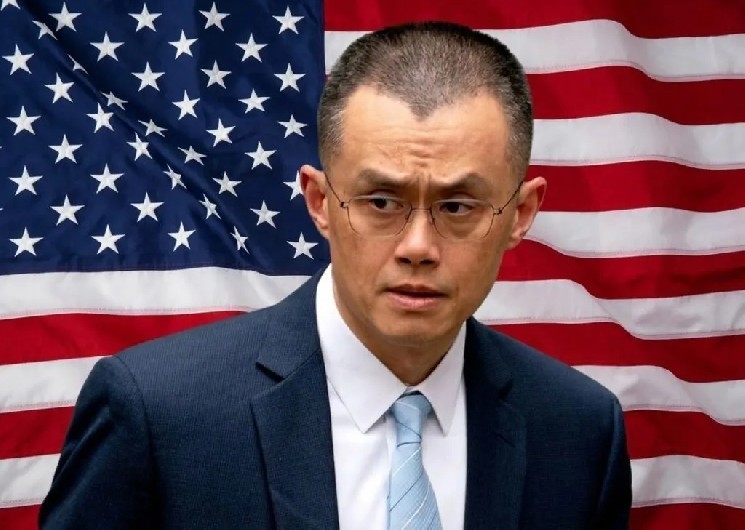
At the recent DCBlockchain Summit held in Washington DC, Changpeng Zhao, commonly known as CZ and the former CEO of Binance, didn’t mince words when addressing one of the most pressing issues facing American cryptocurrency investors today. Speaking candidly to an audience of industry leaders, policymakers, and blockchain enthusiasts, Zhao drew attention to what he considers a fundamental problem plaguing the United States crypto market: a serious lack of competition that’s resulting in unnecessarily high transaction fees for everyday traders. According to his assessment, this isn’t just a minor inconvenience—it’s a structural issue that’s actively restricting market liquidity and forcing American investors to accept significantly worse trading conditions compared to their counterparts in other parts of the world. When you’re paying more in fees and getting less favorable prices than traders in Asia or Europe for the exact same digital assets, something has gone fundamentally wrong with the market structure. This situation, Zhao argues, represents a competitive disadvantage that shouldn’t exist in what’s supposed to be the world’s most advanced financial market.
A Surprising Shift in US Crypto Policy
Despite these current challenges, Zhao expressed genuine optimism about the dramatic transformation he’s witnessed in America’s approach to cryptocurrency regulation and adoption over recent months. In what he describes as an unexpected but welcome development, there’s been a notable policy shift that’s already having real-world effects on the industry’s geography. Entrepreneurs and crypto innovators who had previously felt compelled to relocate their operations overseas—often to more crypto-friendly jurisdictions in Asia, Europe, or the Caribbean—are now beginning to return to American soil. This reverse migration represents a significant vote of confidence in the changing regulatory landscape. Zhao himself admitted his surprise at the pace of this transformation, stating frankly that just two or three years ago, he never would have predicted the United States would become as welcoming to cryptocurrency as it appears to be becoming. This shift represents not just a change in specific regulations, but a fundamental reconsideration of how digital assets fit into America’s broader economic and technological future. The fact that innovators are choosing to come back rather than stay in their adopted homes overseas suggests that something meaningful has changed in how the US government views and treats the cryptocurrency industry.
America’s Inherent Advantages in the Crypto Space
When examining why the United States should be positioned to dominate the cryptocurrency market, Zhao pointed to several structural advantages that no other country can quite match. First and foremost is Silicon Valley—not just as a physical location, but as an ecosystem that represents the world’s most concentrated pool of technological talent, innovation, and entrepreneurial spirit. The engineers, designers, product managers, and visionaries who have built the internet as we know it are largely based in and around this legendary stretch of California, and their expertise is directly applicable to building the next generation of blockchain and cryptocurrency infrastructure. Beyond raw talent, the United States boasts the world’s most sophisticated and well-capitalized venture capital industry, with firms that have decades of experience identifying promising technologies early and providing not just funding but strategic guidance to help them scale. Then there’s Wall Street—the traditional financial powerhouse that, despite initial skepticism about crypto, represents an enormous pool of institutional capital, financial expertise, and market-making capability that could be brought to bear on cryptocurrency markets if the conditions are right. These three elements—tech talent, venture funding, and financial infrastructure—create a potentially unbeatable combination that should theoretically make America the natural center of the global cryptocurrency industry.
The Competition Problem and Its Consumer Impact
Yet despite these advantages, Zhao identifies lack of competition as the critical factor holding back the American crypto market from reaching its full potential. In his meetings with high-ranking US officials—conversations that signal the kind of high-level engagement the industry is now receiving—he’s consistently emphasized a principle that Americans generally hold dear: that free markets with robust competition provide the strongest possible protection for consumers. When markets are competitive, companies must constantly improve their services and lower their prices to retain customers who can easily switch to alternatives. But when competition is limited, whether through regulatory barriers, network effects, or other factors, consumers inevitably suffer through higher costs and lower quality service. This isn’t just abstract economic theory—it has direct, measurable impacts on everyday crypto traders in America. Zhao was particularly pointed in his criticism of transaction fees on American cryptocurrency exchanges, which he characterized as “quite high” compared to global standards. For someone trading a few hundred or few thousand dollars worth of crypto, these elevated fees might seem like small amounts, but they add up quickly and represent a direct transfer of wealth from ordinary investors to exchange operators. More fundamentally, high fees discourage trading activity, which in turn reduces market liquidity, which then leads to wider bid-ask spreads and less efficient price discovery—creating a vicious cycle that makes the entire market function less effectively.
The Strange Liquidity Paradox
Perhaps the most striking observation Zhao made was about what he called a “strange” reversal in where global liquidity is concentrated. In traditional financial markets—whether we’re talking about stocks, bonds, commodities futures, or currency exchange—the United States is unquestionably the world’s deepest and most liquid market. When major companies go public, they list on the New York Stock Exchange or Nasdaq. When international contracts are denominated in currency, they’re usually priced in US dollars. When sophisticated financial instruments are traded, they’re typically traded through American institutions or on American platforms. This concentration of liquidity in the US creates enormous advantages: tighter spreads, better price discovery, greater market stability, and easier access to capital. Yet in the cryptocurrency market, the situation is almost completely reversed. The deepest liquidity pools, the highest trading volumes, and the most competitive pricing are generally found outside the United States—often on exchanges based in Asia or operating in multiple jurisdictions simultaneously. This means that American traders are essentially operating on the periphery of the global crypto market rather than at its center, which is both economically inefficient and somewhat embarrassing for a country that prides itself on financial leadership. The fact that you might get a better price buying Bitcoin in Singapore or trading Ethereum in Dubai than you would in New York or San Francisco represents a fundamental competitive failure that Zhao believes needs to be addressed.
Looking Forward: Solutions and Opportunities
Zhao didn’t just identify problems—he also suggested that the path forward isn’t particularly complicated, though it will require commitment from both industry participants and regulators. His comparison to Amazon was particularly illuminating: just as the e-commerce giant has made American consumers expect to find the best prices and broadest selection when they shop online, cryptocurrency users should be able to expect the same from their trading platforms. The fact that American crypto traders currently don’t have access to the best global prices represents a solvable problem rather than an inherent limitation. The solution, in Zhao’s view, lies in fostering greater competition by reducing unnecessary barriers to entry, allowing more exchanges and trading platforms to operate in the US market, and creating regulatory clarity that lets both domestic and international companies compete fairly for American customers. Given America’s strong institutional investor base—pension funds, endowments, family offices, and corporate treasuries that are increasingly exploring crypto allocations—there’s every reason to believe the US could eventually become the world’s largest cryptocurrency liquidity center, just as it is for traditional assets. Zhao’s previous comments to Bloomberg about Binance’s desire to grow again in the US market and offer higher-quality products to American users suggest that his company, at least, is prepared to invest in making this vision a reality. The coming months and years will reveal whether American policymakers and regulators are equally committed to creating the competitive environment necessary for US crypto markets to reach their full potential, or whether the strange liquidity paradox will persist, leaving American investors as second-class participants in one of the most important financial innovations of our time.