


Supreme Court Hears Historic Challenge to Birthright Citizenship
A Constitutional Principle Under Scrutiny
In a historic Supreme Court hearing on Wednesday, the fundamental American principle that anyone born on U.S. soil automatically becomes a citizen faced its most serious legal challenge in over a century. The case centers on President Donald Trump’s executive order from his first day in office that would eliminate birthright citizenship for children born to parents without legal immigration status. The proceeding was extraordinary not just for its constitutional implications, but also because Trump himself attended the arguments—the first sitting president to do so in modern memory. ACLU attorney Cecillia Wang opened with a powerful statement about what she believes most Americans understand about their country’s citizenship rules: that everyone born here is a citizen, period. This isn’t just tradition or policy, she argued—it’s a constitutional guarantee written into the 14th Amendment after the Civil War specifically to prevent government officials from arbitrarily deciding who gets to be an American. Wang warned the justices that accepting Trump’s novel interpretation would throw the citizenship status of millions of Americans—past, present, and future—into question, creating uncertainty about one of the most fundamental aspects of American identity.
The Government’s Uphill Battle
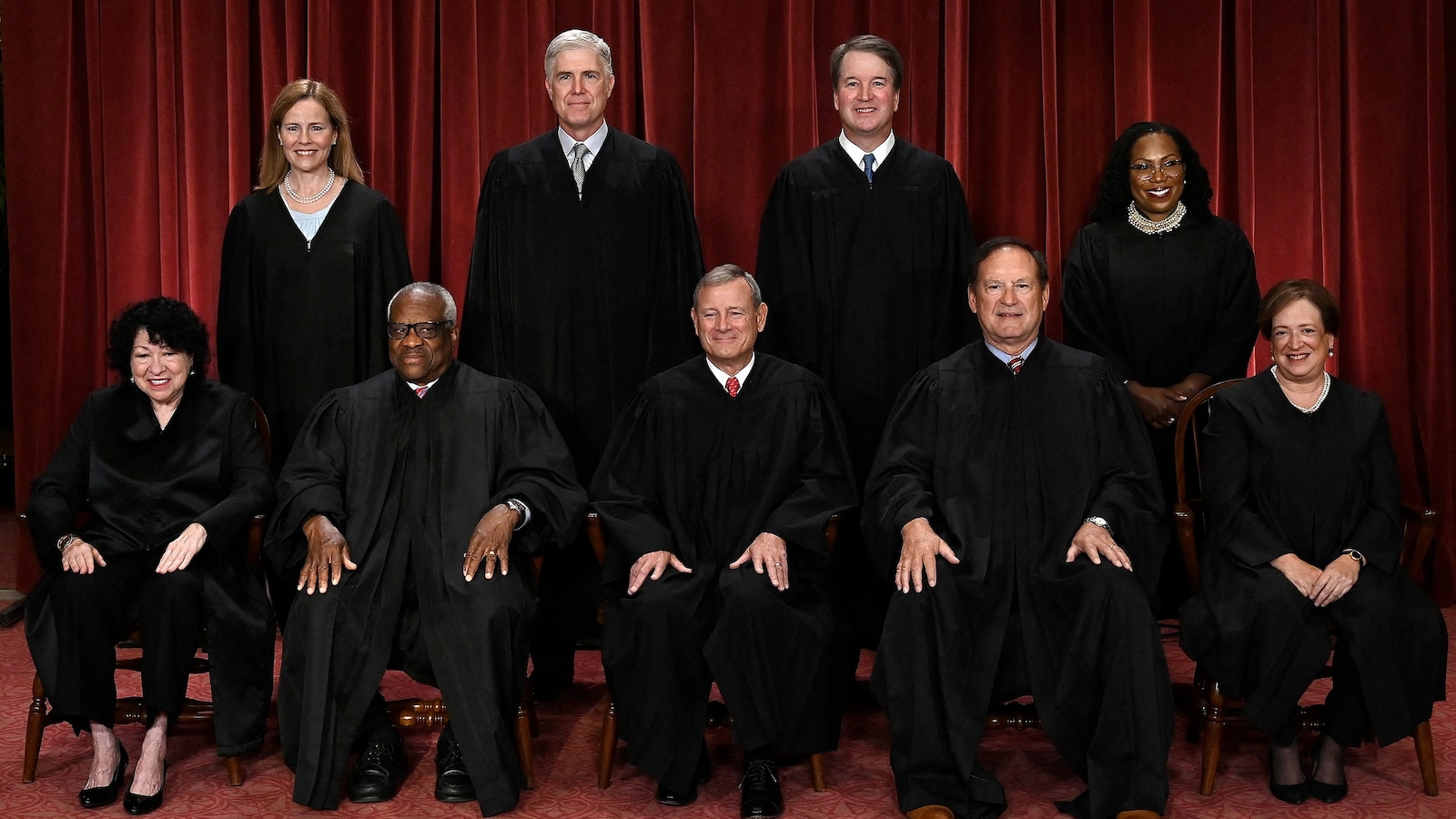
Solicitor General D. John Sauer, representing the Trump administration, faced a surprisingly skeptical reception from key justices, including Chief Justice John Roberts and Justice Neil Gorsuch—both conservative appointees who might have been expected to be more sympathetic to the administration’s position. Sauer argued that the 14th Amendment, adopted after the Civil War to ensure citizenship for freed slaves and their descendants, was never intended to grant citizenship to children of “temporary visitors or illegal aliens.” His argument relied on narrow historical exceptions to birthright citizenship—children of foreign ambassadors, children born during hostile invasions, or children born on foreign warships—and attempted to extend those exceptions to cover all children of undocumented immigrants. Chief Justice Roberts immediately identified what he saw as a logical problem with this approach, describing the administration’s arguments as “very quirky.” He questioned how the government could justify using such “tiny and sort of idiosyncratic examples” to exclude an entire class of people from citizenship. Justice Gorsuch expressed similar doubts, noting that the administration seemed to be relying on outdated “Roman law sources” and, ironically, citing court precedents like the landmark 1898 case Wong Kim Ark that actually established the very birthright citizenship principle they were trying to overturn. Justice Elena Kagan piled on, observing that the government was “using some pretty obscure sources” to make its case—a polite way of saying their legal foundation seemed shaky at best.
The “Illegal Immigration” Question
Justice Samuel Alito brought up what he and the Trump administration consider a key point: that illegal immigration as we understand it today simply didn’t exist when the 14th Amendment was ratified in the 1860s. How, he asked, should the Court interpret a constitutional provision when applying it to circumstances the framers couldn’t have imagined? Sauer eagerly agreed, arguing that because illegal immigration and temporary visitors weren’t significant issues in the post-Civil War era, the 14th Amendment’s citizenship clause shouldn’t be interpreted to cover their children. He pointed to various legal commentators from the late 1800s and early 1900s who, he claimed, agreed that children of temporary visitors weren’t entitled to citizenship, and argued this logic should extend to people who enter the country illegally. However, Justice Kagan pushed back hard on this framing, pointing out that most of Sauer’s written brief actually focused on temporary visitors—people lawfully in the country for a short time—rather than undocumented immigrants. She noted that the historical record clearly shows people understood there would be temporary inhabitants, and that Sauer’s arguments about undocumented persons only occupied a small portion of his brief—”like 10 pages to three pages or something like that.” This exchange highlighted a potential weakness in the government’s case: they seemed to be conflating different categories of people and different historical contexts to reach their desired conclusion.
The Practical Implementation Problem
Justice Ketanji Brown Jackson raised practical questions that got to the heart of how this policy would actually work in the real world. Would hospitals need to check immigration documents in delivery rooms? How would parents prove their status? What happens if the government makes a mistake? Sauer’s responses pointed to Social Security Administration guidance that would use “robust databases” to automatically check parents’ immigration status when a social security number is requested for a newborn. He claimed the process would appear “no different to the vast majority of birthing parents,” though it was unclear how exactly it would work for the minority whose citizenship would be questioned. Justice Jackson appeared skeptical, pressing Sauer on whether parents would have any opportunity to challenge an adverse decision and what the appeals process would look like. These questions highlighted concerns that the policy could create a two-tiered system where some American-born children receive immediate citizenship recognition while others face bureaucratic hurdles and potential rejection—exactly the kind of arbitrary government power over citizenship that the 14th Amendment was designed to prevent. The practical implications extend beyond just paperwork; children denied citizenship at birth would lack access to numerous benefits and protections, potentially creating a permanent underclass of stateless individuals born on American soil.
The Birth Tourism Argument
One of the Trump administration’s most emotionally charged arguments centered on “birth tourism”—the practice of foreign nationals allegedly traveling to the United States specifically to give birth and secure American citizenship for their children. Sauer painted an alarming picture of this supposedly widespread phenomenon, claiming it creates national security risks by producing American citizens with “no meaningful ties to the United States.” He suggested that “uncounted thousands” of people from “potentially hostile nations” have been doing this for decades, particularly referencing reports about Chinese nationals and Russian elites using “birth tourism companies” to facilitate these births in places like Miami. However, when Chief Justice Roberts pressed Sauer for concrete numbers to establish how significant this problem actually is, the Solicitor General couldn’t provide reliable data. He cited a letter from members of Congress asking the Department of Homeland Security about the issue, media estimates of possibly over a million births to Chinese nationals, and reports of 500 “birth tourism companies” operating in China—but nothing definitive. Roberts pointedly asked whether this should have “any impact on the legal analysis before us,” essentially questioning whether anecdotal concerns about birth tourism, even if true, should override a constitutional provision. Sauer tried to frame the issue as a modern problem requiring a modern solution, arguing that “we’re in a new world now” where “8 billion people are one plane ride away from having a child who is a U.S. citizen.” But this argument may have inadvertently undercut his position—if the concern is truly about the ease of international travel rather than any principle in the Constitution itself, it suggests that practical policy concerns are driving the administration’s constitutional interpretation rather than the other way around.
What Comes Next
As the arguments concluded, ACLU Executive Director Anthony D. Romero issued a statement addressing Trump’s unusual presence in the courtroom, expressing confidence that “the Supreme Court is up to the task of interpreting and defending the Constitution even under the glare of a sitting president a couple dozen feet away from them.” The underlying tension was clear: Would the justices feel pressure from Trump’s physical presence, or would they demonstrate judicial independence regardless of who was watching? Based on the oral arguments, at least some of the conservative justices who might be expected to side with Trump appeared genuinely troubled by the weaknesses in the government’s legal reasoning. Chief Justice Roberts’ characterization of the arguments as “very quirky” and Justice Gorsuch’s pointed observations about the administration citing cases that actually contradicted their position suggest the government faces an uphill battle. However, oral arguments don’t always predict outcomes, and justices sometimes ask tough questions of positions they ultimately support. The Court won’t issue its ruling until the end of June, giving the justices months to wrestle with the profound implications of their decision. Whatever they decide will shape not just immigration policy but the fundamental question of what makes someone an American—a question that has defined the nation since its founding and continues to evolve with each generation.