


Iran’s Potential Bitcoin Adoption for Oil Tanker Tolls: What It Could Mean for Global Cryptocurrency
The Strait of Hormuz Payment Controversy
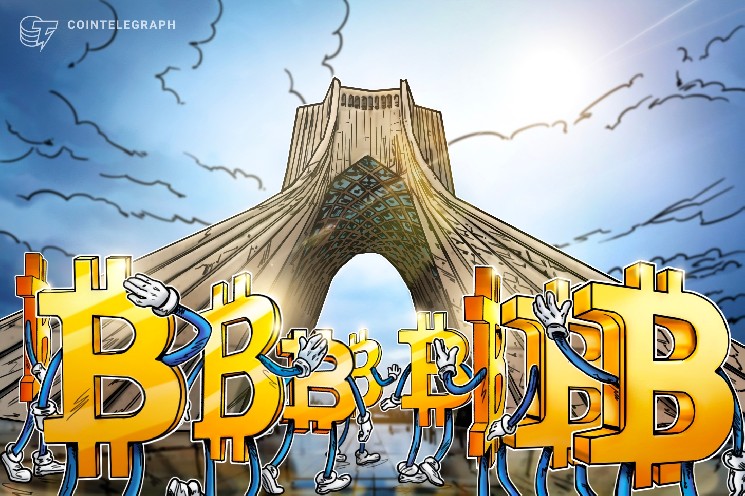
The cryptocurrency world is buzzing with discussions about a potentially groundbreaking development: Iran might start accepting Bitcoin for toll payments from oil tankers passing through the Strait of Hormuz. This narrow waterway isn’t just any shipping lane—it’s one of the world’s most strategically important chokepoints, with roughly one-fifth of all global oil supplies flowing through its waters. The conversation started gaining momentum after the Financial Times published a report this week suggesting that Iranian officials were seriously considering cryptocurrency payments as a way to sidestep American economic sanctions. This news has sparked intense debate within the Bitcoin community about whether such a move is technically feasible, politically significant, and what it might mean for cryptocurrency’s role in international commerce.
The situation isn’t entirely clear-cut, though. Since that initial Financial Times article dropped, conflicting reports have emerged suggesting different payment methods might be under consideration. According to Alex Thorn, who leads research at Galaxy, a prominent cryptocurrency investment firm, some sources indicate Iran might be looking at stablecoins or Chinese yuan instead of pure Bitcoin. This uncertainty has only added fuel to the debate, with crypto enthusiasts, skeptics, and industry analysts all weighing in with their perspectives on what payment method makes the most sense from both technical and geopolitical standpoints.
Why Bitcoin Instead of Stablecoins?
For those wondering why Iran would choose Bitcoin over seemingly more stable options like dollar-pegged stablecoins, Bitcoin advocate Justin Bechler offers a compelling explanation rooted in the fundamental differences between these digital assets. Stablecoins like USDT (Tether) and USDC (USD Coin), despite being cryptocurrencies, contain built-in compliance features that make them vulnerable to the very sanctions Iran is trying to avoid. These tokens include what’s known as “blacklist functions” embedded directly in their smart contract code, which means the companies that issue them can essentially flip a switch and freeze any wallet address they choose, making those tokens completely unusable. This isn’t just theoretical—stablecoin issuers have frozen addresses before when pressured by regulators or law enforcement.
The GENIUS stablecoin regulatory framework that Bechler references has introduced even more stringent compliance controls, making it virtually certain that any major dollar-backed stablecoin issuer would comply with U.S. government requests to freeze Iranian accounts or transactions. This creates an obvious problem for a government actively trying to circumvent American sanctions. Bitcoin, by contrast, operates on fundamentally different principles. There’s no company behind it, no CEO to subpoena, no compliance department to pressure, and no technical mechanism to freeze anyone’s Bitcoin. As Bechler puts it, “Bitcoin has no issuer, no compliance officer to pressure, and no freeze function.” This structural reality makes Bitcoin uniquely suited for a nation-state looking to conduct international commerce outside the traditional financial system and beyond the reach of U.S. sanctions enforcement.
If Iran does move forward with accepting Bitcoin for these toll payments, cryptocurrency advocates believe it could represent a watershed moment for Bitcoin’s legitimacy as what they call a “neutral settlement layer” for international transactions. Rather than being just a speculative investment or a niche payment method, Bitcoin would be demonstrating its utility for serious, large-scale international commerce between sovereign nations and major commercial entities. This would be precisely the kind of real-world validation that Bitcoin supporters have long argued the cryptocurrency deserves.
The Technical Challenges of Shipboard Bitcoin Payments
While the geopolitical implications are fascinating, there are some serious practical questions about how these payments would actually work in practice. According to Thorn’s estimates, each oil tanker would need to pay somewhere between $200,000 and $2 million in tolls to transit through the Strait of Hormuz—these aren’t small transactions. The initial Financial Times report quoted an Iranian official saying that ships would have only “a few seconds” to complete their Bitcoin payment, which raised eyebrows among people familiar with how Bitcoin actually works.
Traditional Bitcoin transactions don’t settle in seconds—they require confirmation on the blockchain, which happens roughly every ten minutes as new blocks are mined. This timing would obviously be impractical for ships that need to keep moving through a busy shipping lane. This technical limitation led many observers to speculate that Iran would need to use the Lightning Network, a so-called “layer-2” solution built on top of Bitcoin that enables near-instantaneous transactions by opening payment channels between parties. Lightning Network transactions can indeed complete in seconds, making them theoretically suitable for this use case.
However, Thorn points out a significant limitation: the largest confirmed transaction over the Lightning Network to date has been around $1 million. This means that for the higher end of the estimated toll range (up to $2 million per ship), Lightning might not be technically capable of handling the payment in a single transaction. This has led to what Thorn considers a more realistic scenario: Iranian authorities would simply provide ships with either a QR code or a traditional alphanumeric Bitcoin address when they approve transit requests. Ships would then send standard Bitcoin transactions to that address, which would confirm within the usual timeframe. The ships wouldn’t literally need to wait at the entrance to the strait for blockchain confirmation—they’d send the payment and proceed, with Iranian officials verifying the transaction shortly after.
Global Implications for Bitcoin Adoption
The potential for a nation-state to use Bitcoin for official government transactions represents something much bigger than just one country’s workaround for sanctions. If Iran successfully implements Bitcoin payments for Strait of Hormuz tolls, it would provide a high-profile proof-of-concept for Bitcoin as a tool for international settlement that operates outside the traditional banking system. Other countries facing sanctions, trade restrictions, or simply seeking alternatives to dollar-dominated finance would be watching closely to see how well it works in practice.
This development comes at a time when many nations are exploring alternatives to the U.S. dollar for international trade. China and Russia have been increasing their use of alternative currencies for bilateral trade, and various countries have discussed creating payment systems that bypass traditional Western financial infrastructure. Bitcoin offers a different approach entirely—rather than replacing dollar hegemony with some other national currency’s dominance, it provides a genuinely neutral option that no single country controls. This neutrality is precisely what makes it appealing for international commerce between parties who may not fully trust each other or any third-party intermediary.
For the shipping industry specifically, this could open up new possibilities. Oil tankers and their operators often find themselves caught in the middle of geopolitical disputes, sometimes unable to conduct business with certain countries due to sanctions or banking restrictions that have nothing to do with the ship owners themselves. A Bitcoin-based payment system could theoretically allow international shipping to continue even when traditional banking channels are restricted, though of course, ship operators would still need to consider their own legal obligations and the sanctions laws of countries where they’re registered or do business.
Skepticism and Concerns
Not everyone in the cryptocurrency community is celebrating this potential development. Some observers worry that association with sanctions evasion could bring unwanted regulatory scrutiny to Bitcoin and the broader cryptocurrency ecosystem. Governments in the United States and allied nations might respond by attempting to impose new restrictions on cryptocurrency exchanges, implement more aggressive monitoring of blockchain transactions, or even attempt to pressure major Bitcoin mining operations. While Bitcoin itself cannot be sanctioned due to its decentralized nature, the on-ramps and off-ramps where it connects to traditional finance remain vulnerable to regulatory pressure.
There are also questions about whether this use case, if it materializes, would actually be positive for Bitcoin’s long-term adoption. Some in the cryptocurrency space worry that if Bitcoin becomes primarily associated with sanctions evasion and circumventing international law, it could damage the currency’s reputation and make mainstream adoption more difficult. Financial institutions and corporations that might otherwise be interested in Bitcoin could become more hesitant if it’s seen primarily as a tool for governments to evade sanctions. On the other hand, Bitcoin maximalists argue that the cryptocurrency’s value proposition has always been about operating outside government control and enabling censorship-resistant transactions—from this perspective, Iran’s potential adoption would be validating Bitcoin’s core purpose rather than undermining it.
The practical effectiveness of using Bitcoin for this purpose also remains uncertain. While Bitcoin transactions can’t be frozen like stablecoin payments, they’re also not anonymous. Every transaction is recorded on a public blockchain that anyone can analyze. This transparency means that governments and compliance firms can potentially track where the Bitcoin goes after Iran receives it, which could complicate efforts to spend or exchange it. Various blockchain analysis firms already specialize in tracing cryptocurrency flows, and they’ve become increasingly sophisticated at linking Bitcoin addresses to real-world identities. Iran would need to carefully manage how it handles any Bitcoin it receives to maintain the privacy and fungibility that makes the payments useful in the first place. Whether the Iranian government has the technical expertise and operational security to effectively manage large-scale Bitcoin holdings remains an open question that will only be answered if this system actually gets implemented.