
Southern States Rush to Redraw Congressional Maps Following Supreme Court Ruling
Special Sessions Called in Response to Voting Rights Act Decision
Republican governors in Tennessee and Alabama have taken swift action by calling special legislative sessions this Friday, marking the beginning of what could become a widespread effort across multiple southern states to redraw their congressional district maps. This development comes on the heels of a pivotal Supreme Court decision that significantly narrowed the interpretation and application of the historic Voting Rights Act of 1965. The moves by these governors represent a potentially transformative moment in American electoral politics, as the balance of power in Congress could shift dramatically depending on how these redistricting efforts unfold. Tennessee Governor Bill Lee has scheduled his state’s special session to begin Tuesday, while Alabama Governor Kay Ivey has called legislators to convene on Monday. Both governors are moving with unprecedented speed, despite the fact that their states have already set primary election dates and candidate filing deadlines have passed in many cases.
The implications of these special sessions extend far beyond the borders of Tennessee and Alabama. Political observers and voting rights advocates are watching closely as these actions could trigger a domino effect across the South, with other Republican-controlled state legislatures potentially following suit. The timing is particularly significant because these changes could impact not only the 2024 elections but also reshape the political landscape for the crucial 2026 midterm elections and beyond. Governor Lee explicitly stated that lawmakers “owe it to Tennesseans to ensure our congressional districts accurately reflect the will of Tennessee voters,” and emphasized that any changes must be enacted immediately. In Tennessee, the primary target appears to be the state’s sole Democratic congressional district, currently represented by Representative Steve Cohen in the Memphis area. Senator Marsha Blackburn, who is running for governor, has publicly advocated for a map that would give Republicans an advantage in all nine of Tennessee’s congressional districts. President Trump has also weighed in on the matter, strongly encouraging Governor Lee to redraw the map to secure “one extra seat” for Republicans, demonstrating the national significance of these local redistricting battles.
Alabama’s Complex Legal Landscape and Court Battles
The situation in Alabama is particularly complicated due to years of ongoing litigation surrounding its congressional district boundaries. The state has been embroiled in legal battles over its redistricting efforts since the Supreme Court ruled in 2023 that Alabama’s House map violated the Voting Rights Act because it failed to provide adequate representation for Black voters. Following that ruling, state lawmakers attempted to draw a new map, but a three-judge panel rejected their effort, finding it still failed to meet the requirements of the Voting Rights Act. Subsequently, a court-appointed independent expert was brought in to draw a fresh map, which resulted in two House districts where Black voters constitute a significant portion of the electorate—both of which are currently held by Democratic representatives. This court-drawn map was intended to ensure fair representation and comply with federal voting rights protections.
Governor Ivey has now announced her intention to return to the 2023 map drawn by the state legislature, which featured only one majority-Black, Democratic-leaning House seat rather than two. However, this plan faces substantial legal obstacles. A court injunction issued last year specifically requires Alabama’s existing map to remain in place until after the 2030 Census is completed and new redistricting occurs based on those population figures. Despite this legal barrier, Alabama Attorney General Steve Marshall filed a request with the Supreme Court on Thursday asking the justices to vacate the lower court ruling that struck down the 2023 legislative map. Marshall’s legal strategy relies heavily on citing the Supreme Court’s recent decision in Louisiana v. Callais, which he argues fundamentally changes the legal framework under which Alabama’s previous maps were evaluated. The state has primaries scheduled for May 19, with candidate filing deadlines having passed back in January, creating a compressed timeline that adds urgency and complexity to the situation. Governor Ivey has stated she wants Alabama to be “prepared should the courts act quickly enough” to allow a new House map to be implemented before this year’s elections, though the practical and legal feasibility of such rapid changes remains highly uncertain.
The Louisiana Decision That Changed Everything
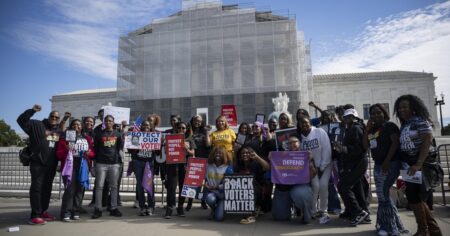
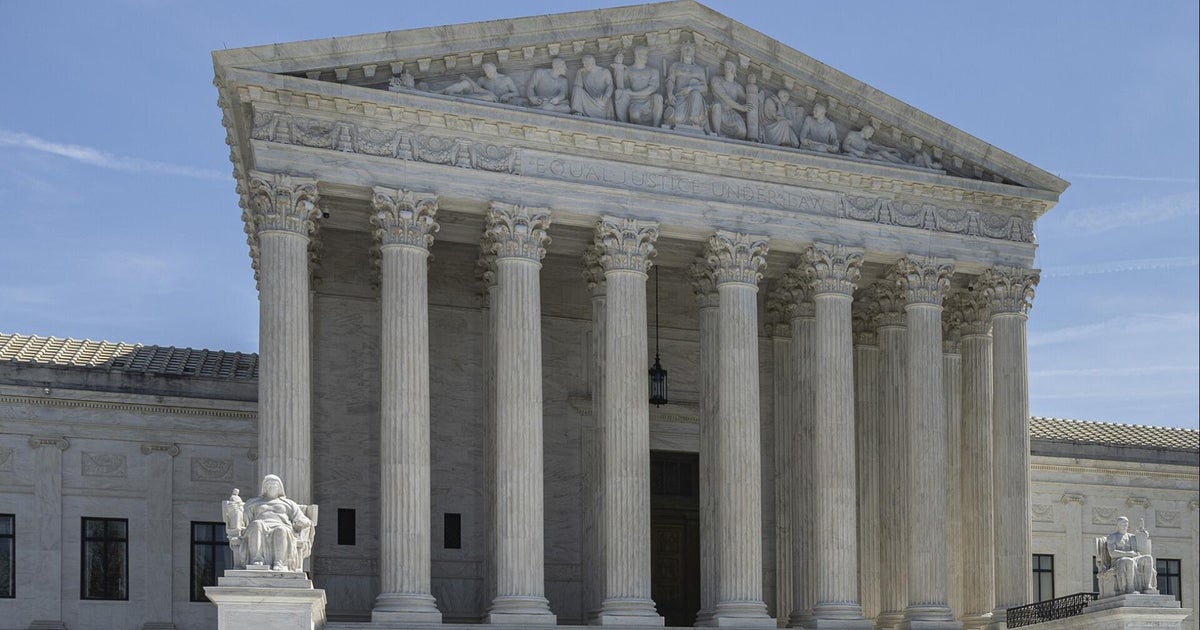
The catalyst for this wave of redistricting efforts was the Supreme Court’s ruling Wednesday in the case Louisiana v. Callais, a decision that fundamentally altered the interpretation of the Voting Rights Act and sent shockwaves through state capitals across the South. In a 6-3 decision along ideological lines, the conservative majority struck down a Louisiana congressional map that included two majority-Black House districts, upholding a lower court ruling that found state lawmakers had relied too heavily on race when drawing district boundaries. This decision effectively narrowed a crucial portion of the 1965 Voting Rights Act that had previously been interpreted to require states to draw districts where minority groups constitute a majority in certain circumstances where doing so would ensure fair representation. The new standard established by the court is considerably more restrictive and harder to enforce.
Writing for the majority, Justice Samuel Alito established a new, higher bar for proving Voting Rights Act violations, declaring that districts only violate the Act when there is a “strong inference that intentional discrimination occurred.” This standard is significantly more difficult to meet than previous interpretations, which focused on the effects of redistricting rather than requiring proof of discriminatory intent. The practical impact of this shift cannot be overstated—proving intentional discrimination requires demonstrating that lawmakers deliberately set out to discriminate against minority voters, rather than simply showing that the maps they drew resulted in diminished representation for minority communities. Louisiana officials responded immediately to the ruling by moving to suspend the state’s House primaries that were scheduled for later this month, potentially clearing the way for legislators to draw an entirely new congressional map that would likely reduce the number of districts where Black voters have electoral influence. The decision has been celebrated by Republican officials who view it as restoring proper limits on federal interference in state redistricting processes, while civil rights advocates and Democratic leaders have condemned it as gutting one of the most important protections against racial discrimination in voting.
A Broader Pattern of Mid-Decade Redistricting
The actions in Tennessee, Alabama, and Louisiana are part of a larger, unprecedented pattern of mid-decade redistricting efforts that has been unfolding across the country, particularly in anticipation of the highly competitive 2026 midterm elections. Traditionally, congressional districts are redrawn only once per decade, following the constitutionally mandated census that occurs every ten years. However, recent years have seen an increasing willingness by state legislatures to redraw maps multiple times within a single decade when political circumstances or legal rulings create opportunities to do so. Beyond Alabama and Tennessee, legislators in Mississippi are planning to hold a special session ostensibly focused on redrawing the state’s Supreme Court districts. However, some Mississippi officials have suggested they may also attempt to redraw the state’s U.S. House maps with the goal of unseating Democratic Representative Benny Thompson, one of the few remaining Democratic members of Congress from the Deep South. The practical timeline for such changes in Mississippi may be constrained, as the state has already conducted its primary elections for this cycle, potentially making any new maps applicable only for future election years.
Well before this week’s Supreme Court ruling, several states had already launched rare mid-decade redistricting efforts, creating a patchwork of politically motivated map changes across the country. Texas lawmakers made significant changes last summer, shifting five Democratic districts toward the GOP, strengthening Republican advantages in what was already a heavily Republican state. California responded to Texas’s actions with a tit-for-tat approach, moving five of its Republican-held districts leftward to shore up Democratic advantages. Missouri and North Carolina each shifted one Democratic district to favor Republicans, while Florida has moved forward with plans to redraw its House maps to give the GOP an edge in four additional seats—an effort that was actually launched before the Supreme Court’s recent ruling. In a rare Democratic victory in this redistricting wave, Virginia voters approved a ballot measure last month to create four new districts that are expected to favor Democratic candidates. This flurry of redistricting activity represents a fundamental shift in how political parties approach the drawing of electoral maps, with the traditional once-per-decade norm giving way to a more aggressive, ongoing battle for partisan advantage.
Implications for Congressional Balance of Power
The cumulative impact of these redistricting efforts could significantly alter the balance of power in the U.S. House of Representatives, potentially affecting control of Congress for the remainder of this decade. The House currently operates with narrow majorities, meaning that even small shifts in a handful of districts across multiple states could determine which party controls the chamber and, by extension, the legislative agenda for the entire country. If Tennessee successfully eliminates its sole Democratic district, that would represent a gain of one seat for Republicans. If Alabama is permitted to revert to a map with only one Democratic-leaning district instead of two, that would represent another Republican gain. Similar changes in Mississippi, Louisiana, and other states could compound these advantages, potentially creating a structural advantage for Republicans that would be extremely difficult for Democrats to overcome, even in favorable election years.
The strategic timing of these efforts is also noteworthy, as they are being implemented with an eye toward not just the current 2024 election cycle but also the crucial 2026 midterm elections and potentially the 2028 presidential election year. Midterm elections historically favor the party not in control of the White House, which means these redistricting efforts could either amplify or mitigate that traditional pattern depending on who wins the 2024 presidential election. Civil rights organizations and Democratic officials have criticized these redistricting pushes as attempts to entrench partisan power and dilute minority voting strength, arguing that they undermine the fundamental principle of fair representation. They point out that many of these efforts specifically target districts where Black voters and other minorities have significant electoral influence, effectively reducing the ability of these communities to elect representatives of their choice. Republican officials, conversely, argue that the Supreme Court has provided clarity on the proper limits of race-conscious redistricting and that states should not be required to draw districts based primarily on racial considerations. They contend that their redistricting efforts are about ensuring districts reflect community interests and voting patterns rather than being artificially constructed based on demographic characteristics. As these special legislative sessions proceed and legal challenges inevitably emerge, courts at various levels will be called upon to referee these disputes, applying the new standards established by the Supreme Court while also considering longstanding principles of fair representation and the rights of minority voters under what remains of the Voting Rights Act.