



Bitcoin’s Rollercoaster Ride: Understanding the Recent Price Movements Above $70,000
The Return Above $70,000 and What It Means for Investors
Bitcoin has once again demonstrated its characteristic volatility, climbing back above the psychologically important $70,000 threshold on Friday morning after experiencing a challenging couple of days. The world’s leading cryptocurrency managed to shake off some of the negativity that had pushed it down by more than 8% earlier in the week, finding support from bargain hunters who saw the dip as a buying opportunity. Trading at approximately $70,749 with a total market value of $1.41 trillion, Bitcoin showed resilience despite facing headwinds from multiple directions. This price level isn’t just a random number—many market analysts consider $70,000 to be a critical psychological anchor that helps maintain investor confidence. When Bitcoin trades above this level, it tends to reinforce positive sentiment among both retail and institutional investors. However, the recovery wasn’t entirely smooth sailing, as the momentum began to falter when Asian technology stocks started declining during their trading session. This connection between Bitcoin and traditional tech stocks highlights how cryptocurrencies have become increasingly intertwined with broader financial markets, responding to similar economic forces and investor sentiment shifts.
Geopolitical Tensions and Economic Uncertainty Shake Market Confidence
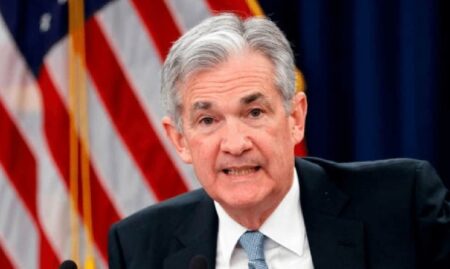
The recent price turbulence didn’t happen in a vacuum—it was triggered by a perfect storm of concerning global events and economic data that rattled investors across all asset classes. The immediate catalyst was news emerging about an Israeli military strike on Iranian energy infrastructure, which sent shockwaves through energy markets and raised serious concerns about potential supply disruptions. Oil prices surged to record highs as traders worried about the possibility of wider regional conflict affecting one of the world’s most crucial oil-producing regions. This development naturally sparked fears about inflation spiraling even higher, as energy costs feed into virtually every sector of the economy. Adding to the anxiety, the United States released economic data showing stronger-than-expected Producer Price Index (PPI) figures, indicating that inflation pressures remain stubbornly persistent despite efforts to cool the economy. Federal Reserve Chair Jerome Powell poured cold water on hopes for interest rate cuts by making it clear that the central bank plans to maintain its current restrictive policy stance as long as inflation stays elevated. For Bitcoin and other risk assets, this combination of geopolitical instability and hawkish monetary policy creates a challenging environment, as investors become more cautious and risk-averse when facing such uncertainty.
Traditional Markets Signal Caution as Tech Stocks Stumble
One of the most significant headwinds facing Bitcoin’s continued recovery is the weakness showing up in traditional stock markets, particularly in the technology sector that typically moves in tandem with cryptocurrencies. During Friday’s Asian trading session, major indices posted notable declines that suggested investors were pulling back from riskier assets. Japan’s benchmark Nikkei 225 index experienced a substantial drop, falling by 1,866 points or 3.38%—a significant single-day decline that reflects growing nervousness among Asian investors. China’s Shanghai Composite also edged lower, down 0.50%, adding to the regional pessimism. This weakness in Asian markets followed a similar pattern in U.S. trading the previous day, where most major indices closed in the red. The Dow Jones Industrial Average slipped 0.44%, while both the S&P 500 and the technology-heavy Nasdaq 100 declined by more than 0.25%. The only bright spot was the Russell 2000 Index, which tracks smaller companies and managed to gain 0.65%. This correlation between cryptocurrency performance and tech stock movements isn’t coincidental—both asset classes are highly sensitive to the same underlying factors, particularly liquidity conditions and interest rate expectations. When investors become worried about the economic outlook or anticipate that borrowing costs will remain high, they tend to reduce exposure to both cryptocurrencies and growth-oriented technology stocks simultaneously.
The Flight to Safety: Gold and Silver Shine Amid Uncertainty
As Bitcoin struggled to maintain its footing above $70,000, investors were clearly rotating their capital into traditional safe-haven assets that have protected wealth during uncertain times for thousands of years. Gold experienced a spectacular rally, jumping more than 2% to climb back above $4,700 per ounce, reinforcing its reputation as the go-to asset when geopolitical tensions rise and economic uncertainty increases. Silver, often called “poor man’s gold,” performed even better, surging over 3% to reach $74, demonstrating that the flight to safety was broad-based across precious metals. This movement of money from cryptocurrencies and stocks into gold and silver tells an important story about current investor psychology. When people are confident about economic growth and comfortable taking risks, they tend to favor assets like Bitcoin and technology stocks that offer higher potential returns. However, when clouds gather on the horizon—whether from inflation concerns, geopolitical conflicts, or central bank policies—investors instinctively seek the stability and proven track record of precious metals. For Bitcoin, which some proponents have marketed as “digital gold,” this rotation represents both a challenge and a reality check. While Bitcoin has made tremendous strides in gaining acceptance as an investment asset, during moments of genuine crisis or uncertainty, many investors still prefer the time-tested safety of physical precious metals over digital alternatives.
Institutional Money Takes a Breather: ETF Outflows Signal Caution
Perhaps the most concerning development for Bitcoin’s near-term outlook is the recent shift in institutional investment flows through U.S. spot Bitcoin Exchange-Traded Funds (ETFs). According to data from SoSoValue, these investment vehicles have experienced net outflows for two consecutive days, with more than $250 million exiting these funds. While this might not sound enormous in absolute terms—especially considering that Bitcoin’s total market capitalization exceeds $1.4 trillion—the timing and context make it significant. Just prior to this reversal, Bitcoin ETFs had enjoyed seven straight days of robust inflows totaling $1.16 billion, suggesting strong institutional appetite for cryptocurrency exposure. The sudden shift from consistent inflows to outflows, even if modest, could indicate that institutional investors are taking profits after Bitcoin’s recent gains or simply becoming more cautious in the face of deteriorating market conditions. These ETFs have been game-changers for Bitcoin since their approval, providing traditional investors with an easy, regulated way to gain cryptocurrency exposure without the complexities of wallets and exchanges. When these institutional funds start experiencing outflows, it can signal a temporary exhaustion in buying momentum or a broader shift in sentiment among professional investors. For everyday Bitcoin enthusiasts, monitoring these ETF flows provides valuable insights into what the “smart money” is doing and can serve as an early warning system for potential trend changes in the market.
Looking Ahead: Navigating Bitcoin’s Path Forward
As Bitcoin hovers around the $70,000 level, investors are left wondering what comes next for the world’s leading cryptocurrency. The current situation presents a complex picture with arguments supporting both bullish and bearish scenarios. On the positive side, the fact that Bitcoin quickly recovered from its 8% decline shows that there’s still substantial buying interest at lower levels, with investors viewing dips as opportunities rather than signals to panic. This kind of resilience suggests an underlying strength in the market and confidence among long-term holders. Additionally, despite the recent ETF outflows, the broader trend of institutional adoption continues, with major financial institutions increasingly offering cryptocurrency services to their clients. However, the challenges facing Bitcoin in the near term are equally real and shouldn’t be dismissed. The combination of persistent inflation, hawkish central bank policies, geopolitical tensions, and weakness in correlated assets like tech stocks creates a difficult environment for risk assets to thrive. The rotation of capital into safe-haven assets like gold and silver demonstrates that many investors are currently prioritizing capital preservation over growth potential. For anyone invested in or considering Bitcoin, the current moment requires careful attention to both cryptocurrency-specific developments and broader macroeconomic trends. Bitcoin has proven remarkably resilient over its history, recovering from numerous crashes and setbacks to reach new heights, but it has never been immune to the forces that drive traditional financial markets. The coming days and weeks will likely test whether Bitcoin can maintain its position above $70,000 and build momentum for another leg higher, or whether the mounting pressures will push it back down to retest lower support levels around its recent low of $69,298 or even further.