
Historic Flight Marks New Era in U.S.-Venezuela Relations
Reconnecting After Years of Isolation
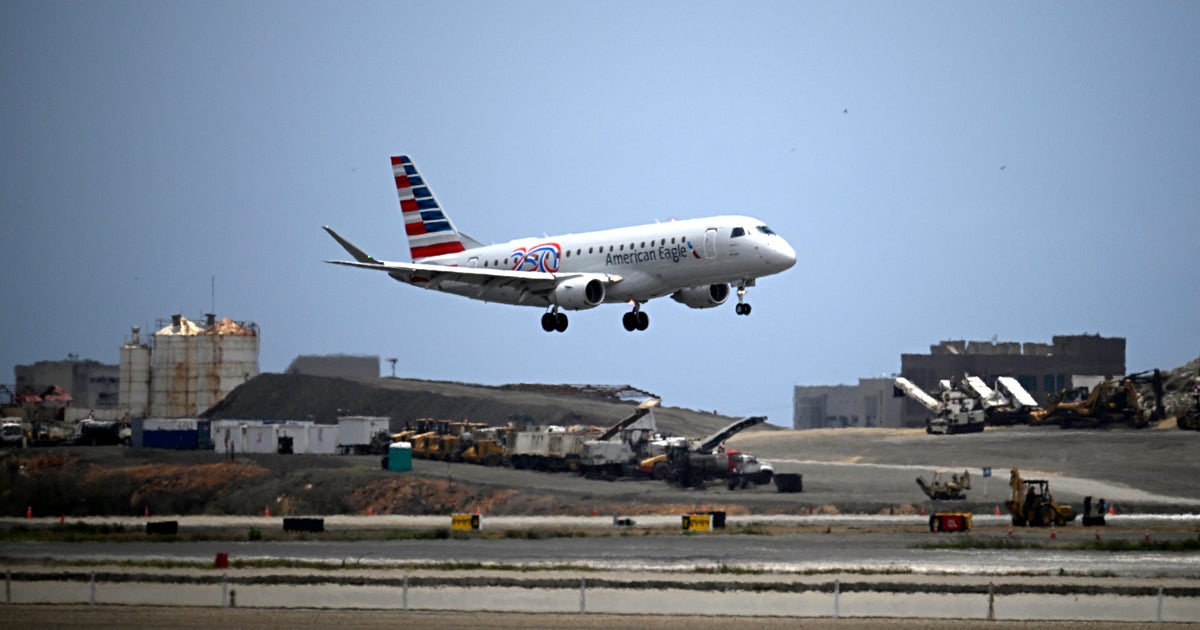
After seven long years of diplomatic freeze and economic isolation, a historic moment unfolded as the first nonstop commercial flight between the United States and Venezuela took off from Miami on Thursday, headed for Caracas. The American Airlines flight carried more than just passengers—it symbolized a dramatic shift in relations between the two countries. Leading the American delegation was Jarrod Agen from the National Energy Dominance Council, while Venezuela’s newly appointed Ambassador to the United States, Félix Plasencia, was also on board. This wasn’t just a routine diplomatic trip; it represented the opening of a new chapter in a relationship that had been frozen for nearly a decade. Agen explained to reporters that the White House team was traveling to Caracas with a specific mission: to advance business agreements between American companies and Venezuela’s state-owned oil company, PDVSA, as well as various mining operations. Among the American companies making their entrance into the Venezuelan market are HKN Energy, backed by businessman Ross Perot Jr., and Hunt Energy. The delegation also planned meetings with Venezuela’s interim President Delcy Rodríguez, signaling that despite years of hostility, both nations were now seeking practical ways to work together.
The Dramatic Change That Made This Possible
The context for this unprecedented flight lies in events that unfolded nearly four months earlier—events that sound almost like something from a Hollywood thriller. In a daring nighttime operation, U.S. special forces conducted a raid that resulted in the capture of Venezuela’s controversial leader Nicolás Maduro and his wife. Both were quickly extradited to New York to face serious drug trafficking charges, though they have since entered not guilty pleas. This dramatic removal of Maduro from power created a vacuum that his former vice president, Delcy Rodríguez, stepped in to fill. Since Maduro’s departure, the Trump administration has moved quickly to reshape the relationship with Venezuela, focusing heavily on economic opportunities, particularly in the energy sector. The administration has systematically rolled back the sanctions that had strangled Venezuela’s economy for years, specifically allowing American oil companies to invest in infrastructure and production facilities. High-level officials including Energy Secretary Chris Wright and Interior Secretary Doug Burgum have already led their own delegations to the country, recognizing that Venezuela holds the world’s largest proven oil reserves—a resource that has long attracted American interest but remained largely off-limits due to political tensions.
Economic Opening Outpaces Democratic Progress
The reality on the ground in Caracas tells a complicated story of rapid economic change but slower political transformation. Juan Gonzalez, a former State Department official who served as deputy assistant secretary of state for Western Hemisphere Affairs during the Biden administration, recently returned from a business trip to the Venezuelan capital with striking observations. “The economic opening in Venezuela is on a bullet train. The democratic process is on a chicken cart,” he told reporters, capturing in vivid language the imbalance between economic and political progress. During his visit, Gonzalez witnessed workers removing old propaganda posters of Maduro from walls around the city, symbolic of a political movement fading into history. He declared that Chavismo—the left-wing socialist ideology that defined Venezuela under Hugo Chávez and later Nicolás Maduro—was effectively “dead and gone.” Yet despite these surface changes, the deeper structures of the Maduro regime remain largely intact, just operating now without Maduro himself at the helm. Chevron, America’s second-largest energy company, provides an interesting case study in continuity and change. Unlike many companies that abandoned Venezuela, Chevron maintained operations throughout even the darkest days of the Maduro era. Now, the Trump administration is actively pressuring the Rodríguez government to implement regulatory reforms that would attract more foreign investment and help stabilize Venezuela’s battered economy.
Corporate Perspectives on Venezuela’s Future
In an interview set to air on “Face the Nation,” Chevron CEO Mike Wirth offered a cautiously optimistic assessment of the changes taking place in Venezuela. Wirth confirmed that the Rodríguez government has made genuine progress in reforming the country’s hydrocarbon laws—the complex regulations that govern how companies can invest in Venezuela’s oil sector. These legal changes fundamentally alter the terms under which foreign companies can operate, making investment more attractive and potentially more profitable. However, Wirth was careful not to overstate the progress, acknowledging that “it still needs some work. It’s probably not enough to bring in the level of investment that would be desirable.” His comments, made before a meeting at the White House, reflect the perspective of someone who understands both the enormous potential and the significant remaining obstacles. Venezuelan oil is particularly valuable to American interests because it consists of heavy crude—exactly the type that refineries along the U.S. Gulf Coast are specifically designed to process. Wirth described the current situation as a “work in progress,” supporting the ongoing changes while remaining realistic about the challenges. He praised Chevron’s Venezuelan employees who remained loyal to the company throughout years of economic chaos but also acknowledged a painful reality: much of Venezuela’s talented workforce has fled the country over the past two decades of socialist rule, creating a brain drain that will take years to reverse.
The Democracy Question Remains Unanswered
While business deals and oil agreements are moving forward rapidly, the question of democracy in Venezuela remains murky and uncertain. Wirth mentioned that he has been in communication with Secretary of State Marco Rubio, who has spoken about the need to hold elections “in due course”—a phrase that deliberately avoids committing to any specific timeline. The U.S. has reestablished its diplomatic presence in Caracas and appointed John Barrett, a career foreign service officer, as chargé d’affaires, but the Trump administration has been notably tight-lipped about when Venezuelans might actually get to vote for their leaders. Multiple sources, both American and Venezuelan officials, have indicated privately that elections could be two to three years away, or possibly even longer. The administration’s priorities are clear: first stabilize the country economically, then worry about democracy. Rodríguez appears to be settling in to complete what would have been Maduro’s six-year term, which could potentially delay elections until 2030—a timeline that alarms democracy advocates. Opposition leader María Corina Machado, who spoke to “Face the Nation” in February, has been adamant that exiled Venezuelans need “a secure and precise timeline for a transition” before they will feel safe enough to return to their homeland. Machado has consulted at least twice with President Trump and recently with Secretary Rubio about her plans. With remarkable confidence, she told reporters, “I will be president when the time comes.” Her claim carries weight because her party actually won the last presidential election in 2024, according to the U.S. State Department’s assessment. An estimated 12 million Venezuelans peacefully voted in that election, but Maduro’s controlled National Electoral Council fraudulently declared him the winner, and his security forces then attempted to arrest both Machado and Edmundo Gonzalez, who had stood in for her in the race.
The Complicated Reality of Power in Venezuela
The current situation in Venezuela reveals just how complicated and sometimes contradictory American foreign policy can be. Rodríguez, who served as Maduro’s vice president, was officially recognized by the Trump administration as the “sole head of state” in March, nearly three months after the dramatic military operation that removed Maduro. The U.S. lifted sanctions on Rodríguez earlier this month, essentially legitimizing her position as the country’s leader. Yet other figures from the old regime remain in power, including Interior Minister Diosdado Cabello, who still has a $25 million bounty on his head from the U.S. government. Cabello is wanted for his role in the Cartel de los Soles, the same drug trafficking organization that the United States has designated as a terrorist group. He ran Maduro’s brutal security apparatus—the very system that imprisoned dissidents, suppressed protests, and maintained authoritarian control through fear and violence. Today, in a twist that seems almost surreal, Cabello—once accurately described as “Maduro’s chief thug”—can be seen sitting across the table from high-level Trump administration officials in meetings to discuss business deals and economic cooperation. This uncomfortable reality illustrates the pragmatic, transactional approach the Trump administration is taking toward Venezuela: willing to work with anyone, regardless of their past, if it serves American economic and strategic interests, particularly in the energy sector.