
Ripple’s RLUSD Stablecoin Reaches New Heights with Major OKX Partnership
A Game-Changing Collaboration in the Crypto Space
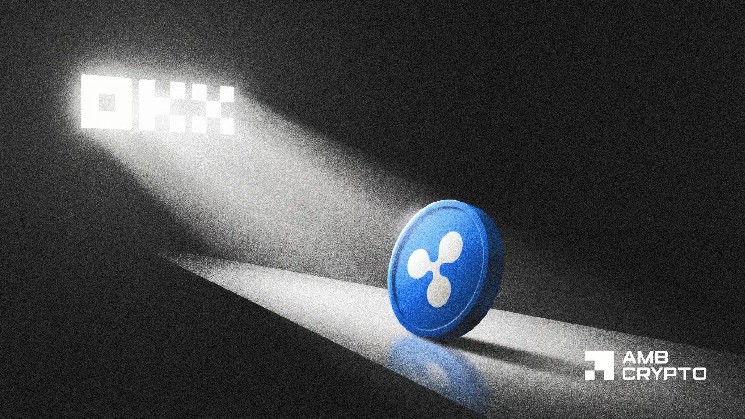
In what marks a significant leap forward for Ripple’s digital currency ambitions, the company’s stablecoin RLUSD has secured a transformative partnership with OKX, one of the world’s leading cryptocurrency exchanges. This collaboration isn’t just another routine listing—it represents a comprehensive integration that will see RLUSD become tradable across an impressive 280 trading pairs on the OKX platform. Beyond simple trading functionality, the stablecoin will serve multiple critical roles within the exchange’s ecosystem, including being accepted as margin collateral for leveraged trading positions. Perhaps most notably for blockchain enthusiasts, users will be able to make direct transfers from the XRP Ledger (XRPL) chain, streamlining the movement of assets and reducing friction in the trading process. This multi-faceted integration demonstrates OKX’s confidence in RLUSD as a serious contender in the competitive stablecoin market and signals the exchange’s commitment to offering its users diverse options for stable digital assets.
The partnership has garnered enthusiastic responses from leadership at both organizations. Jason Klau, Chief Investment Officer at OKX, expressed genuine excitement about the collaboration, highlighting that RLUSD presents itself as an attractive alternative for institutional players seeking a reliable stablecoin option. His comments underscore OKX’s strategic approach to platform development—rather than playing favorites or limiting options, the exchange is committed to supporting the best stablecoins that their user base demands. Meanwhile, Star Xu, who founded and continues to lead OKX as CEO, emphasized a particularly valuable technical advantage that RLUSD will enjoy on the platform: access to the exchange’s unified order book. This feature is far from trivial—it means that RLUSD transactions will tap into OKX’s deep global liquidity pools, ensuring that traders can execute large orders without significant price slippage and that the stablecoin maintains consistent pricing across different trading pairs. This kind of liquidity access can make or break a digital asset’s success on an exchange platform.
The Remarkable Rise of a Young Stablecoin
What makes RLUSD’s rapid ascent particularly impressive is its relative youth in the cryptocurrency markets. The stablecoin only made its debut in December 2024, which means it hasn’t even celebrated its second birthday yet. In an industry where established players like Tether’s USDT and Circle’s USDC have dominated for years, RLUSD’s quick climb up the ranks demonstrates both the strength of Ripple’s brand and the company’s strategic acumen in forging the right partnerships at the right time. The growth trajectory hasn’t been accidental—Ripple has pursued an aggressive but thoughtful expansion strategy, focusing on securing integrations with major exchanges and financial platforms that can provide immediate access to millions of potential users. The OKX partnership represents just the latest chapter in this strategic playbook, but it’s certainly not the first major win for the young stablecoin.
Looking at 2026 alone (which we’re currently experiencing), RLUSD has already notched two critical collaborations that have significantly boosted its profile and utility in the cryptocurrency ecosystem. In February of this year, Binance—the world’s largest cryptocurrency exchange by trading volume—integrated RLUSD into its platform for select trading pairs and accepted it as margin collateral for futures and derivatives trading. This integration went beyond simple spot trading support; Binance also added full support for the XRP Ledger itself, enabling users to make direct deposits and withdrawals through Ripple’s proprietary blockchain. This seamless integration removed technical barriers and made it considerably easier for Binance’s massive user base to access and utilize RLUSD. But the partnerships haven’t been limited to crypto-native platforms. In late 2025, asset management giant BlackRock—one of the world’s most influential traditional financial institutions—enabled direct one-to-one swaps for its BUIDL money market fund using RLUSD. This development was particularly significant because it represented a bridge between traditional finance and the cryptocurrency world, adding substantial utility and institutional legitimacy to Ripple’s stablecoin offering.
The Binance Effect and What It Means for Future Growth
Among all of RLUSD’s partnerships to date, the Binance integration appears to have delivered the most dramatic impact on adoption metrics and usage patterns. Data from Artemis, a respected blockchain analytics platform, reveals that RLUSD began experiencing a consistent and substantial surge in transaction volume almost immediately following the Binance collaboration announcement and implementation. This wasn’t just a brief spike driven by initial curiosity—the increased activity has proven sustainable, suggesting genuine utility and organic adoption rather than speculative interest that quickly fades. When examining which applications and platforms dominate RLUSD usage, the data tells an interesting story: Binance currently ranks third in terms of RLUSD activity, trailing only Ripple itself (which makes sense given the company created the stablecoin) and Aave, a leading decentralized finance protocol. The fact that Binance achieved such significant usage in a relatively short period speaks volumes about the exchange’s influence in the cryptocurrency market and its ability to drive adoption of new assets.
This historical pattern with Binance creates an intriguing framework for predicting what might happen following the OKX integration. If the OKX partnership delivers adoption metrics similar to what Binance produced—and there’s good reason to believe it could, given OKX’s substantial global user base and trading volumes—then RLUSD’s circulating supply could see another significant expansion in the coming weeks and months. Market observers and industry analysts will be watching these metrics closely, as they’ll provide important signals about RLUSD’s competitive positioning relative to more established stablecoins. It’s worth noting that while exchanges like Binance and OKX represent crucial distribution channels, RLUSD hasn’t neglected the decentralized finance ecosystem. According to recent data, over 76 percent of RLUSD’s total supply—approximately $1.18 billion worth—currently resides on the Ethereum blockchain. This concentration on Ethereum underscores the stablecoin’s uptake within the DeFi ecosystem, where Ethereum remains the dominant platform for decentralized applications, lending protocols, and automated market makers.
Current Market Position and the Road to $2 Billion
As of the most recent data available, RLUSD has achieved a market supply of approximately $1.5 billion, a remarkable accomplishment for a stablecoin that’s been in existence for less than two years. This supply figure places RLUSD as the 13th largest stablecoin in the world—a competitive position in a market dominated by a few major players. For context, the stablecoin market has long been characterized by extreme concentration, with Tether’s USDT and Circle’s USDC accounting for the vast majority of stablecoin market capitalization. Breaking into the top tier of this market requires not just technical competence and regulatory compliance, but also the kind of strategic partnerships and integrations that Ripple has been systematically pursuing. The company’s approach appears to be working, as evidenced by RLUSD’s steady climb in market rankings.
The next psychological and practical milestone on the horizon is the $2 billion mark in total supply. Whether RLUSD can cross this threshold relatively quickly following the OKX integration remains an open question, but there are several factors working in its favor. First, the demonstrated pattern from the Binance integration suggests that major exchange listings can drive substantial increases in circulation and usage. Second, OKX’s global reach—particularly its strong presence in Asian markets where Ripple has historically performed well—could introduce RLUSD to user demographics that haven’t previously had easy access to it. Third, the comprehensive nature of the integration, including margin collateral functionality and direct XRPL transfers, provides multiple use cases beyond simple trading, potentially encouraging users to hold and utilize RLUSD rather than just passing through it during trades. Finally, the momentum effect shouldn’t be underestimated: as RLUSD becomes more widely available and accepted across major platforms, network effects begin to take hold, where each additional integration makes the stablecoin more valuable and useful to existing and potential users.
The Broader Implications for Ripple and the Stablecoin Market
This latest development with OKX represents more than just another line item on Ripple’s partnership roster—it reflects the company’s broader strategic vision and its increasingly successful execution of that vision. Ripple has long positioned itself as a bridge between the traditional financial system and the cryptocurrency world, and RLUSD serves as a crucial tool in that bridging function. Stablecoins, by maintaining a stable value relative to fiat currencies like the US dollar, address one of the primary concerns that institutional investors and traditional finance participants have about cryptocurrencies: volatility. By offering a stable, compliant, and well-integrated digital dollar alternative, Ripple is making it easier for institutions to participate in cryptocurrency markets and blockchain-based applications without taking on the price risk associated with assets like Bitcoin or even XRP, Ripple’s native token.
The timing of RLUSD’s growth is also noteworthy within the broader context of the stablecoin market’s evolution. Regulatory scrutiny of stablecoins has intensified globally, with lawmakers and financial regulators increasingly focused on ensuring that these digital assets are properly backed, transparently operated, and compliant with existing financial regulations. Ripple, having navigated a lengthy legal battle with the U.S. Securities and Exchange Commission regarding XRP, has developed considerable expertise in working within regulatory frameworks and maintaining compliance standards. This experience likely informed the development and rollout of RLUSD, positioning it as a stablecoin that can meet institutional compliance requirements while still offering the efficiency and technological advantages of blockchain-based assets. As regulatory clarity continues to emerge—particularly in major markets like the United States and European Union—stablecoins that have prioritized compliance from the outset may find themselves with significant competitive advantages.
Looking ahead, the success of RLUSD could have implications beyond Ripple’s own business objectives. It demonstrates that the stablecoin market, despite being dominated by established players, remains open to new entrants that bring strong partnerships, solid technology, and strategic positioning. For the cryptocurrency industry more broadly, the growth of multiple viable stablecoin options represents healthy market development, reducing systemic risk associated with over-reliance on any single stablecoin issuer and providing users with meaningful choices based on their specific needs and preferences. The OKX integration, following on the heels of the Binance and BlackRock partnerships, suggests that RLUSD has achieved a critical mass of credibility and utility that should support continued growth. Whether it can eventually challenge the dominance of USDT and USDC remains to be seen, but for a stablecoin approaching its second birthday, the trajectory is undeniably impressive and the momentum appears to be building rather than plateauing.