
Louisiana Suspends Congressional Primary Elections Following Supreme Court Ruling
Emergency Action Halts House Races Amid Redistricting Controversy
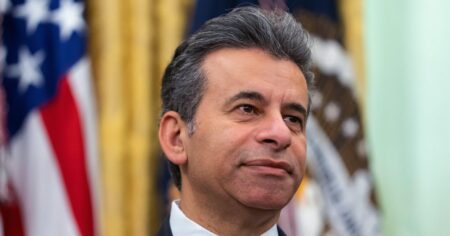
In a dramatic turn of events that has sent shockwaves through Louisiana’s political landscape, Secretary of State Nancy Landry announced on Thursday that the state would be suspending its U.S. House of Representatives primary elections that were scheduled for May 16. This unprecedented decision came in direct response to a Supreme Court ruling that struck down Louisiana’s congressional map, throwing the state’s electoral process into disarray. While voters will still see the House races listed on their ballots if they vote early, Secretary Landry made it crystal clear that any votes cast in those particular races simply won’t count. The suspension represents a significant disruption to the democratic process, affecting thousands of voters who had been preparing to make their voices heard in the upcoming primaries. The secretary of state emphasized that this wasn’t a decision made lightly, but rather a mandatory legal step required under Louisiana law following the high court’s ruling.
The Legal Framework Behind the Suspension
Secretary of State Nancy Landry explained that her decision to certify the emergency was made “pursuant to 18:401.1(B),” a specific provision in Louisiana law that provides a mechanism for suspending elections under extraordinary circumstances. This certification served as a necessary prerequisite before Governor Jeff Landry—who, notably, is not related to the secretary of state despite sharing the same surname—could take executive action. The governor wasted no time in responding to the emergency certification, signing an executive order on the same Thursday that officially suspended the House primaries. According to the order, the elections are postponed until July 15, though that date isn’t set in stone. The order includes flexible language stating the suspension will last “until such time as determined by the legislature,” acknowledging that the actual timeline may depend on how quickly state lawmakers can act to resolve the underlying redistricting issues. The executive order also included a strong encouragement for the Louisiana State Legislature to tackle the problem head-on by passing new congressional maps and scheduling fresh elections “as soon as practical.”
What This Means for Louisiana Voters
For Louisiana residents who were planning to participate in the May 16 primaries, the situation creates an unusual and potentially confusing scenario. While other races on the ballot—including the Senate primaries—will proceed as planned, the House races exist in a strange limbo. Secretary of State Nancy Landry assured the public that her office would take steps to minimize confusion by posting notices at early voting sites to inform voters about which races would and wouldn’t count. This means that voters who show up to cast their ballots will still be able to participate in the Senate races and other local contests, but they need to understand that any choices they make for U.S. House representatives will essentially be discarded. The situation is particularly complicated for those who have already voted early or planned to do so, as they’ll see candidates’ names on their ballots even though those portions of the election have been invalidated. Election officials face the challenging task of communicating these changes effectively to ensure that voters understand what’s happening and don’t feel disenfranchised by the sudden shift in the electoral landscape.
The Supreme Court Decision That Started It All
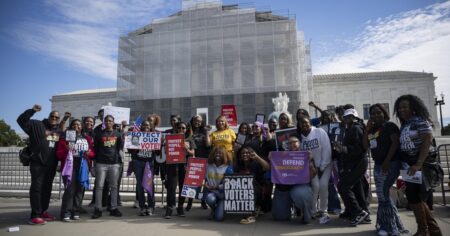
The catalyst for this entire situation was a Supreme Court ruling issued on Wednesday that upheld a lower court’s findings regarding Louisiana’s redistricting process. The case centered on how Louisiana mapmakers approached the task of redrawing the state’s voting boundaries to comply with Section 2 of the Voting Rights Act, a crucial piece of federal legislation designed to prevent racial discrimination in voting. The lower court had determined that Louisiana officials relied too heavily on racial considerations when creating the new district lines, and the Supreme Court agreed with this assessment. In a 6-3 decision written by Justice Samuel Alito, the Supreme Court’s conservative majority concluded that while compliance with Section 2 of the Voting Rights Act is important, it cannot justify using race as a predominant factor when redrawing House district boundaries. This ruling has significant implications not just for Louisiana but potentially for redistricting efforts across the country, as states grapple with the complex balance between ensuring fair representation for minority communities and avoiding what the courts consider excessive reliance on racial considerations in the mapmaking process.
National Implications and the Florida Connection
Louisiana isn’t the only state finding itself in the crosshairs of redistricting controversies following recent Supreme Court decisions. The situation in Louisiana is playing out against a broader national backdrop of disputes over how congressional districts should be drawn. Earlier in the same week, Florida Republicans approved a new congressional map that had been pushed by Governor Ron DeSantis, who had taken the controversial step of redrawing a Hispanic-minority district in central Florida. State attorneys in Florida have gone even further, arguing that the recent Supreme Court rulings on redistricting mean that certain provisions in Florida’s Fair Districts Amendment—a voter-approved measure designed to prevent gerrymandering—are now unconstitutional. These parallel developments in Louisiana and Florida illustrate how Supreme Court decisions on voting rights and redistricting are reverberating across multiple states, potentially reshaping the political landscape and raising fundamental questions about how to balance the competing goals of fair representation, compliance with voting rights laws, and constitutional constraints on the use of race in drawing district lines. The outcomes in these states could set precedents that influence redistricting battles for years to come.
Looking Ahead: What Happens Next
As Louisiana moves forward from this electoral disruption, all eyes are now on the state legislature, which faces the urgent task of drawing new congressional maps that can pass legal muster while still providing fair representation to all Louisiana residents. The July 15 date mentioned in Governor Landry’s executive order represents a tentative target, but the actual timeline will depend on how quickly legislators can reach consensus on new district boundaries and navigate what is certain to be a contentious process. Lawmakers must walk a fine line, creating districts that comply with the Voting Rights Act’s protections for minority voters while avoiding what the Supreme Court has now deemed an over-reliance on racial considerations. This balancing act will be complicated by the political realities of redistricting, as both parties seek to draw maps that favor their candidates while maintaining the appearance of fairness and legality. Meanwhile, candidates who had been campaigning for the May primaries find themselves in limbo, needing to maintain their campaign operations and momentum despite not knowing exactly when they’ll face voters. For Louisiana’s citizens, the suspension serves as a stark reminder of how court decisions and legal challenges can directly impact their ability to participate in democracy, even at the last minute, and underscores the ongoing national debate about voting rights, representation, and the role of race in American politics.