

Arthur Hayes Doubles Down on Hyperliquid: What His Latest $HYPE Purchase Tells Us About the Crypto Market
A Crypto Veteran Makes Another Bold Move
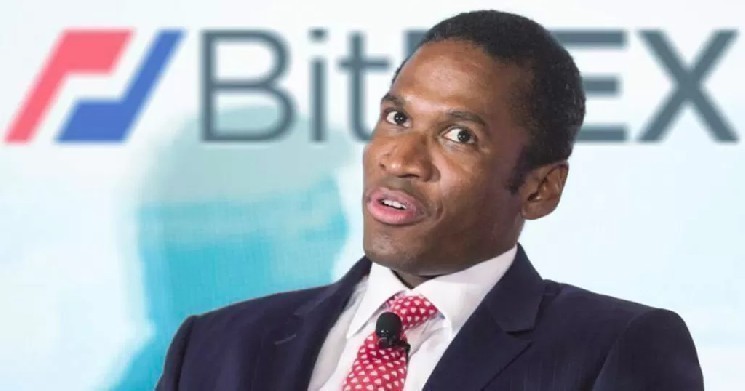
Arthur Hayes isn’t exactly a household name outside crypto circles, but within the industry, he’s something of a legend. As the founder of BitMEX, one of the earliest and most influential cryptocurrency derivatives exchanges, Hayes has developed a reputation for making bold calls and even bolder investments. His latest move? Continuing to stack up $HYPE tokens from the Hyperliquid ecosystem, and he’s not being shy about it. On February 16th, Hayes added another 16,434 $HYPE tokens to his already substantial holdings through the Gate exchange. This might not sound like earth-shattering news at first glance, but when you look at the bigger picture of Hayes’ accumulation strategy and what it might signal about the future of decentralized finance, it becomes a lot more interesting.
What makes this particularly noteworthy is that Hayes isn’t just dipping his toes in the water—he’s diving in headfirst. His total holdings now stand at a staggering 205,629,927 $HYPE tokens, which translates to approximately $6.12 million at current market prices. For someone who has seen multiple crypto market cycles, weathered regulatory storms, and built one of the most successful trading platforms in the industry, Hayes doesn’t make these kinds of moves lightly. His continued accumulation of $HYPE suggests he sees something in Hyperliquid that many investors might be missing. Whether he’s right or wrong remains to be seen, but his conviction is certainly turning heads and getting people to take a closer look at what Hyperliquid is building.
Understanding Hyperliquid’s Growing Appeal
So what exactly is Hyperliquid, and why would someone like Arthur Hayes be so bullish on it? Hyperliquid has been making waves in the decentralized derivatives sector, which is essentially the Wild West of crypto trading right now. While centralized exchanges have dominated the derivatives market for years, there’s been a growing push toward decentralized alternatives that offer users more control, transparency, and theoretically less counterparty risk. Hyperliquid is positioning itself at the forefront of this movement, offering a platform where traders can engage in derivatives trading without having to trust a centralized entity with their funds.
The platform has been experiencing impressive growth in both trading volume and user interest, which doesn’t happen by accident in the competitive crypto landscape. Traders are increasingly drawn to platforms that offer them the benefits of decentralization—like self-custody and transparency—while still providing the sophisticated trading tools and liquidity they need to execute their strategies effectively. Hyperliquid appears to be striking this balance, which is no small feat. Many decentralized platforms struggle with liquidity issues or clunky user interfaces that turn off experienced traders, but Hyperliquid seems to be avoiding these common pitfalls. This growing adoption is creating a positive feedback loop: more users lead to more liquidity, which attracts even more users, which in turn supports demand for the platform’s native $HYPE token.
What Hayes’ Accumulation Strategy Reveals
There’s something particularly interesting about how Hayes is accumulating his $HYPE position. Rather than making one massive purchase that could move the market and drive up his average entry price, he’s been methodically adding to his holdings over time. This approach, often called dollar-cost averaging or strategic accumulation, suggests Hayes is thinking long-term rather than trying to flip these tokens for a quick profit. When wealthy investors with reputations to protect commit millions of dollars to a relatively niche altcoin and continue buying more, it sends a signal to the market that can’t easily be ignored.
The fact that this latest purchase came through the Gate exchange also adds an interesting dimension. While the exact details of whether this was a direct spot market purchase or involved some other transfer mechanism weren’t disclosed, the transaction was transparent enough to be tracked by on-chain monitoring platforms. This level of transparency is both a feature and a challenge of crypto investing—on one hand, it allows everyday investors to see what the “smart money” is doing; on the other hand, it can create copycat behavior where people blindly follow major investors without doing their own research. Hayes knows his moves are being watched, yet he’s continuing to accumulate anyway, which could indicate he believes the opportunity is still early enough that additional buying won’t significantly impact his thesis.
Market Implications and Investor Sentiment
When someone with Arthur Hayes’ profile and track record makes moves like this, it inevitably impacts market sentiment. Other investors start asking themselves: “What does he know that I don’t?” This can create what’s known as a bandwagon effect, where Hayes’ purchases generate additional buying interest from investors who want to position themselves alongside someone they perceive as having superior market knowledge or insights. In the short term, this can absolutely impact prices, creating upward pressure on $HYPE as more people decide to get in on the action.
However, market analysts are quick to point out that this sword cuts both ways. Yes, large accumulations by respected investors can strengthen market sentiment and create positive price momentum. But they can also create inflated expectations and FOMO (fear of missing out) that leads less experienced investors to take on more risk than they can actually handle. The crypto market remains notoriously volatile, and what works for someone with Arthur Hayes’ resources and risk tolerance might not be appropriate for the average retail investor. The analysts following this story have been emphasizing that while Hayes’ accumulation is certainly interesting and potentially signals confidence in Hyperliquid’s future, it shouldn’t be taken as a guaranteed path to profits. Smart investors will do their own research, understand the risks involved, and only invest amounts they can afford to lose.
The Bigger Picture: Decentralized Derivatives and Crypto’s Future
Hayes’ investment in Hyperliquid also tells us something about where he thinks the crypto industry is heading. The decentralized derivatives sector is still relatively young compared to spot trading, but it represents potentially the next major frontier for crypto adoption. Traditional finance has long relied on derivatives for price discovery, risk management, and speculation, with the derivatives market being many times larger than the underlying spot markets. If crypto is going to mature into a truly comprehensive financial ecosystem, it needs robust, user-friendly, and trustworthy derivatives platforms.
The challenge has always been replicating the performance and user experience of centralized derivatives exchanges in a decentralized environment. Centralized platforms can offer high speed, deep liquidity, and sophisticated order types because everything runs on their own servers. Decentralized platforms, by contrast, have to deal with blockchain limitations, smart contract risks, and the complexity of maintaining liquidity in a permissionless environment. Hyperliquid’s growing success suggests that these technical challenges are being overcome, which could represent a genuine shift in how crypto derivatives trading happens. If Hayes is right about Hyperliquid, he’ll be positioned to benefit from this broader industry trend toward decentralization in derivatives trading, not just the success of one particular platform.
The Bottom Line: Opportunity and Caution in Equal Measure
Arthur Hayes’ continued accumulation of $HYPE tokens is undeniably interesting and worthy of attention, but it requires a balanced perspective. On one hand, we have an experienced crypto entrepreneur and investor putting significant capital—over $6 million—into a token that represents a platform working in one of crypto’s most promising growth areas. His methodical approach to building this position suggests conviction rather than speculation, and his track record gives weight to his market judgment. The fact that Hyperliquid itself is showing strong metrics in terms of trading volume and user growth provides fundamental support for his investment thesis.
On the other hand, this isn’t investment advice, and that disclaimer isn’t just legal boilerplate—it’s genuinely important. The crypto market has humbled even the smartest investors, and past success doesn’t guarantee future results. Hyperliquid, for all its promise, is still competing in a crowded space where technology can be disrupted overnight and regulatory uncertainty remains a constant threat. Hayes can afford to take big bets that might not pay off; most individual investors cannot. The smart approach is to view this news as one data point among many, to research Hyperliquid thoroughly if it interests you, to understand both the potential upside and the very real risks, and to never invest more than you can afford to lose. Hayes’ purchases are worth paying attention to, but they should inspire thoughtful research rather than blind imitation. In the unpredictable world of cryptocurrency, that distinction could make all the difference between a successful investment and an expensive lesson.