
Terror Strikes Mali: Coordinated Attacks Rock Capital and Multiple Cities
A Morning of Violence Across the Nation
The West African nation of Mali awoke to chaos and terror early Saturday morning as coordinated attacks erupted across multiple cities, sending shockwaves through communities already weary from years of conflict. What began as sporadic reports of gunfire quickly evolved into a full-scale security crisis, with armed militants targeting strategic locations in the capital city of Bamako and several other population centers throughout the country. The sounds of heavy weapons fire and explosions shattered the morning calm, forcing thousands of residents to shelter in their homes as pitched battles erupted between government forces and what authorities described as “unidentified armed terrorist groups.” The scope and coordination of the attacks immediately raised concerns among security analysts that this represented one of the most significant security challenges Mali has faced in recent years, potentially involving an unprecedented alliance between different armed factions that have long plagued the troubled Sahel region.
The Assault on Bamako and Military Installations
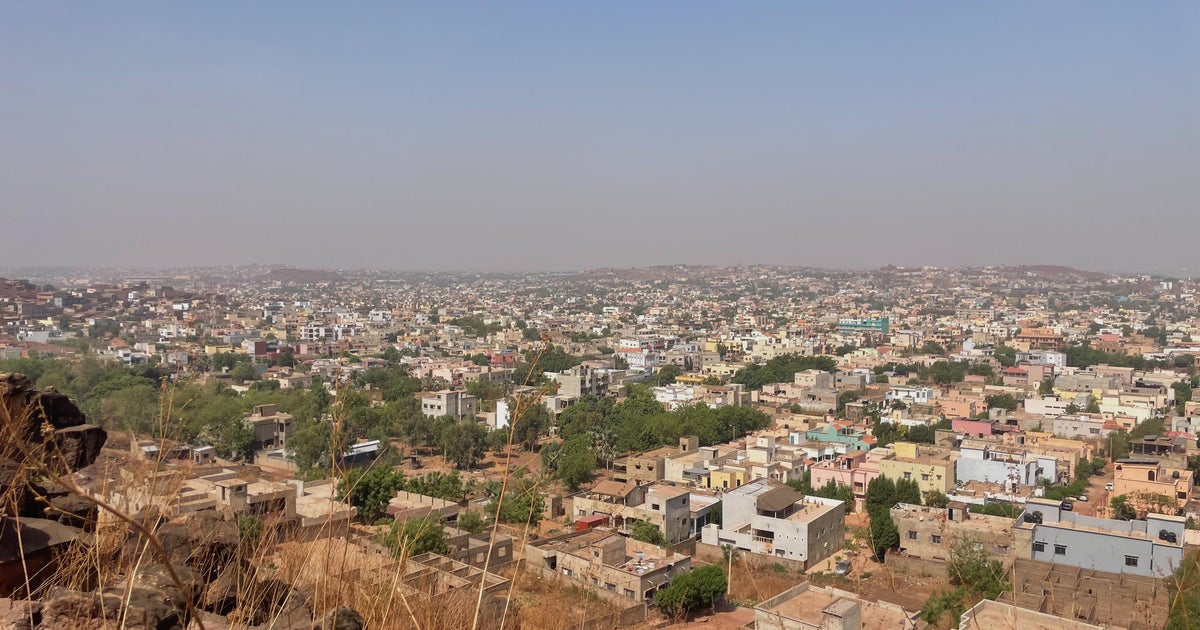
In Mali’s capital city of Bamako, the primary focus of the attack centered on the Modibo Keïta International Airport, located approximately nine miles from the city center. Journalists and residents reported sustained heavy weapons fire and the distinctive sound of automatic rifles echoing through neighborhoods surrounding the strategic facility. Military helicopters were observed circling overhead, likely conducting reconnaissance and supporting ground operations against the attackers. The airport sits adjacent to a critical air base utilized by Mali’s air force, making it a symbolically and strategically significant target for any group seeking to demonstrate their capability to strike at the heart of the nation’s military infrastructure. Residents living near the airport complex described a terrifying morning of continuous gunfire punctuated by explosions, while three military helicopters maintained constant patrols overhead. The Malian army responded quickly to the threat, issuing statements confirming that armed terrorist groups had targeted “certain locations and barracks” throughout Bamako and assuring citizens that soldiers were “engaged in eliminating the attackers.” By later in the day, military authorities claimed the situation was under control, though sporadic fighting continued in some areas, and the full extent of casualties remained unclear as security forces worked to secure all affected locations.
Kati Under Siege: Assault on Military Stronghold
Perhaps even more alarming than the attack on the capital was the simultaneous assault on Kati, a strategically vital town located near Bamako that serves as home to Mali’s principal military base. Residents of Kati reported being jolted awake in the pre-dawn hours by the unmistakable sounds of combat—sustained gunfire interspersed with the concussive blasts of explosions. The significance of targeting Kati cannot be overstated, as this town serves not only as a major military installation but also as the residence of General Assimi Goita, the leader of Mali’s ruling military junta who came to power through a coup. Videos circulating on social media platforms painted a chilling picture of the situation, showing convoys of armed militants moving through otherwise deserted streets in trucks and on motorcycles, their weapons clearly visible as frightened residents watched from behind windows and doorways. The imagery evoked comparisons to previous major insurgent offensives in the region and demonstrated a level of organization and boldness that security experts found deeply troubling. The apparent ease with which these armed groups moved through a town hosting such significant military presence raised immediate questions about intelligence failures and the overall readiness of Mali’s security forces to defend even their most important installations.
Northern Cities Under Attack: Kidal and Gao Targeted
The violence was not confined to the capital region, as reports flooded in from northern Mali describing similar attacks in the cities of Kidal and Gao, suggesting a carefully coordinated multi-pronged assault designed to stretch government forces thin and maximize psychological impact. In Kidal, gunmen managed to enter the city and took control of several neighborhoods, leading to fierce exchanges of fire with army units attempting to repel them. A former mayor of the town, speaking to journalists on condition of anonymity due to legitimate fears for his personal safety, confirmed that armed groups had penetrated defensive perimeters and were engaged in street-to-street combat with security forces. Videos emerging from both Kidal and Gao showed the brutal reality of urban warfare, with gunfire echoing through streets and the horrifying sight of bodies lying where they had fallen during the fighting. Mohamed Elmaouloud Ramadane, a spokesperson for the Tuareg-led Azawad separatist movement, made bold claims on Facebook that his forces had seized control of Kidal and portions of Gao, though these assertions could not be independently verified by international media organizations. In Gao, residents described a terrifying ordeal that began in the early morning hours and continued well into late morning, with the intensity of explosions literally shaking the foundations of homes and causing windows and doors to rattle violently in their frames. One resident, speaking anonymously to protect his safety, described being “scared out of my wits” as the sounds of battle emanated from the direction of the army camp and adjacent airport facility.
International Response and Historical Context
The severity and scope of the attacks prompted immediate international concern, with the United States Embassy in Bamako issuing urgent security alerts advising American citizens to shelter in place and avoid all travel to affected areas until the security situation could be properly assessed and stabilized. The coordinated nature of the assaults marked what security experts described as the largest organized attack in Mali in years, raising alarm bells about the evolving capabilities and coordination among various armed groups operating in the region. Ulf Laessing, who heads the Sahel program at the Konrad Adenauer Foundation, expressed particular concern about evidence suggesting that JNIM, an al Qaeda-affiliated terrorist organization, may have coordinated the day’s attacks in partnership with Tuareg rebel groups—a deeply troubling development given that a similar alliance in 2012 resulted in these forces overrunning northern Mali and sparking a regional security crisis that continues to this day. Mali, along with its neighbors Niger and Burkina Faso, has been locked in an increasingly desperate struggle against armed groups affiliated with both al Qaeda and the Islamic State for more than a decade, with the security situation steadily deteriorating despite various military interventions and counter-terrorism efforts. Following military coups in all three nations, their respective juntas made the controversial decision to pivot away from traditional Western security partners toward Russia, seeking Moscow’s assistance in combating Islamic militant organizations—a shift that has generated significant international controversy and debate about its effectiveness.
The Worsening Security Crisis and Path Forward
Despite these changing alliances and new security partnerships, the harsh reality remains that the security situation across Mali, Niger, and Burkina Faso has actually deteriorated significantly in recent times, with analysts documenting record numbers of attacks by militant organizations and a corresponding increase in civilian casualties. Government forces in these countries have themselves faced serious allegations of human rights abuses, accused of killing civilians suspected of collaborating with militant groups—extrajudicial actions that risk alienating local populations and potentially driving more people into the arms of extremist organizations. The pattern of violence is not new to Mali’s capital; in 2024, an al Qaeda-linked group claimed responsibility for a devastating attack on Bamako’s airport and a military training facility in the capital that resulted in scores of deaths and demonstrated the persistent vulnerability of even supposedly secure government installations. Saturday’s coordinated attacks represent a continuation and possibly an escalation of this trend, suggesting that despite government assurances and military operations, armed groups retain the capability to strike at will across large swathes of Malian territory. The involvement of Tuareg separatist forces, who have fought for years to establish an independent state of Azawad in northern Mali and who once successfully drove security forces from the region before a 2015 peace deal (which has since collapsed) temporarily stabilized the situation, adds another complex dimension to an already multifaceted conflict. As Mali struggles to respond to this latest security crisis, fundamental questions remain about the government’s capacity to protect its citizens, the effectiveness of current security strategies, and whether the partnership with Russia will prove any more successful than previous approaches in bringing stability to this troubled region of West Africa.