


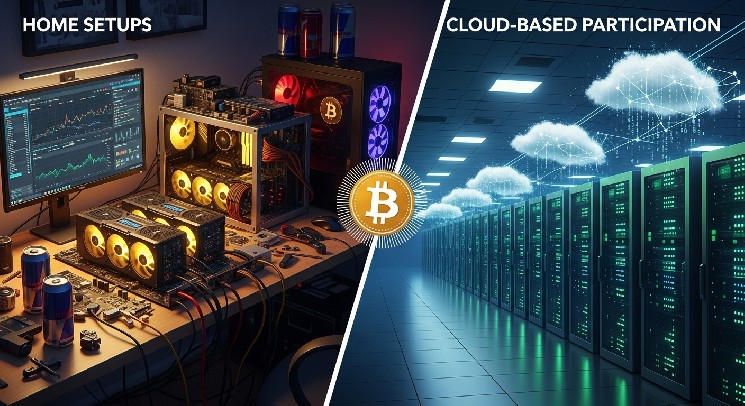

The Evolution of Bitcoin Mining: From Basement Hobby to Professional Enterprise
From DIY Dreams to Industrial Reality
Remember when Bitcoin mining was something anyone could do from their bedroom? Those days feel like ancient history now. Back in Bitcoin’s early years, enthusiastic hobbyists would set up modest mining rigs in their homes, letting their computers hum away through the night, steadily accumulating digital coins. It was an exciting time—a digital gold rush where ordinary people could participate with nothing more than a decent computer and an internet connection. Fast forward to today, and the landscape has transformed dramatically. Bitcoin mining has evolved into a highly competitive, industrial-scale operation where only the most efficient survive. The barriers to entry have skyrocketed, and what was once accessible to everyone has become the domain of specialists with deep pockets and technical expertise. For most people interested in Bitcoin today, the question isn’t about understanding the cryptocurrency itself—it’s about finding realistic ways to participate in mining without breaking the bank or turning their home into a data center. The game has changed, and individual miners need new strategies to stay in the race.
Why Traditional Mining Has Become Nearly Impossible for Individuals
The fundamental technology behind Bitcoin mining—Proof-of-Work—remains the same, but everything else has changed beyond recognition. Today’s mining environment demands resources that put it far beyond the reach of casual participants. First, there’s the hardware requirement. Gone are the days when a standard computer could mine Bitcoin. Now, you need specialized ASIC (Application-Specific Integrated Circuit) machines designed exclusively for cryptocurrency mining. These aren’t cheap—they can cost thousands of dollars each, and they become obsolete quickly as newer, more efficient models hit the market. Then there’s the electricity situation. Bitcoin mining consumes enormous amounts of power, and unless you have access to incredibly cheap electricity, your mining operation will lose money faster than it generates Bitcoin. Professional miners locate their operations in regions with the lowest possible energy costs, giving them a competitive advantage that home miners simply cannot match.
But the challenges don’t stop there. These powerful mining machines generate tremendous heat, requiring sophisticated cooling systems to prevent damage and maintain efficiency. You’ll also need to constantly upgrade your hardware to keep pace with the increasing difficulty of mining algorithms and the competition from other miners worldwide. And let’s not forget the technical expertise required—monitoring system performance, troubleshooting issues, optimizing settings, and maintaining uptime all demand knowledge and attention that most people simply don’t have. When you add up all these requirements, it becomes clear why traditional Bitcoin mining has moved out of reach for individual enthusiasts. The operational costs and technical barriers often exceed any potential rewards, effectively locking out interested participants not because they lack motivation, but because the practical obstacles are simply too high. This reality has forced many would-be miners to look for alternative approaches that don’t require turning their garage into a high-tech operation center or earning an engineering degree.
Cloud Mining: The Practical Solution for Modern Bitcoin Enthusiasts
Enter cloud mining—an approach that removes the physical infrastructure from the equation entirely. Instead of purchasing, installing, and maintaining your own mining equipment, cloud mining allows you to rent computing power from professional data centers that handle all the technical details. The actual mining process remains identical, but the responsibility shifts from the individual to the platform provider. This model represents a fundamental reimagining of how ordinary people can participate in Bitcoin mining. You get the benefits of mining—the potential earnings, the participation in the Bitcoin network—without any of the headaches. No deafening noise from cooling fans running 24/7. No excessive heat turning your spare room into a sauna. No hardware failures requiring expensive replacements. No shocking electricity bills that make you question whether mining is worth it at all.
Cloud mining platforms handle everything on the backend while users simply select a mining contract that fits their budget and goals. This accessibility is what makes cloud mining attractive to people who understand Bitcoin’s potential but lack the resources or inclination to become hardware specialists. It’s mining simplified—stripped down to its essential function without the operational complexity that has made traditional mining so prohibitive. For many, this represents the only realistic way to participate in Bitcoin mining in today’s competitive environment.
How Fleet Mining Makes Bitcoin Mining Accessible to Everyone
Fleet Mining represents one of the leading platforms bringing cloud mining to a broader audience. The company operates large-scale mining infrastructure powered by AI-based cloud computing systems, handling all the technical complexity that would otherwise fall on individual miners. Their professional data centers manage everything from hardware performance and energy efficiency to cooling systems and mining optimization. Users don’t need to understand the intricacies of hash rates, mining pool selection, or hardware specifications. Instead, they simply choose a mining contract that aligns with their investment goals and timeframe. From that point forward, the system runs automatically, generating daily rewards based on the computing power allocated to each user’s contract.
What sets Fleet Mining apart is the integration of artificial intelligence into their operations. These AI systems constantly optimize resource distribution to maximize output while minimizing costs and downtime—addressing inefficiencies that plague individual miners who lack sophisticated monitoring tools. This technological advantage translates into more consistent and predictable earnings for users. All mining activity and earnings are documented transparently, allowing users to track performance without needing technical knowledge or constant monitoring. The entire experience is designed to be straightforward, predictable, and manageable—making Bitcoin mining accessible to people who value simplicity over technical mastery. The platform transforms mining from a complex technical challenge into a straightforward participation opportunity, democratizing access in a way that aligns with Bitcoin’s original vision of financial accessibility.
The Concrete Benefits and Reward Structure
The advantages of cloud mining through platforms like Fleet Mining are substantial and address the exact pain points that make traditional mining impractical. There’s no initial hardware investment—no need to spend thousands on ASIC miners that might become obsolete within months. There are no ongoing electricity costs eating into your profits or cooling expenses to manage the heat generated by powerful processors. Users receive automated daily mining revenue without lifting a finger, based on their chosen contract. The platform offers flexible contract options to accommodate different budgets and risk tolerances, and all earnings are transparently recorded so users can verify their returns without technical expertise. This combination of benefits makes Bitcoin mining genuinely accessible to people who previously had no realistic way to participate.
Beyond the basic mining functionality, Fleet Mining enhances user engagement and value through additional features and bonuses. New users receive a registration bonus ranging from $15 to $100, providing immediate value and a risk-free way to explore the platform. There’s also a daily login reward of $0.60, encouraging regular engagement with the platform. Perhaps most interesting is the Daily Lucky Egg feature, which adds an element of excitement to the mining experience. Users can receive rewards in various forms—cash bonuses, additional hash power to boost their mining capacity, or discount coupons for future contracts. The potential rewards range widely, with the highest prize reaching an impressive $1,000,000. These features add value beyond the standard mining income, creating multiple pathways for users to benefit from their participation. To illustrate the earning potential across different investment levels, consider these contract examples: A $15 agreement lasting one day generates $0.60 daily. A $100 agreement over two days produces $3 daily, returning a total of $106. A $1,200 agreement spanning 10 days yields $16.20 daily for a total of $1,362. Moving up the scale, a $6,000 agreement over 20 days generates $96 daily, totaling $7,920. At the upper end, a $30,000 agreement lasting 45 days produces $540 daily, culminating in a total return of $54,300. These examples demonstrate how the platform accommodates everyone from beginners testing the waters with minimal investment to serious participants making substantial commitments.
The Future of Accessible Bitcoin Mining
Bitcoin mining has fundamentally transformed from a personal experiment anyone could try into a professional operation requiring significant resources and expertise. The days of basement mining rigs are over, replaced by industrial-scale data centers optimized for maximum efficiency. For individual enthusiasts, traditional mining has become increasingly difficult to access in any meaningful way. This is where cloud mining emerges as the most viable path forward—a practical solution that maintains accessibility without requiring users to become hardware experts or make substantial capital investments in equipment destined for obsolescence. Platforms like Fleet Mining are leading this transformation by providing automated, streamlined systems that convert the complexity of mining into consistent, measurable results. They’re shifting the paradigm from effort-intensive operations to efficiency-focused participation, making it possible for ordinary people to engage with Bitcoin mining in a realistic, sustainable way.
This evolution doesn’t diminish Bitcoin’s revolutionary potential—it actually fulfills it by removing barriers that had inadvertently created a new kind of exclusivity. Cloud mining represents democracy in action within the cryptocurrency space, ensuring that participation isn’t limited to those with technical knowledge or substantial capital. As the Bitcoin network continues to grow and mature, accessible pathways like cloud mining will become increasingly important for maintaining broad-based participation. The future of Bitcoin mining lies not in returning to the hobby-scale operations of the past, but in finding new models that balance the industrial efficiency required for profitability with the accessibility that keeps cryptocurrency true to its decentralized, inclusive vision. For anyone interested in Bitcoin mining today, understanding these new models and choosing reputable platforms offers the best chance to participate meaningfully in this ongoing digital revolution.